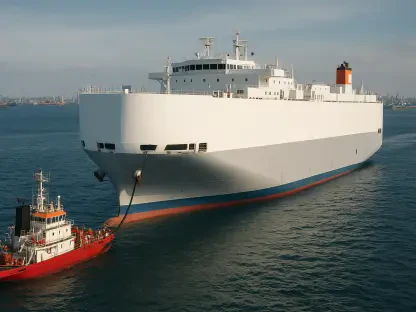

The movement of hazardous radiological isotopes across a sprawling network of highways and industrial corridors represents one of the most complex logistical challenges currently facing the Mexican government and its energy sector. To address these evolving threats, the Ministry of Energy, commonly

The rapid transformation of the logistics landscape has forced industry leaders to recognize that maintaining a competitive edge requires a sophisticated blend of technological prowess and unwavering safety protocols. In this environment, the transition from legacy systems to advanced digital

The delicate equilibrium of international maritime trade currently faces a defining challenge as the Bab el-Mandeb Strait transforms from a vital shipping lane into a volatile geopolitical chokepoint. While the Strait of Hormuz has long occupied the attention of defense analysts, the southern
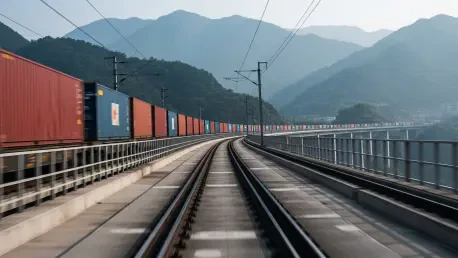
The realization of the China-Kyrgyzstan-Uzbekistan railway represents a seismic shift in the logistical architecture of the Eurasian landmass, moving beyond decades of theoretical planning into a phase of intense physical construction. This 532-kilometer corridor serves as more than just a

Aspirating smoke detection (ASD) facilitates this shift by moving beyond passive sensors to an active air-sampling model. By pulling air through a network of pipes into a central chamber, these systems overcome the limitations of high ceilings and rapid airflow that often defeat traditional

Rohit Laila stands as a titan in the logistics and supply chain sector, bringing decades of boots-on-the-ground experience to an industry that has undergone more change in the last five years than in the previous fifty. Throughout his career, he has navigated the complexities of global delivery