
The rapid transformation of the logistics landscape has forced industry leaders to recognize that maintaining a competitive edge requires a sophisticated blend of technological prowess and unwavering safety protocols. In this environment, the transition from legacy systems to advanced digital frameworks is no longer an optional upgrade but a fundamental necessity for survival in a market defined by instantaneous consumer demands. Source Logistics has responded to these pressures by recalibrating its operational standards, focusing on the seamless integration of hardware and software to ensure that every movement within its facilities is optimized for both speed and protection. This evolution reflects a broader industry trend where data-driven insights are used to anticipate bottlenecks before they occur, allowing for a more fluid movement of goods across diverse supply chains. By prioritizing a holistic approach that values human safety as much as mechanical throughput, the organization establishes a blueprint for modern distribution excellence that effectively mitigates the inherent risks of high-volume freight handling.
Implementing Intelligent Robotics for Facility Efficiency
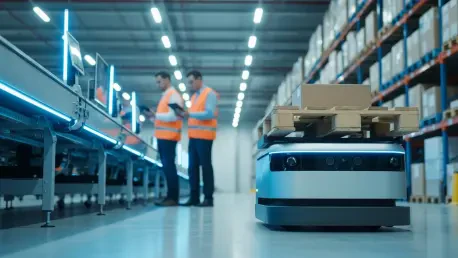
Deploying Autonomous Mobile Robots (AMRs) within distribution centers represents a significant leap forward in how inventory is managed and moved across expansive floor spaces. These intelligent machines utilize lidar sensors and sophisticated mapping algorithms to navigate complex environments without the need for fixed tracks or human intervention. By offloading repetitive and physically demanding tasks to these robotic units, the organization significantly reduces the potential for employee fatigue and associated workplace injuries. Furthermore, the synchronization between these robots and the central Warehouse Management System (WMS) ensures that picking accuracy reaches near-perfect levels, which is crucial for high-velocity e-commerce fulfillment. This technological layer does not replace the human element but rather augments it, allowing warehouse personnel to focus on high-value supervisory roles and exception management. The result is a highly scalable infrastructure that can adapt to seasonal spikes in volume while maintaining a consistent and predictable safety record across all shifts.
The implementation of AI-driven predictive analytics further enhances the safety profile of these facilities by identifying patterns that might indicate mechanical failure or potential traffic congestion. Sensors embedded within conveyor systems and heavy machinery transmit real-time data to a centralized monitoring hub, where machine learning models analyze performance metrics against historical benchmarks. If a deviation is detected, maintenance teams are alerted automatically to perform corrective actions before a breakdown occurs, thereby preventing accidents that could arise from equipment malfunction. This proactive stance on maintenance extends the lifecycle of critical assets while ensuring that the working environment remains stable and secure for all onsite staff. Additionally, the use of virtual reality for safety training allows new hires to practice operating heavy machinery in a risk-free environment, building muscle memory and situational awareness before they ever step onto the live warehouse floor. Such comprehensive digital integration fosters a culture where safety is engineered into the workflow rather than being treated as a secondary consideration.
Strategic Investments: Data Security and Training
Securing the digital perimeter is just as vital as physical safety in a period where supply chains are increasingly targeted by sophisticated cyber threats. Source Logistics has implemented robust cybersecurity protocols, including multi-factor authentication and end-to-end encryption for all data transmissions between clients and the warehouse network. These measures protect sensitive shipment information and prevent unauthorized access to critical logistics infrastructure, ensuring that the movement of goods remains uninterrupted by external digital disruptions. The organization also utilizes blockchain technology to create immutable ledgers of transactions, providing an unparalleled level of transparency and traceability for every item in the inventory. This level of visibility is essential for industries with strict regulatory requirements, such as pharmaceuticals and food production, where the integrity of the supply chain must be documented at every stage. By combining physical security with rigorous digital defenses, the facility provides a comprehensive shield that protects both the physical assets and the data that governs their transit across the globe.
The transition toward these elevated standards demonstrated that long-term success depended on the ability to merge innovative technology with a deep-seated commitment to worker welfare. Stakeholders recognized that investing in high-tech solutions was only effective when coupled with ongoing education and a willingness to adapt to shifting industry dynamics. To maintain this momentum, leadership focused on establishing a continuous feedback loop where frontline data informed future capital expenditures and process refinements. It became clear that the integration of Internet of Things (IoT) devices and real-time monitoring tools provided the necessary visibility to navigate an increasingly complex global trade environment. Moving forward, the emphasis remained on refining these systems to enhance resilience against both physical and digital vulnerabilities. Organizations were encouraged to conduct regular audits of their automation stacks to identify areas where further optimization could reduce operational friction. By treating safety and technology as two sides of the same coin, the industry moved toward a more sustainable and reliable model for global commerce.