
Rohit Laila brings a wealth of knowledge from decades in logistics and supply chain innovation to our discussion today. We are exploring the recent milestone achieved by Econowind, whose 16-meter VentoFoil 3-Series suction wings have just secured a Type Approval Design Certificate from DNV. This conversation delves into how standardized certifications are streamlining the adoption of wind-assisted propulsion systems, the explosive growth of the sector since 2022, and the operational confidence that comes with meeting rigorous safety benchmarks for vessels like the MS Heinz.
How does the new Type Approval Design Certificate from DNV fundamentally change the process for shipowners looking to integrate these 16-meter suction wings?
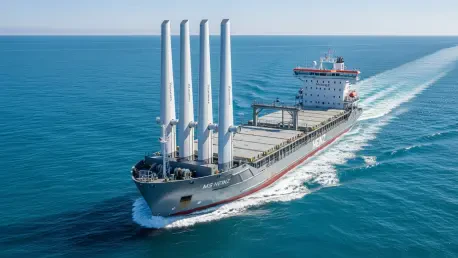
Securing this certificate is a massive win because it eliminates the tedious need to repeat the full design assessment for every single vessel in a fleet. When a shipowner decides to install the 16-meter VentoFoil 3-Series, the path from initial conception to the final installation becomes significantly smoother and faster. It removes that layer of administrative friction that often stalls green initiatives, allowing for late-stage design integration that feels seamless rather than forced. For a company that has already seen more than 150 units sold, this move toward standardization means they can scale up production and deployment without getting bogged down in individual project red tape.
With the number of vessels using wind-assisted propulsion growing fivefold since 2022, what do you think is driving this sudden acceleration in the maritime sector?
We have finally topped the century mark for vessels in operation, which is a psychological and technical milestone that signals wind technology is no longer just a series of niche experiments. The industry is witnessing a perfect storm where advances in materials and production capacity are meeting the urgent, heavy pressure of global decarbonization goals. Seeing the number of operational vessels quintuple in just a couple of years tells me that shipowners are feeling the wind at their backs and are finally ready to commit to long-term changes. There is a palpable sense of excitement on the docks when you see these massive wings being craned onto decks, knowing they represent a shift back to maritime roots powered by high-tech engineering.
What specific role does the DNV ST-0511 standard play in building the trust required for owners to adopt the VentoFoil 3-Series on such a large scale?
The DNV ST-0511 standard acts as a seal of quality that proves these suction wings can withstand the brutal, salty realities of the open ocean while maintaining peak performance. For owners of DNV-classed vessels, like the MS Heinz which is already sailing with this certificate, it provides a level of security that is essential for high-stakes maritime operations. They aren’t just taking a gamble on a new piece of hardware; they are investing in a system that has met the highest industry standards for safety and structural integrity. This certification gives the entire market a powerful signal that the VentoFoil 3-Series is robust enough for the global fleet, whether it is a complex retrofit project or a brand-new build.
What is your forecast for wind-assisted propulsion?
I expect the current trend to not just continue, but to shift into a much higher gear as the 5-Series for the deep-sea market begins to gain similar traction among larger ocean-going vessels. As we look toward the next few years, the sight of suction wings on the horizon will become a standard feature of the global shipping skyline rather than a rare novelty. With more than 100 vessels already leading the way and five times the activity we saw just two years ago, we are at the tipping point where wind assistance becomes a cornerstone of sustainable logistics. The shipping industry is sailing strong into a future where the wind is once again our most reliable and cost-effective partner in moving goods across the globe.