
The delicate equilibrium of international maritime trade currently faces a defining challenge as the Bab el-Mandeb Strait transforms from a vital shipping lane into a volatile geopolitical chokepoint. While the Strait of Hormuz has long occupied the attention of defense analysts, the southern entrance to the Red Sea is now the epicenter of a calculated effort to exert pressure on Western economies through maritime blockades. This narrow passage, historically known as the “Gate of Tears,” serves as a mandatory transit point for vessels moving between the Indian Ocean and the Mediterranean Sea. The Islamic Revolutionary Guard Corps (IRGC) has significantly increased its presence in the area, signaling a shift in focus that prioritizes the disruption of export corridors over traditional territorial disputes. Tehran has created a situation where every commercial transit carries significant risk, threatening to dismantle the efficiency of global shipping and necessitating a rapid reassessment of maritime security protocols across the globe.
The Strategic Significance: Why the Gate of Tears Matters
At its most constricted point, the Bab el-Mandeb measures only eighteen miles across, a physical reality that concentrates immense economic power within a very small geographic footprint. This strait is the essential link for any vessel attempting to navigate the Suez Canal, making it the primary artery for trade between Asia and Europe. The transit of liquefied natural gas and crude oil through this region is not merely a matter of convenience but a fundamental requirement for the energy stability of several G20 nations. Without this passage, the logistical complexity of moving energy products increases exponentially, as there are no viable short-term alternatives that can match the volume and speed provided by the Red Sea route. Consequently, any interruption in the flow of traffic here resonates through global markets almost immediately, leading to increased volatility in commodity prices and forcing shipping companies to make difficult decisions regarding the safety of their crews and cargo.
Recent shifts in energy logistics have unexpectedly increased the strategic weight of the Bab el-Mandeb in the current year of 2026. To mitigate risks associated with the Strait of Hormuz, Saudi Arabia invested in cross-country pipeline infrastructure that delivers crude oil to the Red Sea port of Yanbu. While this move successfully bypasses one chokepoint, it inadvertently places a massive portion of the world’s oil supply on a collision course with the Bab el-Mandeb as tankers head south toward the open ocean. This centralization of export volume has turned the strait into a secondary valve for global energy security that, if closed, would effectively isolate some of the most productive oil fields from their primary customers. The strategic irony is that efforts to diversify transit routes have only served to highlight the lack of a truly secure path for liquid energy, as the focus of regional conflict has simply migrated alongside the trade flows, proving that geographical vulnerabilities are often more persistent than any temporary fix.
Regional Alliances: The Doctrine of Shared or Denied Access
The current escalation is underpinned by a doctrine that emphasizes a “shared or denied” approach to energy exports and maritime access. This policy suggests that if certain nations are restricted from accessing international markets due to sanctions or naval pressure, they will ensure that no other regional player can benefit from those same corridors. This zero-sum mentality has led to explicit warnings that major straits could be closed simultaneously, a scenario that energy analysts predict would cause oil prices to surge past two hundred dollars per barrel within a matter of days. Such a spike would trigger a massive inflationary shock, destabilizing economies that are already struggling with the transition to more expensive energy sources. The coordination between the IRGC and local militant movements creates a layered threat environment where conventional naval power is challenged by unconventional tactics, making the cost of maintaining security through these narrow waters prohibitively expensive for most international coalitions today.
The relationship between the Houthi movement in Yemen and their regional backers is a complex partnership of convenience that allows for power projection through plausible deniability. While the Houthis possess their own political motivations, their strategic strikes on commercial shipping frequently align with broader geopolitical goals that seek to undermine Western influence. By providing advanced drone technology and intelligence, external actors can disrupt the Bab el-Mandeb without engaging in a direct conventional conflict. This outsourcing of maritime disruption allows for a high-intensity siege that remains just below the threshold of total conflict, keeping global markets on edge while providing the perpetrators with leverage in international negotiations. This dynamic has turned the southern Red Sea into a testing ground for asymmetric warfare, where low-cost aerial and naval drones can threaten multi-billion dollar commercial vessels and sophisticated naval destroyers with relative ease and frequency.
Economic Fallout: Measuring the Impact on Global Trade
The tangible economic fallout is most clearly seen in the dramatic reduction of trade volumes passing through the Bab el-Mandeb. Data from 2026 indicates that the daily transit of crude oil and petroleum liquids has dropped by more than fifty percent compared to previous levels. When a waterway becomes too dangerous to insure, the commercial viability of the route collapses, forcing ships to undertake the long journey around the Cape of Good Hope. This detour adds roughly three thousand miles to a typical voyage between Asia and Northern Europe, resulting in higher fuel consumption and an extension of transit times by up to two weeks. These delays ripple through the entire supply chain, causing port congestion and equipment shortages that further inflate the cost of shipping. For many companies, the added expense is passed directly to the consumer, contributing to a persistent rise in global inflation that threatens to derail economic growth across multiple continents simultaneously.
Beyond the energy sector, the siege has profound implications for global food security and the distribution of essential agricultural commodities. This waterway is a primary corridor for the transport of grains, wheat, and fertilizers from Eastern Europe and Central Asia to markets in East Africa and South Asia. Disruptions in this flow lead to immediate shortages in regions that are already vulnerable to food instability, creating a humanitarian crisis that stems directly from maritime insecurity. Additionally, the manufacturing sector relies on the “just-in-time” delivery of electronic components and raw materials that are typically moved through the Suez Canal. As these shipments are delayed or rerouted, production lines in Europe and North America face frequent interruptions, leading to product shortages and higher prices for everything from automobiles to consumer electronics. The weaponization of this geography thus affects every layer of the global economy, proving that a localized conflict can have universal consequences when it targets a vital node.
Naval Response: Defending the Chokepoint Against Asymmetric Threats
Securing the Bab el-Mandeb requires a multifaceted naval response that balances defensive operations with the need to keep commercial traffic moving. International maritime coalitions have deployed advanced destroyers equipped with sophisticated missile defense systems to escort merchant vessels through the danger zone. However, the sheer volume of traffic and the persistence of the threat make constant protection a logistical challenge for even the most well-funded navies. The use of low-cost, expendable drones by regional actors creates an economic imbalance where the cost of a defensive interceptor missile far exceeds the cost of the attacking drone. This strategy of attrition is designed to exhaust the resources and political will of the international community, making the long-term defense of the strait unsustainable under current conditions. As naval commanders seek new ways to counter these asymmetric threats, the focus is shifting toward electronic warfare and laser-based defense systems that offer a more cost-effective way to neutralize strikes.
The overarching trend is the calculated weaponization of maritime geography to counter conventional military strength and exert economic pressure on a global scale. Strategic thinkers in the region have identified the reliance of the modern world on a few narrow waterways as a fundamental vulnerability that can be exploited with relatively modest resources. By creating a persistent state of insecurity in the Bab el-Mandeb, these actors can achieve geopolitical goals that would be impossible through traditional diplomatic or military means. This shift in the nature of conflict requires a total reassessment of how global trade is protected, moving away from a reliance on single chokepoints and toward a more resilient, distributed network of supply routes. For the international community, the challenge remains how to secure these passages without triggering the very economic shock the siege was designed to produce. The volatility of the situation means that any miscalculation could lead to a permanent shift in how the world moves goods.
Resilient Infrastructure: Future-Proofing the Global Maritime Corridor
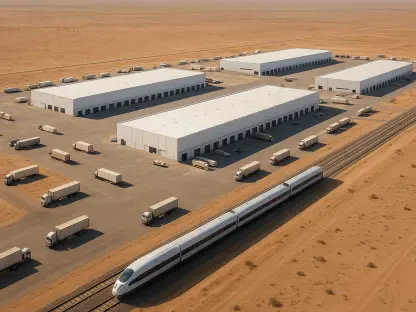
To address the persistent vulnerabilities exposed by the crisis, global leaders and industry experts prioritized the development of a more resilient maritime infrastructure that did not depend on a single chokepoint. One of the most effective solutions involved the expansion of land-based transport corridors, such as the renewed investment in transcontinental rail networks and the development of new port facilities outside of the immediate conflict zone. These alternatives provided a necessary safety valve that allowed essential goods to bypass the volatile Red Sea corridor when the risk level became unacceptable. Furthermore, the integration of advanced satellite monitoring and artificial intelligence into maritime logistics enabled shipping companies to predict potential threats and reroute vessels with much greater precision than was previously possible. By diversifying the physical and digital paths of trade, the international community began to reduce the leverage held by regional actors who sought to weaponize geography for political gain.
The move toward decentralized supply chains and the adoption of localized manufacturing served as a critical defense against the economic paralysis threatened by the siege. Companies realized that the cost of efficiency was too high if it came at the expense of security, leading to a significant increase in “near-shoring” operations that brought production closer to the end consumer. This strategic shift reduced the total distance goods needed to travel and minimized the number of maritime chokepoints they had to cross to reach their destination. Diplomatically, the establishment of a more inclusive maritime security framework ensured that a broader range of nations contributed to the protection of shared waterways, sharing the burden of defense and intelligence gathering. These collective actions moved the global economy toward a model where resilience was prioritized alongside speed, ensuring that the closure of a single strait would no longer have the power to derail international commerce, successfully creating a more robust and secure global trading system.