
The realization of the China-Kyrgyzstan-Uzbekistan railway represents a seismic shift in the logistical architecture of the Eurasian landmass, moving beyond decades of theoretical planning into a phase of intense physical construction. This 532-kilometer corridor serves as more than just a collection of steel tracks; it is a strategic bypass that offers a fresh alternative for global trade by navigating the complex geography of Central Asia in ways previously thought impossible. As the world moves toward greater supply chain diversification, this southern path is emerging as a critical link that reduces the heavy reliance on the Northern Corridor and avoids the logistical bottlenecks frequently associated with the Caspian Sea. By establishing a direct overland connection between East Asia and the heart of the Fergana Valley, the project provides companies with a vital tool to protect their cargo from geopolitical shifts and infrastructure traditionalism. The momentum behind this development signals a new era for the “Iron Silk Road,” where regional resilience and shorter transit times become the primary drivers of international commerce and cooperation.
Engineering Resilience: Conquering the Central Asian Peaks
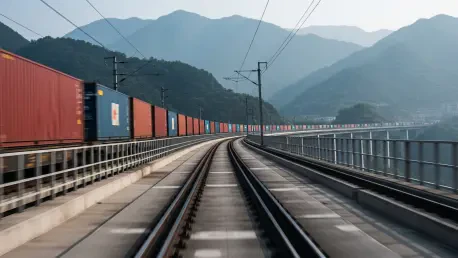
Constructing a railway through the rugged terrain of Kyrgyzstan requires an unprecedented level of engineering precision and investment, as the route traverses some of the most challenging high-altitude landscapes on the planet. The project involves the creation of dozens of bridges and nearly 30 tunnels, some of which are destined to become the longest and deepest in the region, cutting through solid mountain rock to maintain a viable gradient for heavy freight. Thousands of specialized workers and advanced boring machines are currently deployed across the construction sites, moving millions of cubic meters of earth to stabilize the path against the harsh environmental conditions of the Tien Shan range. This massive effort is not merely about laying track but about creating a permanent, weather-resistant artery that can withstand extreme temperature fluctuations and seismic activity. The sheer scale of the civil engineering work underscores the commitment of the participating nations to overcome the natural barriers that have historically isolated these inland markets from the global maritime trading systems.
A significant technical hurdle that planners have addressed involves the historical difference in rail gauges between the standard tracks used in China and the wider gauges found in Kyrgyzstan and Uzbekistan. To ensure that goods do not come to a standstill at the border, the infrastructure includes a state-of-the-art transshipment hub designed for maximum efficiency in cargo transfer. This facility serves as the technological heart of the corridor, where specialized cranes and automated systems move containers between train sets with minimal delay, effectively bridging two different railway eras. By integrating these transshipment solutions directly into the project design, the partners have minimized the risk of the long bottlenecks that often plague international rail crossings. This proactive approach to technical interoperability ensures that the railway functions as a seamless logistics chain rather than a disjointed series of national tracks. The focus on smooth transitions at the border is essential for maintaining the competitive edge that overland transport requires to compete with traditional shipping.
Strategic Comparisons: Efficiency Over the Middle Corridor
When compared to existing trade routes, the primary advantage of the new railway lies in its status as a fully overland connection that removes the need for maritime segments. While the Middle Corridor has gained popularity as an alternative to northern routes, it frequently requires cargo to be loaded onto ferries to cross the Caspian Sea, a process that introduces significant variables such as weather delays and port handling fees. The new southern railway eliminates these extra steps, keeping containers on the tracks from start to finish and providing a level of predictability that modern logistics managers demand. This consistency is particularly valuable for industries that operate on a “just-in-time” basis, where even a two-day delay at a sea terminal can disrupt an entire production line. By offering a stable and continuous land-based path, the project provides a layer of logistical security that multi-modal routes struggle to match, especially during periods of high maritime congestion or regional instability.
Efficiency gains from this corridor are most visible in the drastic reduction of transit times and the shortening of the total distance traveled between East Asia and Southern Europe. Preliminary estimates indicate that this new route could shorten the total journey by approximately 1,000 kilometers when compared to the current northern land options, which translates into nearly a full week of saved time for shippers. For high-value or time-sensitive goods, such as electronics, automotive components, and perishable items, this time saving is a transformative factor that can significantly lower the cost of capital tied up in transit. The speed of the connection makes the railway a highly attractive prospect for moving goods toward the Middle East and the Mediterranean, where traditional routes are often slower or more expensive. As companies look to optimize their global footprints, the ability to cut seven days off a delivery schedule represents a massive competitive advantage that will likely drive a permanent shift in how Eurasian trade is managed and executed.
Financial Foundations: A Shared Stake in Regional Success
The financial architecture supporting the project was finalized through a multi-billion-dollar agreement that balances the economic interests and sovereignty of the three primary nations involved. China holds a majority stake in the joint venture and provides the vast majority of the initial capital through long-term infrastructure loans, reflecting its role as a primary driver of regional integration. However, Kyrgyzstan and Uzbekistan retain significant ownership shares, ensuring that they are not merely transit points but active partners with a direct interest in the line’s operational profitability and long-term maintenance. This trilateral ownership model is designed to foster regional stability by aligning the economic incentives of each country, creating a shared commitment to keeping the tracks open and safe. By securing this funding early in the process, the project has avoided the stop-and-start financing issues that have historically hindered large-scale infrastructure developments in Central Asia, allowing construction to proceed at a steady and predictable pace.
While the physical progress of the project is moving at a rapid clip, logistics experts and regional planners are maintaining a realistic outlook regarding the final operational timeline. Given the extreme difficulty of boring through some of the hardest mountain rock in the world, the expected completion window is currently set between 2028 and 2030. This duration is necessary to ensure that safety standards are met and that the complex tunnel systems are fully equipped with the latest ventilation and emergency response technologies. Shippers and global supply chain strategists are being encouraged to view this corridor as a long-term strategic asset that will mature toward the end of the decade, rather than a quick fix for the immediate logistical pressures of the current year. Monitoring the progress of these key mountain segments will be essential for any organization looking to integrate this new lane into their future transport planning. The project represents a generational investment, and the careful pace of construction is a reflection of the intent to build a lasting legacy.
Trade Projections: Integrating Global Supply Chains
Once the railway reaches its full operational capacity, it is projected to handle tens of millions of tons of freight annually, fundamentally altering the flow of goods through Central Asia. This capacity will open up unprecedented access to markets in Iran, Turkey, and the Persian Gulf, providing a direct rail link to the Mediterranean that bypasses traditional choke points. For landlocked nations in the region, the railway provides a “dry port” effect, turning isolated mountainous areas into bustling logistics hubs where goods can be sorted, stored, and redistributed. This surge in volume is expected to catalyze a ripple effect of infrastructure development in surrounding areas, including the construction of new warehouses, industrial parks, and digital customs facilities. By offering a more cost-effective and resilient path, the railway serves as a vital component of the modern global trade network, ensuring that the movement of goods is no longer dependent on a single corridor or a handful of vulnerable maritime passages.
The integration of this rail line will likely trigger significant shifts in regional customs processing and the management of high-speed e-commerce logistics. As the infrastructure matures, the implementation of unified digital manifests and automated clearance systems will become necessary to handle the high volume of traffic efficiently. For global shippers, the presence of the railway represents a future-proofing element in their broader supply chain strategy, offering an insurance policy against disruptions in other parts of the world. The shift in trade patterns will also encourage the development of new manufacturing centers in Central Asia, as the cost of exporting to both Europe and China becomes more competitive. Businesses that early on recognized the potential of this corridor began positioning their distribution centers to take advantage of the increased connectivity. The success of this railway was ultimately measured by its ability to transform the geopolitical landscape of trade from a series of barriers into a streamlined network of cooperation and economic opportunity.
The establishment of the China-Kyrgyzstan-Uzbekistan railway provided a clear roadmap for the future of land-based trade, as organizations throughout the region adjusted their long-term strategies to account for the new southern lane. Logistics providers shifted their focus toward developing multi-modal connections that branched off from the main artery, ensuring that the benefits of the project reached far beyond the immediate vicinity of the tracks. Decision-makers in the private sector recognized that the diversification of transit routes was a fundamental requirement for maintaining operational continuity in an increasingly unpredictable global environment. Governments and regional bodies finalized new trade agreements that harmonized customs procedures, reducing the administrative hurdles that once slowed the movement of goods across borders. This period of growth demonstrated that massive infrastructure projects could serve as the foundation for broader economic integration and regional peace. Ultimately, the successful deployment of this corridor proved that overcoming geographic isolation was possible through sustained investment and international collaboration.