
The rhythmic hum of heavy-duty engines crossing the Pennines or navigating the M25 now increasingly represents a professionalized logistics service rather than a private corporate asset. As the United Kingdom navigates a landscape of fluctuating fuel prices and tightening environmental regulations, the traditional model of a company owning and operating its own fleet is rapidly fading into obscurity. Recent statistical evidence highlights a decisive migration toward third-party logistics providers, marking a structural change that is effectively hollowing out the “own-account” sector. This transition is not merely a reaction to temporary economic pressure but a fundamental reassessment of core business competencies. By offloading the complexities of fleet maintenance, driver recruitment, and regulatory compliance, British enterprises are attempting to insulate themselves from the volatility of the transport market while demanding higher levels of service from their specialized partners.
Market Dynamics: The Rise of Third-Party Logistics and SME Growth
Part 1. Shifting Ownership Structures and Financial Resilience
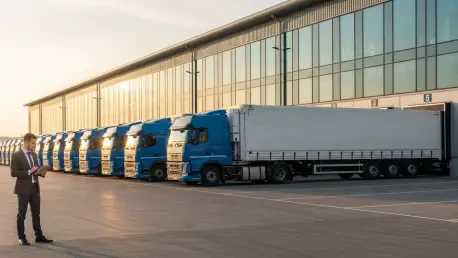
The movement toward outsourcing has catalyzed an unprecedented expansion for professional logistics providers who now command a significant portion of the nation’s heavy goods vehicles. While organizations that historically maintained their own trucks have seen their vehicle counts plummet, third-party logistics firms have aggressively scaled their operations to absorb this diverted demand. This resilience is particularly noteworthy when considering various headwinds, such as the persistent shortage of qualified drivers and the inflationary pressures on maintenance costs. Professional haulers have demonstrated a unique ability to stabilize their margins by leveraging economies of scale that smaller, private fleets simply cannot replicate. Consequently, the marketplace has seen a sharp consolidation of expertise, where the technical burden of logistics is concentrated within firms that view transportation as their primary product rather than a necessary overhead cost.
Beyond simple ownership shifts, the financial stability of these specialized providers is bolstered by their ability to implement sophisticated fuel management and procurement strategies. By purchasing fuel and spare parts in massive quantities, 3PL providers can insulate themselves and their clients from the sudden price shocks that often cripple smaller, in-house transportation departments. Furthermore, the professionalization of the sector has led to better credit terms and more favorable insurance premiums, as underwriters recognize the reduced risk associated with expert-managed fleets. This financial resilience allows third-party operators to continue investing in the latest Euro VI or electric vehicle technologies, even when the broader economy is experiencing a downturn. As a result, the gap between the efficiency of professional haulers and private fleets continues to widen, making the argument for total logistics outsourcing increasingly difficult for traditional manufacturers to ignore.
Part 2. The Agility of Small and Medium-Sized Operators
Contrary to the assumption that only the largest logistics conglomerates would benefit from this outsourcing trend, small and medium-sized enterprises (SMEs) are emerging as the industry’s most dynamic growth engines. These nimble operators are currently adding vehicles at a rate that outpaces their much larger competitors, often by focusing on niche markets or localized delivery routes. The success of these mid-sized firms stems from their ability to offer personalized, flexible services that larger corporations often struggle to provide. While industry giants are preoccupied with restructuring their massive operational frameworks to adapt to new energy requirements, these smaller haulers are capturing market share by being more responsive to the specific needs of businesses looking to externalize their shipping functions. This trend suggests that the future of UK haulage will be defined by a diverse ecosystem of specialists rather than a monolithic block of a few dominant players.
Moreover, the rise of SME haulers is being facilitated by the widespread availability of brokerage platforms and digital freight exchanges that level the playing field. These technologies allow smaller operators to find backhaul opportunities and reduce empty mileage with the same efficiency as their larger rivals. By maintaining a lower overhead and a more direct relationship with their drivers, these mid-sized companies can often offer more competitive pricing without sacrificing service quality. This has created a vibrant sub-sector of the haulage industry that caters to regional businesses and specialized industries that require a “high-touch” service model. As the outsourcing movement matures, the ability of these SMEs to provide tailored solutions while maintaining high operational standards is proving to be a critical component of the UK’s logistical infrastructure. Their growth underscores the fact that flexibility and local expertise remain highly valued assets in the modern supply chain.
Operational Strategies: Efficiency and Sectoral Transitions
Part 3. Trailer-Heavy Models and Asset Optimization
One of the most visible indicators of the shift toward professional logistics is the changing ratio of trailers to tractor units within modern fleets. Dedicated logistics providers are increasingly funneling their capital into trailer-heavy configurations, a strategy designed to maximize the uptime of expensive motorized units through “drop-and-swap” operations. This method allows a driver to leave a loaded trailer at a distribution center and immediately hitch to another one, bypassing the lengthy loading and unloading times that previously kept trucks idle. By decoupling the cargo container from the propulsion unit, companies are ensuring that their most expensive assets—the trucks and the drivers—are constantly in motion. This operational philosophy has led to a significant spike in trailer registrations, as haulers recognize that having excess carrying capacity is far more cost-effective than allowing a highly taxed and fueled engine to sit stationary in a loading bay.
The rapid expansion of the digital economy has created a massive tailwind for specialized delivery firms, particularly those serving the e-commerce and parcel sectors. As consumers continue to prioritize the convenience of home delivery, the demand for sophisticated fulfillment networks has surged, prompting a rapid increase in vehicle counts for specialized courier services. Simultaneously, the foodservice industry has shown remarkable strength, with major distributors reporting significant fleet expansions to meet the complex requirements of the hospitality and grocery sectors. These industries require a high degree of specialization, including temperature-controlled environments and strict delivery windows, which are increasingly difficult for retailers to manage internally. By partnering with dedicated food logistics experts, restaurant chains and supermarkets are ensuring that their supply chains remain robust even as consumer habits evolve and the complexity of distribution increases.
Part 4. Strategic Outlook and Future Operational Steps
The transition toward a fully outsourced logistics model provided a clear blueprint for how businesses managed their operational footprints. Companies that successfully transitioned their transportation needs to third-party experts reported a significant reduction in capital expenditure and a renewed focus on their primary commercial activities. This shift allowed organizations to leverage the technological advancements and sustainable practices implemented by professional haulers, such as the adoption of alternative fuels and more efficient routing systems. Decision-makers prioritized the selection of partners who demonstrated high levels of digital integration and environmental compliance, ensuring that their supply chains remained competitive in a rapidly changing market. Ultimately, the move away from internal fleet management proved to be a decisive step in enhancing the agility of the British economy, setting a standard for specialized service delivery that informed strategic planning for the decade.