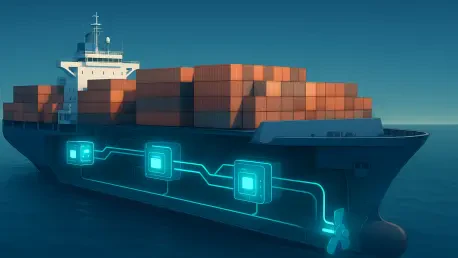

Limited and expensive satellite bandwidth at sea often prevents crews from deploying critical security patches or receiving real-time technical support from shore-based experts. This physical and digital isolation was once considered a natural defense mechanism for the shipping industry, but in the current year, it has become a liability. As vessels evolve into floating data centers, the integration of complex digital systems has fundamentally transformed the maritime landscape. While these advancements have undeniably optimized fuel consumption and improved cargo visibility, they have also exposed ships to a new frontier of risks that bridge the gap between cyber systems and physical safety. In this modern context, a digital breach is no longer confined to the IT department; it represents a direct threat to the very buoyancy and steerage of the vessel. Consequently, the industry is seeing a paradigm shift where cybersecurity is being repositioned as a core component of maritime safety standards rather than a secondary technical concern.
The Convergence of Navigation and Digital Security
Understanding the Shift: Information to Operations
The primary focus for shipowners and operators has shifted significantly from the protection of traditional Information Technology (IT) to the security of Operational Technology (OT). Historically, cybersecurity in the maritime sector was preoccupied with safeguarding commercial data, such as bills of lading and payroll records. However, the rise of autonomous and semi-autonomous systems has placed the focus on the machinery that manages the physical movement of the vessel. These OT systems include critical components like propulsion control, electronic charting, and ballast water management. Experts now emphasize that a failure in these systems due to a cyberattack can lead to catastrophic outcomes, including groundings or collisions in crowded shipping lanes. Maintaining real-time visibility into these safety-critical processes is essential for preventing a digital glitch from escalating into a full-scale maritime disaster that could disrupt the entire global supply chain for weeks.
Managing these operational risks requires the same level of systematic rigor that is traditionally applied to mechanical failures or environmental hazards. The shipping industry has long operated under a culture of safety-first, with detailed protocols for engine maintenance and oil spill prevention. Integrating cyber risk into this existing framework is the logical next step for ensuring the continuity of global trade in an increasingly volatile digital world. Instead of treating software vulnerabilities as an isolated problem for technicians, forward-thinking organizations are now incorporating digital resilience into their overall safety management systems. This involves regular stress-testing of communication protocols and the implementation of redundant systems that can take over if a primary digital controller is compromised. By treating cyber resilience as a non-negotiable aspect of seaworthiness, operators can protect their crews and assets from the unpredictable nature of modern digital threats.
Lessons: Recent High-Profile Disruptions
Recent high-profile incidents have shattered the long-held myth of the “air gap” between administrative computers and critical shipboard engine rooms. In many cases, unauthorized access to propulsion-related networks has demonstrated that even the most isolated machinery is now vulnerable through interconnected maintenance ports or remote monitoring sensors. When these systems are breached, the immediate result is often an “operational fog,” where the crew cannot distinguish between a legitimate mechanical malfunction and a deliberate malicious attack. This ambiguity is particularly dangerous during high-stakes maneuvers, such as docking or navigating through narrow straits. The disruption of port operations through ransomware further illustrates how a digital event can bring a multi-billion-dollar terminal to a complete standstill, even if the physical cranes remain uncompromised. These events highlight a critical need for a new approach to incident response that prioritizes operational continuity.
The ambiguity inherent in modern cyber events necessitates a specialized training regime for crews to maintain safe operations regardless of the cause of a system failure. In the past, sailors relied on their mechanical intuition to troubleshoot engines, but today’s engineers must also be proficient in identifying abnormal data patterns and unauthorized network activity. When a vessel’s navigation system begins providing false data, the ability to recognize the discrepancy and transition to traditional seamanship becomes a life-saving skill. Furthermore, the industry is beginning to recognize that port disruptions are not just business losses but are logistical bottlenecks that affect food and energy security. As a result, the focus is shifting toward creating “cyber-ready” crews who are as comfortable with data integrity as they are with hull integrity. This holistic view of vessel security acknowledges that the human element remains the most critical line of defense in a world where digital and physical threats are inseparable.
Strategies: Building Operational Resilience
Implementing Defensive: Technical Measures
To build true operational resilience, maritime operators are moving beyond mere regulatory compliance by implementing a comprehensive inventory of every digital component on their vessels. This process involves identifying all hardware, software, and firmware, then prioritizing them based on their direct impact on the ship’s safety and environmental systems. Understanding the “criticality” of a specific device is far more important than simply patching every known software vulnerability. For example, a vulnerability in the crew’s entertainment system might be a low priority compared to a minor flaw in the steering control firmware. By mapping out these dependencies, companies can allocate their limited resources more effectively, focusing on the systems that are essential for the vessel’s survival. This data-driven approach allows for a more proactive defense strategy, ensuring that the most vital links in the operational chain are reinforced against potential interference or failure.
Beyond inventory management, rigid network segmentation is becoming a mandatory standard for protecting critical shipboard infrastructure. In a modern maritime environment, it is no longer acceptable to have an open network architecture where passenger Wi-Fi and administrative offices are connected to the same backbone as the bridge or engine room. By creating isolated digital “islands” within the ship, operators can ensure that a virus or ransomware attack on a non-critical system cannot migrate to the machinery responsible for navigation or propulsion. Furthermore, any remote access required by third-party vendors for maintenance must be strictly governed through multi-factor authentication and time-limited sessions. This prevents “always-on” backdoors that could be exploited by attackers to gain unauthorized entry into a vessel’s most sensitive control systems. These technical measures create multiple layers of defense, making it significantly harder for an external threat to compromise the vessel’s physical integrity.
Prioritizing Response: Crew Readiness
Prioritizing crew readiness involves developing specific response playbooks that focus on maintaining “safe degraded operations” rather than simply shutting down compromised systems. In a traditional IT environment, the standard procedure for a security breach is to disconnect the affected server to prevent further spread. However, applying this logic to a ship at sea could be catastrophic; shutting down a compromised navigation server while the vessel is in a high-traffic lane could lead to an immediate collision. Therefore, maritime incident response must be designed to keep the ship moving safely even if digital tools are partially disabled. This requires crews to be trained in manual overrides and analog navigation techniques that serve as a backup to automated systems. The goal is to ensure that the ship remains under human control at all times, providing a safety net that digital technology cannot replicate, thus bridging the gap between automation and tradition.
The maritime industry ultimately recognized that cybersecurity was the new cornerstone of global shipping safety, rather than just an optional technical upgrade. By integrating digital defense protocols with traditional seamanship and engineering, organizations established a more resilient framework for protecting international trade. Regulators and operators alike worked together to mandate “secure-by-design” principles, ensuring that every new vessel entering service was built with inherent digital safeguards. This transition successfully moved the industry toward a model where cyber risk was managed with the same urgency as any physical threat to the hull or engine. Future efforts focused on expanding these standards to include the entire supply chain, from remote software providers to port infrastructure. This unified approach protected crews and ensured that global commerce remained uninterrupted by the growing volatility of the digital landscape. These actions solidified the role of cybersecurity as a permanent and essential standard for the sea.