
Economic success is increasingly determined by the efficiency of entire trade corridors rather than the capabilities of a single isolated port facility. This fundamental shift marks a departure from the traditional model where logistics functioned merely as a background operational expense. In the current landscape of 2026, logistics infrastructure has emerged as the essential bedrock of national competitiveness and corporate resilience. According to recent surveys of over 3,500 logistics executives, a new consensus has solidified: supply chains are now primary drivers of value rather than simple necessities of commerce. This evolution is unfolding despite significant geopolitical volatility and fluctuating trade policies that have characterized the start of this decade. Industry leaders are no longer viewing transport as a line-item cost but as a strategic tool to navigate a world where disruption is the only constant. By prioritizing the integration of high-tech assets with physical routes, businesses are transforming their operational frameworks into engines of sustainable growth and trade.
Redefining Logistics as a Competitive Advantage
A striking aspect of this transformation is the decoupling of business confidence from political stability. While a majority of logistics executives anticipate high levels of policy uncertainty during the 2026 to 2028 period, more than half of global supply chain leaders expect trade growth to accelerate significantly. This resilience suggests that global businesses are no longer waiting for a return to geopolitical certainty; instead, they are proactively building robust systems and infrastructure capable of thriving within a climate of permanent volatility. The prevailing sentiment is one of cautious optimism, signaled by a strategic pivot toward viewing the supply chain as a proactive driver of market performance. Organizations are increasingly confident in their ability to navigate turbulence through better planning and more robust physical assets. This mindset shift allows companies to commit to long-term projects even when regional stability seems precarious, ensuring that commerce continues to flow regardless of external pressures.
The outdated perception of logistics as a cost center focused on expense minimization is being replaced by a strategic focus on expanding market footprints. Companies are now using supply chain restructuring as a tool for growth, with over half of industry leaders prioritizing the diversification of their supplier bases as they move through 2026. This strategic pivot is driven by the desire to enter new markets, leverage emerging technologies, and enhance the agility required to respond to shifting consumer demands. Nearly half of trade executives cite access to new markets as their chief growth driver, viewing the supply chain not just as a way to move goods, but as a means to reach new customers more effectively. This shift indicates that the ability to navigate complex global networks has become a core component of a brand’s competitive edge in the modern economy. By restructuring their logistics paths, businesses are finding that they can reduce lead times and improve customer satisfaction while simultaneously mitigating the risks of regional supply shocks.
The Convergence of Physical and Digital Assets
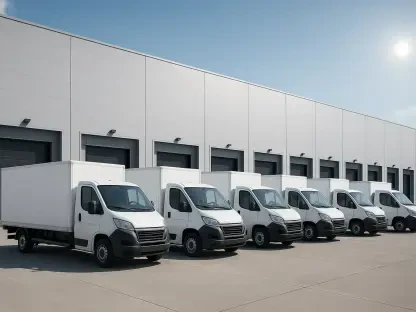
For modern trade to flow efficiently, physical infrastructure and digital capabilities must advance in tandem rather than in isolation. Recent data shows that warehousing and logistics hubs have become the most vital physical investments, evolving into strategic nodes where manufacturing, international distribution, and regional transport intersect. These facilities are increasingly specialized, catering to high-value sectors such as pharmaceuticals, perishables, and sensitive data center technology. The demand for temperature-controlled environments and high-security storage has transformed the humble warehouse into a sophisticated technological asset. These hubs allow for the strategic sequencing of deliveries to large-scale construction sites, thereby reducing on-site bottlenecks and improving the overall speed of the trade cycle. As the complexity of goods increases, the physical space required to manage them must become smarter, providing the necessary environment for pre-assembly and sophisticated inventory management before the final mile of delivery.
On the digital front, Artificial Intelligence has become a top priority for optimizing route planning and predicting potential disruptions. Approximately 43% of executives have integrated AI tools to manage inventory more precisely and to navigate the complexities of modern transport networks. However, technology alone cannot resolve the persistent soft infrastructure challenges, such as administrative friction at international borders. Industry experts agree that digital tools like electronic documentation and automated customs platforms are only effective when matched by institutional reform and international cooperation. A substantial 60% of executives still identify customs procedures as the primary cause of supply chain delays, suggesting that the digital revolution must be accompanied by regulatory alignment. To ensure that cargo does not sit idle while paperwork is processed, nations must work to synchronize their digital standards. Only through this dual approach of high-tech adoption and administrative streamlining can the full potential of modern logistics networks be realized.
Specialized Infrastructure and Industrial Synergies
The evolution of logistics has profound implications for the breakbulk and project cargo industries, which handle the oversized equipment essential for energy and industrial manufacturing. The growth of these sectors is now inextricably linked to the availability of specialized terminals and multimodal networks. As the global energy transition accelerates, the movement of massive wind turbine components, solar infrastructure, and industrial machinery requires more than standard container capacity. These specialized fields are no longer just about heavy lifting; they are strategic partners in industrial expansion. The ability to move project cargo seamlessly from point of origin to final installation is a major differentiator for developing regions seeking to attract heavy industry. Specialized terminals must offer deep-water access, heavy-lift cranes, and extensive staging areas to accommodate the logistical requirements of modern energy projects. Without these dedicated assets, the transition to greener energy and advanced manufacturing would remain stalled by physical limitations.
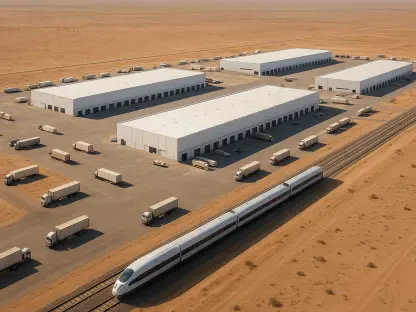
Strategic developments, such as integrated logistics parks located near major ports, serve as a blueprint for reducing transport complexity and attracting manufacturing investment. For instance, facilities like the Sokhna Logistics Park illustrate how placing logistics infrastructure adjacent to industrial clusters and major maritime routes ensures the seamless movement of cargo. This connectivity is becoming a decisive factor for nations looking to secure a place in the global industrial landscape. By reducing the distance between the ship’s rail and the final assembly point, these parks eliminate significant costs and time delays. Developers are increasingly focusing on these integrated ecosystems to create a one-stop-shop environment for global manufacturers. This approach naturally leads to a more competitive manufacturing sector, as companies can rely on predictable delivery schedules and lower inland transport costs. The synergy between industrial production and logistics excellence is the new standard for economic zones, providing a clear path for nations to enhance their participation in the global value chain.
Resilient Foundations for Long-Term Economic Health
As the global trade community moves toward an ecosystem approach, the performance of individual assets is increasingly judged by the quality of the road, rail, and digital links that connect them. Future investment priorities are centering on corridor development, ensuring that inland terminals and border crossings are as efficient as the ports they serve. This requires a holistic view of the path goods take, emphasizing synchronized multimodal connectivity across sea, air, and land. When a port is isolated from its hinterland, its efficiency is essentially capped by the bottlenecks of the surrounding infrastructure. Therefore, the focus has shifted toward building comprehensive networks that integrate different modes of transport into a single, fluid system. This trend is visible in the growing investment in rail links and dry ports that extend the reach of maritime gateways. By ensuring that every link in the chain is equally strong, stakeholders can create a more resilient trade environment that is capable of absorbing shocks and adapting to changing trade patterns.
The transition of logistics from a functional support role to a core economic strategy was largely completed as industry leaders recognized the necessity of infrastructure for long-term growth. The organizations and economies that led the trade landscape in 2026 achieved success by treating infrastructure as a tool for enablement rather than a cost to be minimized. Decision-makers learned that combining aggressive investment in physical hubs with the adoption of AI was essential for navigating modern complexities. They also prioritized the streamlining of customs procedures through international cooperation to remove administrative barriers. Moving forward, the industry established that sustainable growth required a commitment to corridor-wide efficiency and multimodal integration. Future considerations suggested that those who invested in specialized logistics for the energy sector were best positioned to capitalize on industrial shifts. The lesson was clear: success followed those who built networks that did not just accommodate movement but actively drove it through intelligence and strategic integration.