
The rapid pulse of Latin American commerce is no longer merely a product of physical labor but is increasingly dictated by the silent, rapid calculations of autonomous artificial intelligence agents. The regional logistics landscape has moved decisively beyond the era of static record-keeping into a period defined by applied intelligence and self-correcting supply chains. In this current environment of 2026, the transition from traditional Systems of Record to AI-native platforms is not just a technological upgrade but a fundamental survival strategy. These advanced systems do more than store information; they actively interpret real-time variables to make operational decisions that were once the sole province of human dispatchers.
The Evolution of Logistics from Static Planning to Autonomous Intelligence
The state of logistics in Latin America has shifted from a reactive posture toward a proactive, intelligence-led framework. Historically, companies relied on fragmented data sets that provided a delayed view of fleet performance and inventory movement. However, the adoption of AI-native platforms has allowed these organizations to bridge the gap between planning and execution. This evolution is characterized by the move toward applied intelligence, where algorithms do not just suggest routes but manage the complexities of urban density and volatile infrastructure in real time. The focus has moved from simple data visibility to autonomous problem-solving across the entire value chain.
The rise of agentic management represents a significant milestone in this journey, transforming university-born algorithms into industrial-scale solutions that power the continent’s economy. What began as academic research into mathematical optimization has matured into robust software agents capable of replacing manual dispatching. These agents handle thousands of variables simultaneously, from driver behavior to fuel consumption, ensuring that every asset is used to its maximum potential. This automation is particularly vital in a region where traffic patterns can change in minutes and where the traditional manual oversight of large fleets is no longer feasible or cost-effective.
Retail, fast-moving consumer goods (FMCG), and third-party logistics providers (3PL) are currently the primary drivers of this technological adoption. Large-scale retailers in Mexico and Brazil are utilizing advanced routing technologies to meet the heightened expectations of omnichannel consumers who demand speed and precision. For these market players, the integration of agentic AI is the only way to manage the massive scale of daily deliveries while maintaining tight margins. The ability to dynamically re-route deliveries based on warehouse availability or sudden shifts in consumer demand has become a defining competitive advantage for the region’s largest distributors.
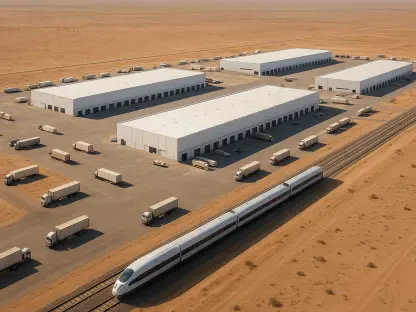
Nearshoring has further accelerated this digital transformation, as the influx of manufacturing and assembly operations creates a pressing need to maximize the efficiency of new physical infrastructure. While massive warehouses and industrial hubs are being constructed at a record pace, the software layer is what prevents these facilities from becoming inefficient bottlenecks. Digital infrastructure must evolve alongside physical assets to ensure that the increased flow of goods through newly established trade corridors is handled with precision. Agentic AI serves as the critical link that ensures the capital invested in physical infrastructure yields the expected operational returns.
Market Dynamics and Emerging Technological Frontiers
Autonomous Workflows and the Rise of AI Agents
The definition of an AI agent in the 2026 logistics context has moved beyond simple automation to encompass true deviation management and independent decision-making. Platforms now deploy agents like ADA that monitor every aspect of a delivery route without requiring constant human monitoring. If a vehicle deviates from its planned path or encounters an unexpected delay, the agent can autonomously communicate with the driver via localized messaging tools and simultaneously update the end customer. This level of autonomy ensures that the control tower remains a center for strategic oversight rather than a room full of people solving repetitive, low-level disruptions.
Integration with telematics and safety systems has transformed how fleet security and driver well-being are managed across the region. AI agents now leverage real-time data from cabin cameras and vehicle sensors to detect signs of driver fatigue or distracted driving. By analyzing blinking patterns and head movements, these systems can intervene with immediate safety warnings or suggest nearby rest stops, significantly reducing the risk of accidents. In high-risk environments, these agents also provide remote security interventions, such as geofencing alerts and emergency protocols that protect both the driver and the valuable cargo they carry.
Omnichannel logistics has forced a reconciliation between e-commerce demand and traditional brick-and-mortar distribution networks. Consumers now expect a seamless experience, whether they are purchasing from a physical store or an online marketplace, which places immense pressure on last-mile delivery systems. AI agents bridge this gap by treating stores as micro-fulfillment centers and optimizing the movement of goods between various nodes in the network. This flexibility allows businesses to adapt to shifting consumer behaviors in real time, ensuring that inventory is always positioned where it is most likely to be needed.
Data-Driven Projections for the Regional Logistics Sector
Quantifiable efficiency gains are now clearly visible across the market, with data reflecting a 10% reduction in fleet size for companies that have fully adopted agentic AI. This reduction does not represent a decrease in service but rather an increase in the utility of every remaining vehicle. Furthermore, operational costs have dropped by an average of 30%, driven by optimized fuel usage and reduced maintenance requirements. These savings are being reinvested into further technological enhancements, creating a virtuous cycle of innovation that continues to lower the barrier to entry for smaller logistics operators.
Growth forecasts and key performance indicators (KPIs) for the 2026 to 2028 period indicate a steady 25% increase in delivery productivity. This is measured by the number of successful deliveries per vehicle and the accuracy of the estimated arrival times provided to customers. Beyond mere movement, the impact of automated reordering through AI-driven commercial agents has led to a 6% increase in net sales for FMCG companies. By removing the friction from the ordering process for small-scale retailers, AI ensures that shelves remain stocked and that sales opportunities are never lost due to administrative delays.
The scalability of Latin American logistics technology is now being tested as regional leaders expand into the U.S. and Brazilian markets. The unique complexities of the Latin American environment—ranging from extreme traffic congestion to difficult geographical terrain—have served as a perfect training ground for these algorithms. As a result, software developed to handle the chaos of Mexico City or Sao Paulo is proving to be exceptionally resilient when applied to more predictable markets. This expansion signals a shift in the global tech hierarchy, where Latin America is becoming an exporter of high-end logistics intelligence rather than just a consumer of foreign software.
Navigating Implementation Hurdles and Technical Friction
The industry continues to grapple with a high failure rate in AI pilots, with approximately 90% of enterprise projects stalling before they reach full operational status. This friction often stems from organizational inertia and the difficulty of integrating modern AI agents with legacy ERP systems that were never designed for real-time data exchange. Many organizations struggle to move past the initial excitement of a pilot project because they lack the internal expertise to manage the cultural shift that comes with autonomous decision-making. Overcoming this hurdle requires a move away from purely software-based sales toward a more integrated, service-oriented implementation model.
The Forward Deployed Engineer (FDE) has emerged as a critical solution to these implementation challenges, acting as the human bridge between complex Large Language Models and the messy reality of daily logistics. These engineers work directly within the client’s operations, mapping out existing workflows and ensuring that the AI agents are configured to meet specific regional requirements. By embedding technical expertise directly into the operational heart of a company, the FDE model eliminates the gap between a software’s potential and its actual performance. This human-centric approach is proving to be the difference between a failed digital experiment and a successful enterprise-wide transformation.
Managing real-world volatility remains one of the most significant technical challenges for AI in the region. Urban traffic in major Latin American hubs is famously unpredictable, and geographical constraints often limit the effectiveness of standard routing models. AI agents must be trained on hyper-local data to understand how rain, protests, or local holidays impact the flow of goods. Strategies for overcoming this volatility involve the use of predictive modeling that can anticipate disruptions before they occur, allowing the system to adjust the entire fleet’s schedule proactively rather than reacting after a delay has already impacted the customer.
The Regulatory Landscape and Sustainability Mandates
Decarbonization is no longer a peripheral concern but a core component of corporate compliance and ESG targets across Latin America. Intelligent routing plays a vital role in this effort by drastically reducing the number of miles driven and eliminating avoidable emissions from failed delivery attempts. Every time an AI agent ensures a first-time delivery success, it directly contributes to the reduction of the company’s carbon footprint. Regulators are increasingly looking at these efficiency metrics when evaluating corporate sustainability reports, making high-quality logistics software a key tool for regulatory compliance.
Electromobility standards are introducing new layers of complexity to routing logic as fleets begin the transition to electric vehicles (EVs). Unlike internal combustion engines, the range of an electric truck is highly sensitive to the weight of the payload and the elevation of the terrain. Modern AI agents now generate “eco-routes” that specifically account for these variables, planning stops so that heavy inclines are tackled when the vehicle is at its lightest and scheduling charging sessions to minimize downtime. This specialized routing is essential for making the transition to EVs economically viable for large-scale logistics operations.
Data security and governance have become paramount as AI agents are given more autonomy to interact with sensitive corporate and customer data. Ensuring that these agents operate within strict regional regulatory frameworks for data privacy is a significant undertaking for any logistics provider. Companies must implement robust governance structures to monitor how AI agents make decisions and to ensure that asset protection protocols are never compromised. As these agents become more integrated into the financial and operational heart of the business, the need for transparent and secure AI architectures will only continue to grow.
Future Horizons: The Path Toward Fully Autonomous Supply Chains
The convergence of AI and physical infrastructure is moving the industry toward a future where autonomous intelligence is embedded in every facet of retail operations. We are approaching a point where the distinction between a warehouse and a data center will become increasingly blurred. In this future, every sensor and every piece of equipment will be part of a unified, self-managing system that optimizes itself in real time. This level of integration will allow for a level of efficiency and responsiveness that was previously unimaginable, fundamentally changing the economics of distribution in high-density urban areas.
Predictive commercial intelligence represents the next frontier in the evolution of logistics technology. AI is moving beyond the management of routes to the autonomous prediction of market demand and the proactive management of inventory levels. Instead of reacting to an order, the system will anticipate it, moving goods into position before the customer even completes their purchase. This predictive capability will turn logistics from a cost center into a direct driver of commercial growth, as companies use their supply chain intelligence to capture market share and improve customer loyalty through unparalleled service levels.
Latin America is currently positioned as a global leader in logistics technology, largely because of the extreme challenges its environment presents. The region has become the primary testing ground for global innovation, as companies around the world look to Latin American solutions to solve their own logistics complexities. This leadership position is a testament to the region’s ability to turn geographical and infrastructural challenges into opportunities for technological advancement. The lessons learned in the bustling streets of Santiago and Bogota are now shaping the future of supply chain management on a global scale.
Strategic Outlook for AI-Native Logistics in Latin America
The transition to agentic AI was the defining characteristic of the regional logistics strategy between 2024 and 2026. This period demonstrated that software intelligence is no longer an optional add-on but an essential operational necessity for any company moving goods at scale. The report found that those who prioritized early adoption of autonomous agents achieved significantly higher margins and customer satisfaction scores than their competitors. These companies proved that the ability to manage real-time volatility with minimal human intervention was the most effective way to protect the bottom line in an increasingly complex market.
Investment recommendations for the coming years emphasize the prioritization of software intelligence alongside any physical expansion. Stakeholders must avoid the trap of building “white elephant” infrastructure that lacks the digital tools to operate at peak efficiency. It is recommended that companies allocate a significant portion of their capital expenditure toward embedding AI engineers within their teams and upgrading their data architectures to support autonomous workflows. This balanced approach ensures that physical assets and digital intelligence work in harmony to deliver the best possible returns.
The long-term outlook for Latin American logistics is one of continued leadership in the field of autonomous supply chain management. The region has set a new global benchmark by proving that AI can be successfully deployed in the most challenging environments to drive both efficiency and sustainability. As these technologies continue to mature, the focus will shift from individual fleet optimization to the creation of entire autonomous ecosystems. This evolution will further cement the region’s role as a hub for technological innovation, providing the blueprint for the next generation of global logistics.