
The fragmentation of security responsibility through third-party maintenance contracts has left many logistics providers unaware of the specific vulnerabilities within their own hardware networks. This systemic blind spot became painfully apparent during a series of coordinated cyber-physical attacks targeting major French supermarket chains. Rather than traditional data theft, these breaches focused on Industrial Internet of Things (IIoT) hardware, specifically unpatched Danfoss refrigeration controllers. By remotely overriding thermal limits to fifty degrees Celsius, attackers effectively weaponized the grocery shelf, leading to massive inventory losses and localized fires. This incident highlights a shift in modern conflict, where the cold chain—the invisible backbone of global food security—serves as a primary target for state-sponsored and non-state actors. The reality is that the final link in the supply chain is now just as vulnerable as the ports and manufacturing hubs that feed it, requiring a total reassessment of defensive strategies.
Psychological Dimensions of Silent Sabotage
The psychological implications of such sabotage are often more damaging than the immediate fiscal consequences. Security researchers distinguish between “loud” attacks, which aim for immediate visibility, and “silent” operations, which are far more insidious. In the French case, the attackers chose a loud approach, making the equipment failure obvious to store managers. However, a silent attack, where cooling is subtly disabled while digital logs are spoofed to show normal temperatures, represents a much higher tier of risk. This type of stealthy manipulation would allow spoiled perishables or tainted pharmaceuticals to reach the end consumer without detection. By the time the failure is discovered, the public health crisis would already be underway, shattering communal trust in basic infrastructure. This tactic shifts the burden of the attack from a simple corporate balance sheet issue to a fundamental crisis of national social stability and health security.
The vulnerability of these essential systems is fundamentally exacerbated by the convergence of Information Technology and Operational Technology. Devices that were historically isolated for safety reasons are now routinely connected to the public internet to facilitate maintenance convenience and remote monitoring. This pervasive connectivity has created a massive, poorly defended attack surface that allows malicious digital code to bridge the gap into the physical world. Furthermore, the modern trend toward outsourcing facility management to specialized third-party providers has fragmented security oversight to a dangerous degree. When a single refrigeration or maintenance provider is breached, every client within their vast network becomes a potential entry point for a cascading assault. This interconnectedness means that a vulnerability in a secondary service provider can provide a gateway for hostile actors to compromise the integrity of an entire national food distribution network.
Systemic Fragility in Maritime and Global Logistics
Efficiency-driven logistics models, specifically the “just-in-time” approach, have left modern nations with almost no margin for error or reserve stock. This systemic fragility means that synchronized sabotage across even a few hundred distribution nodes can trigger genuine food shortages within a matter of hours. The global supply chain operates on a thin edge where any disruption to the cold chain—the refrigerated backbone of trade—reverberates through the entire economy. Hostile actors recognize that they do not need to destroy a nation’s military to cause chaos; they only need to interrupt the delicate balance of food and medicine delivery. Because modern society expects immediate availability of goods, the sudden disappearance of staples due to coordinated hardware failures creates an atmosphere of panic. This vulnerability is not a bug of the system but a feature of a global economy that prioritizes low overhead and speed over redundancy and physical security.
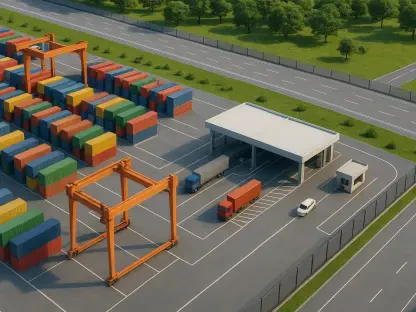
Modern maritime terminals and logistics hubs have evolved into what experts describe as open-air operating systems. From automated gantry cranes to the power grids that support thousands of refrigerated containers, every aspect of port operations is now governed by digital interfaces. While these advancements have significantly increased throughput and reduced human error, they have also introduced numerous points of entry for adversaries looking to exert geopolitical pressure. A targeted disruption at a major port, such as a localized shutdown of temperature monitoring systems for sensitive cargo, can cause billions in damage without a single kinetic weapon being fired. Historical events, such as the malware incidents that paralyzed major shipping lines, serve as stark reminders of how vulnerable the maritime sector remains. In the current landscape, these hubs are no longer just physical locations but critical digital nodes in a wider hybrid battlefield where trade is the weapon.
Regional Vulnerabilities and the Italian Case Study
Italy presents a unique case study regarding these emerging threats due to its heavy reliance on an intricate network of small and medium-sized enterprises. According to recent data from the Clusit Report, the nation continues to face a disproportionate volume of serious cyber incidents, particularly within the manufacturing and logistics sectors. These smaller entities are vital components of the broader European supply chain, yet they often lack the sophisticated cybersecurity budgets of their multinational counterparts. This disparity makes them the weakest links in an otherwise robust economic system. Hostile actors target these firms not for their individual wealth, but for their role as conduits into larger networks. The high level of interconnectedness in the Italian economy means that a single breach in a regional logistics provider can have cascading effects that reach far beyond national borders, demonstrating how localized vulnerabilities can lead to broader regional instability.
The strategic use of digital sabotage in the cold chain is a hallmark of hybrid warfare, which avoids open declarations of war in favor of ambiguity and deniability. By launching unclaimed, low-cost attacks that disrupt the daily lives of civilians, hostile actors can erode a population’s confidence in its government and institutions. The goal of such an adversary is rarely the total destruction of an industry; rather, it is a demonstration of capability designed to force political concessions or sow social discord. When citizens can no longer trust that the food on their grocery shelves is safe or that medicine has been stored at the correct temperature, the social contract begins to fray. This type of conflict targets the psychological resilience of a nation, turning every consumer into a potential victim of an invisible struggle. Consequently, the defense of the cold chain has become a matter of national security that transcends traditional border protection.
Governance Frameworks and the Path Toward Resilience
A significant barrier to securing these networks remains the ambiguity surrounding liability and the responsibility vacuum created by complex contracts. When a hardware breach occurs in unpatched legacy equipment managed by a third-party vendor, determining who is at fault becomes a legal quagmire. This “unowned risk” often leads to a situation where security updates are neglected because neither the hardware owner nor the maintenance provider feels fully responsible for the digital integrity of the device. This lack of accountability eventually impacts national economic stability, as insurance premiums rise and investor confidence in supply chain reliability wavers. Current governance models frequently prioritize bureaucratic compliance over active operational resilience. For the cold chain to be truly secured, the responsibility for digital defense must move from the IT department to the executive suite, ensuring that cybersecurity is integrated into the core of the business strategy.
Moving forward, the strategic focus shifted toward a model of active resilience where technological security was woven into the fabric of logistics management. Organizations began implementing comprehensive asset inventories to account for every connected sensor and controller, ensuring that legacy systems were either isolated or upgraded. Binding security clauses were introduced into maintenance contracts, legally mandating that third-party vendors maintain strict update schedules and vulnerability monitoring. Furthermore, logistics providers developed manual contingency plans that allowed for the continuation of essential services even in the event of a total digital blackout. These actions reflected a broader realization that the strength of the national economic chain depended on its most overlooked links. By prioritizing transparency and accountability, the industry moved to close the gaps that had previously allowed hybrid warfare to flourish within the aisles of the world’s grocery stores.