
The traditional view of automotive packaging as a secondary logistical cost has been completely dismantled by the urgent necessity for circularity and the intricate demands of electric vehicle architectures. This shift marks a turning point where material management is no longer a peripheral task handled after vehicle design, but a primary driver of operational success. As original equipment manufacturers navigate a landscape defined by 2026 production targets, packaging has emerged as a high-stakes arena for both cost containment and environmental stewardship.
The current industry environment demands a sophisticated balance between protecting sensitive high-tech components and adhering to increasingly strict sustainability mandates. Global supply chains have become more fragile, making the durability and tracking of containers a vital component of risk mitigation. Consequently, the evolution of packaging is directly mirroring the broader transformation of the automotive sector, focusing on efficiency, data transparency, and material innovation to sustain long-term growth.
The Strategic Shift in Automotive Logistics and Material Management
The automotive industry has witnessed a profound transition where packaging has moved from a low-level logistical concern to a central pillar of strategic operations. Major manufacturers now recognize that packaging efficiency influences everything from shipping densities to assembly line speed. By prioritizing packaging early in the development cycle, companies are finding that they can significantly reduce the volume of waste and the physical footprint of their logistics network. This strategic pivot is largely driven by the sheer scale of the industry, which acts as a massive consumer of plastics, corrugated materials, and specialized metals.
Original equipment manufacturers are currently leading the charge in packaging innovation, utilizing their market influence to set new standards for the entire supply chain. Technological advancements in logistics, such as real-time tracking and automated warehouse management, have necessitated a redesign of traditional containers to ensure they are compatible with modern sensors. As a result, packaging is no longer just a protective shell; it is an integrated part of a digital ecosystem that tracks a component from the tier-one supplier directly to the point of installation on the vehicle frame.
Escalating cost pressures and the need for environmental compliance have also fundamentally altered the financial weight of packaging expenditures. In the current vehicle development landscape, packaging often represents one of the largest single costs outside of direct manufacturing equipment. This reality has forced a re-evaluation of how budgets are allocated, moving away from the mindset of packaging as a disposable expense and toward a model where it is viewed as a reusable, long-term asset. Compliance with global carbon reduction targets has further accelerated this trend, pushing the industry toward a circular economy model.
Modern Trends and Market Dynamics in Container Engineering
Integrating Packaging into Early-Stage Vehicle Design
One of the most significant changes in modern automotive logistics is the “early involvement” strategy, which places packaging engineers at the table during the very first stages of vehicle program inception. In the past, packaging was often a reactive solution created to fit a finished part, which frequently led to wasted space and inefficient transport. By collaborating at the design stage, engineers can influence the dimensions of components to ensure they fit perfectly into standardized, high-density shipping containers.
This proactive approach has replaced the traditional siloed procurement process with a holistic integration strategy. When the supply chain team and the product design team work together from day one, they can identify potential logistical bottlenecks before they become costly problems. This front-end planning not only reduces the long-term costs of shipping but also minimizes the environmental impact by ensuring that every cubic inch of a shipping container is utilized effectively, thereby reducing the number of total shipments required.
Growth Projections and the Impact of Electric Vehicle Expansion
The rapid expansion of the electric vehicle market has introduced specialized packaging requirements that differ significantly from those of internal combustion engines. High-tech components, such as power electronics and lithium-ion batteries, require packaging that offers both electrostatic protection and rigorous safety features for “dangerous goods” transport. The complexity of moving these materials has created a new niche in the market, where specialized containers must meet fire-retardant and shock-absorption standards that were previously unnecessary for most automotive parts.
Looking ahead from 2026 to 2030, growth projections indicate a substantial increase in the demand for smart, automated logistics solutions. As the number of unique components for electric vehicles rises, the number of packaging stock-keeping units (SKUs) is also climbing, making it harder to manage inventory manually. Performance indicators suggest that the successful companies will be those that can harmonize their packaging designs to work across different vehicle platforms, reducing the total variety of containers needed while still accommodating the specialized needs of sensitive electronic systems.
Overcoming Structural and Operational Complexities
Maintaining material durability while increasing the percentage of recycled content remains one of the most difficult technical hurdles for packaging engineers. Many recycled plastics exhibit different structural properties than virgin materials, often being more brittle or less resistant to extreme temperature fluctuations. This requires a rethink of container geometry and manufacturing processes to ensure that a sustainable box provides the same level of protection as its traditional counterpart.
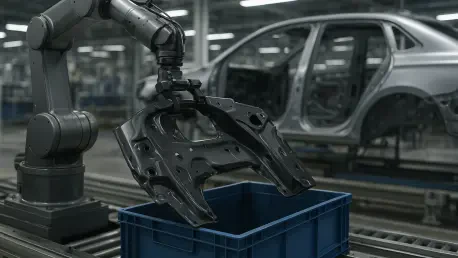
The rise of automated factory floors has also introduced tighter dimensional tolerances for packaging interfaces. Robotic arms and automated guided vehicles require containers to be perfectly uniform; even a slight warp in a plastic crate can cause a machine to jam, halting the entire production line. This necessity for precision means that packaging must be engineered with the same level of detail as the automotive parts themselves, ensuring a seamless handover between the logistics provider and the automated assembly system.
Managing the total landed cost is another significant challenge, as the financial burden of waste management infrastructure continues to grow. Companies must account for the entire lifecycle of a container, including the costs associated with cleaning, repairing, and eventually recycling the material. Harmonizing these designs across diverse global production lines is essential to prevent a fragmented system where different regions use incompatible packaging, which only adds to the operational complexity and financial overhead of the global supply chain.
Navigating the Global Regulatory and Compliance Landscape
The European Union’s Packaging and Packaging Waste Regulation has set a new global benchmark that affects how manufacturers operate far beyond Europe. These regulations mandate specific targets for material reduction and recyclability, forcing companies to prove that their packaging is truly sustainable. This regulatory pressure is not just about avoiding fines; it is about maintaining a license to operate in a global market where environmental transparency is becoming a non-negotiable requirement for doing business.
Extended Producer Responsibility schemes are also reshaping material selection by making manufacturers financially responsible for the end-of-life treatment of their packaging. This economic incentive encourages the use of materials that are easier and cheaper to recycle, as the cost of disposal is now factored into the initial procurement decision. Consequently, the choice of whether to use a specific grade of plastic or a specific coating on cardboard is now a strategic financial decision rather than just a functional one.
Accurate data has become the primary defense against non-compliance penalties in this new regulatory environment. Manufacturers must be able to identify the exact material sub-types used in their packaging to report their environmental impact accurately. The evolving safety standards for transporting electric vehicle components also necessitate a high degree of transparency; without precise documentation regarding the chemical composition and safety ratings of containers, companies risk legal delays and significant disruption to their component supply lines.
Innovation and the Future of Data-Driven Packaging
The industry is currently transitioning from managing physical containers to managing granular material data. By treating every box and crate as a data point, companies can gain visibility into their supply chain that was previously impossible. This digital approach allows for the optimization of return loops, ensuring that empty containers are not shipped back across oceans but are instead redirected to the nearest supplier who needs them, significantly reducing the carbon footprint of the entire operation.
Smart packaging and IoT-enabled tracking are the latest market disruptors, providing real-time insights into the location and condition of sensitive parts. These sensors can monitor temperature, humidity, and impact levels during transit, alerting logistics managers to potential damage before a part even reaches the assembly plant. This level of oversight is particularly valuable for high-value electric vehicle components, where a single damaged battery cell can lead to costly delays or safety risks during vehicle testing.
Future growth areas are increasingly focused on bio-based materials and advanced recycling technologies that align with consumer environmental preferences. These innovations in material science are expected to drive the next generation of resilient and sustainable logistics, moving away from fossil-fuel-based plastics toward polymers derived from renewable sources. By investing in these technologies now, automotive companies are positioning themselves to thrive in a global system that increasingly values resource efficiency and technological agility.
Transforming Packaging from an Expense into a Competitive Advantage
The shift toward a unified understanding of material choices across the entire vehicle lifecycle redefined how automotive leaders approached their supply chains. The evaluation confirmed that when packaging was treated as a strategic asset, rather than a mere expense, it provided a significant competitive advantage by reducing operational friction and ensuring regulatory compliance. The findings demonstrated that the integration of packaging data into the broader digital thread of manufacturing allowed for unprecedented levels of efficiency and cost control.
The analysis identified that the most successful original equipment manufacturers adopted a cross-functional model where data, engineering, and procurement worked in tandem. This collaboration ensured that every material choice reflected a balance between durability, cost, and end-of-life processing. The investigation also revealed that the companies that invested in reusable, high-precision containers were better prepared for the demands of automated factory environments, which in turn protected their margins during periods of high market volatility.
The path forward for the industry relied on the continued pursuit of material science innovations and the expansion of circular logistics networks. By treating the container with the same level of engineering rigor as the component it held, the automotive sector achieved a more resilient and sustainable global system. This transition solidified the role of packaging as a key driver of long-term profitability, proving that the smartest way to manage a complex supply chain was to master the materials that moved it.