
Rohit Laila has spent decades navigating the complexities of global supply chains, from the gritty reality of delivery hubs to the cutting edge of logistics automation. His perspective isn’t just about moving boxes; it’s about the intersection of human effort and digital precision. In this conversation, we explore the critical hardware choices facing modern warehouses—whether to lean into rugged industrial terminals or leverage the versatility of smartphones—while examining how native software solutions are redefining efficiency for over 5,000 workers worldwide. We delve into the nuances of hardware durability, the strategic advantages of rapid smartphone deployment for seasonal shifts, and why the real bottleneck in a warehouse is rarely the device itself, but rather the software architecture running on it.
High-volume operations often face extreme conditions like sub-zero temperatures and heavy drops onto concrete. How do you determine when a warehouse has outgrown consumer tech and needs something as rugged as a Zebra terminal?
The transition to rugged hardware usually happens when the physical environment starts winning the battle against your equipment. In high-volume settings where pickers are scanning hundreds or thousands of times a shift, a standard phone simply isn’t built for that mechanical repetitive stress. When you are operating in cold storage, you’re dealing with sub-zero environments where standard screens fog up instantly and batteries drain into nothingness before the first pallet is even moved. Dedicated terminals like the Zebra MC9300 or TC21 are designed specifically so that a worker wearing thick gloves can still feel the tactile response of a button and the screen won’t crack after the third time it’s knocked against a steel pallet rack. It’s about ensuring the shift doesn’t end early just because a device couldn’t survive a four-foot drop onto a concrete floor.
On the flip side, many smaller businesses feel pressured to invest in expensive hardware immediately. In what scenarios is a standard smartphone not just a budget-friendly choice, but actually the smarter strategic move?
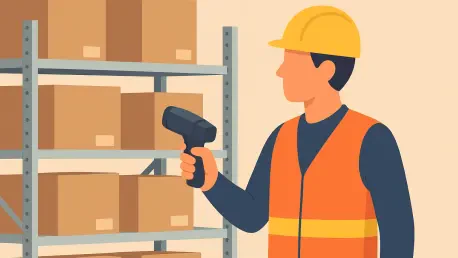
For many smaller operations or those dealing with sudden seasonal spikes, the speed of deployment is far more valuable than the ruggedness of the shell. You can hand a new starter a basic Android phone with at least 2GB of RAM and a 5-inch screen, and they can be scanning barcodes with the rear camera in minutes. This avoids the long lead times often associated with procurement and provisioning of high-end industrial batches. It’s an ideal way to scale without a massive upfront capital investment, especially if you aren’t running 24/7 high-intensity cycles. As long as the device is comfortable for all-day use and has a reliable camera, it serves as a perfectly capable gateway into a digitized inventory system.
You’ve often said that the shell of the device matters less than the intelligence running inside it. Why is native software integration, specifically for Odoo users, more impactful than the physical specs of a scanner?
A rugged terminal running a slow, browser-based application is still going to be a bottleneck for your most talented pickers. When we use a native Android application like Ventor PRO, the device communicates directly with Odoo Inventory, which eliminates the lag and clunkiness of a web interface. This ensures that whether you are on a high-end Honeywell or a budget smartphone, the interface remains identical and lightning-fast, which means you don’t have to retrain your staff when you finally upgrade your hardware. The software handles the heavy lifting, such as route optimization and batch picking, which are the real drivers of warehouse speed. Ultimately, the hardware is replaceable, but the workflow established by the software is what actually protects your margins.
Efficiency is often measured in seconds per pick, but large-scale inventory management is where the real stress tests happen. Can you share an example of how the right technological pairing handles a massive stocktake or complex batch picking?
The real-world impact is best seen when you look at a massive undertaking like a full warehouse stocktake, which usually fills managers with dread. Take a client like Solter in Spain; they utilized our native Odoo integration to count over 4,000 products across more than 1,600 different locations in just a single day. Without the right software-hardware synergy, a task of that magnitude would typically swallow an entire week of labor and a mountain of paperwork. By grouping more than 450 orders into a single picking run, the software reduces the physical mileage a worker has to walk. It turns a chaotic, manual process into a streamlined, digital flow that works in real-time.
When companies are planning for growth, they often worry about the cost of scaling their workforce. How does a per-device licensing model change the financial math for a 3PL or manufacturer compared to traditional per-user fees?
The per-device licensing model is a total game-changer for businesses running multiple shifts because it prioritizes the tool rather than the person holding it. If you have three different people using the same scanner across morning, afternoon, and night shifts, you only pay for one license instead of three. This significantly lowers the barrier to entry for 3PLs who might have high staff turnover or a large roster of part-time employees. It allows the management to focus on how many “active stations” they need on the floor at any given time. This transparency in pricing helps a warehouse scale its operations to over 1,000 sites worldwide without the software costs spiraling out of control as the headcount grows.
What is your forecast for the future of warehouse hardware and software integration?
I see a future where the distinction between the “office” and the “warehouse floor” disappears entirely through seamless, hardware-agnostic ecosystems. We will see even more heavy reliance on RFID and automated labeling, with software like Direct Print PRO becoming the standard for instantaneous task execution. The 5,000+ workers currently using these systems are just the beginning; as native applications become more intuitive, the training time for a warehouse associate will drop toward zero. We are moving toward an era where the software will predict the most efficient path before the picker even picks up their device, regardless of whether that device cost fifty dollars or fifteen hundred. Efficiency will no longer be a hardware luxury, but a baseline software requirement for any business that wants to survive.