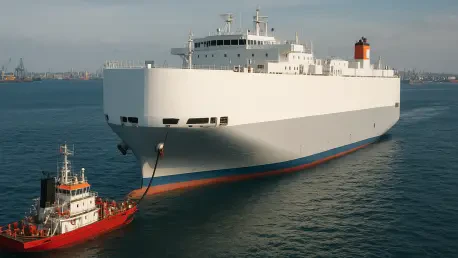

The AICC Fenghuang’s massive windage area presented unique stability control hurdles that were overcome through precise vessel positioning and rigorous weather assessments. As the first vessel of its kind to receive ship-to-ship liquefied natural gas bunkering in Hong Kong, this Pure Car and Truck Carrier signaled a transformative shift in the region’s operational capabilities. The collaboration between CLPe and CNOOC International Marine Clean Energy has proven that high-complexity maritime refueling is not only possible but highly efficient when executed within the framework of modern safety protocols. By successfully managing the six-hour fuel transfer at Western Anchorage No. 3, authorities demonstrated that Hong Kong can accommodate the specialized needs of dual-fuel ocean-going vessels. This milestone reflects a concerted effort to align local infrastructure with the global decarbonization movement. This technical success reinforced the port’s reputation.
Precision in Energy Transfer
Role of Specialized Vessels: The Bunkering Process
The refueling process was facilitated by the Haiyang Shiyou 301, recognized as the world’s largest vessel specifically designed for the transport and bunkering of liquefied natural gas. This specialized ship provided approximately 2,600 cubic meters of fuel to the AICC Fenghuang, maintaining a steady flow rate that adhered to the strict safety parameters required for cryogenic liquids. Because the car carrier features a distinctive high-sided structure, the bunkering vessel had to maintain a constant berthing proximity while accounting for tidal shifts and local current fluctuations. The integration of advanced dynamic positioning systems ensured that both ships remained perfectly aligned throughout the multi-hour procedure. This level of technical synchronization is essential for preventing structural stress on the transfer hoses and maintaining the integrity of the fuel connection. Such precision underscores the technical evolution occurring within the local maritime sector.
Managing Structural Stability: Navigational Excellence
Handling a Pure Car and Truck Carrier involves addressing unique aerodynamic properties that differ significantly from standard container ships or bulkers. The AICC Fenghuang, with its expansive vertical surface area, acts essentially as a giant sail, making it highly sensitive to wind gusts that could disrupt a ship-to-ship transfer. To mitigate these risks, the operation required a comprehensive weather assessment and the utilization of high-performance tugs to stabilize the vessel’s orientation at the anchorage. Rigorous safety management protocols were implemented to monitor the tension on mooring lines and the pressure within the gas transfer systems. By overcoming these physical constraints, the technical teams proved that even the most wind-sensitive vessels can be serviced safely in open-water anchorages. This achievement provided a blueprint for future operations involving large-scale specialized carriers that require specialized fuel handling at the port.
Growth of the Green Hub
Synergy Through Alliances: Strategic Regional Partnerships
The strategic alliance between CLPe and CNOOC has been a catalyst for rapid infrastructure development, moving from initial agreements to full-scale operational status in the current cycle. This partnership previously achieved success with large container vessels, but the expansion to car carriers and Very Large Crude Carriers demonstrates a broadening of the service scope. By diversifying the types of ships that can receive liquefied natural gas, the joint venture is effectively capturing a larger share of the sustainable shipping market. This strategy is critical for maintaining Hong Kong’s status as a premier international maritime center in a competitive regional landscape. The ability to offer a variety of green fuels, including bio-LNG and methanol, will be the cornerstone of the port’s long-term viability. Furthermore, these collaborative efforts facilitate a more resilient supply chain by providing predictable refueling windows for major shipping lines globally.
Future Logistic Standards: Strengthening Economic Integration
The departure of the AICC Fenghuang for the Mediterranean with 7,000 vehicles on board illustrated the direct link between green infrastructure and the vitality of international trade. To sustain this momentum, stakeholders focused on standardizing safety codes and investing in permanent bunkering facilities that could further reduce turnaround times. Future considerations included the development of digital scheduling platforms and the training of specialized personnel to handle increasingly complex alternative fuel systems. It was clear that the successful integration of sustainable bunkering capabilities provided a necessary competitive edge for supporting the environmental transformation of maritime logistics. Regional authorities recognized that the transition required consistent policy support and technological innovation to remain effective. Ultimately, the completion of this landmark operation proved that the harbor was ready to lead the next generation of eco-friendly shipping.