


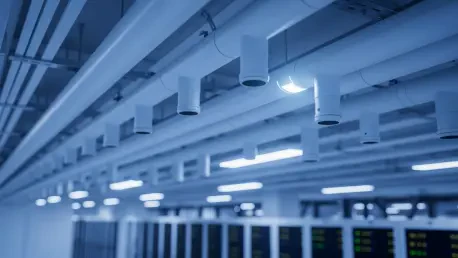

Aspirating smoke detection (ASD) facilitates this shift by moving beyond passive sensors to an active air-sampling model. By pulling air through a network of pipes into a central chamber, these systems overcome the limitations of high ceilings and rapid airflow that often defeat traditional detectors.
Evolution and Fundamental Principles of Aspirating Smoke Detection
The transition from simple vacuum units to digitally integrated platforms allowed for the detection of particles long before smoke became visible. This proactive approach addressed the needs of sectors where business continuity is non-negotiable.
Unlike standard detectors, modern systems act as high-performance aspirators. They monitor air quality with extreme precision, ensuring that environments with high ventilation remain protected against the threat of diluted smoke.
Critical Technological Components and Performance Enhancements
Advanced Sensing Chambers and Signal Processing
At the core of the TITANUS REX® is W1 technology, which fuses optical sensors with intelligent signal processing. This combination uses light-scattering to detect smoke at concentrations far below the threshold of human sight.
This sensitivity proved crucial for protecting high-value assets where even minor smoke damage results in financial loss. The ability to distinguish fine particles from background noise marked a major leap in sensor reliability.
Intelligent Fire Pattern Recognition and Nuisance Alarm Immunity
False alarms are mitigated through LOGIC·SENS® PLUS, which compares data against known fire profiles. This pattern recognition filters out noise like dust while maintaining sensitivity to real threats.
Such intelligence ensures industrial operations remain uninterrupted. By providing immunity to nuisance alarms, the technology allowed safety professionals to trust automated responses in complex logistical environments.
The Shift Toward Digitalization and Sustainability
Digital transformation introduced modular architectures that integrate with building management systems via IoT protocols. This allows for easier hardware updates and real-time monitoring of system health across large facilities.
Furthermore, specialized sensors now reduce power consumption significantly. These energy-efficient designs align fire safety with corporate environmental goals, reducing the hardware footprint while maintaining peak performance.
Practical Applications in Industrial and Commercial Sectors
ASD technology is effective in logistics hubs and data centers where high ceilings disrupt smoke patterns. In these settings, pulling air samples directly from the source provides a critical response window.
It also solved issues in cold storage and historical buildings. Traditional detectors often malfunctioned in extreme cold or disrupted aesthetic preservation, whereas ASD piping remained discreet and functional under diverse conditions.
Overcoming Technical and Regulatory Challenges
Maintaining pipe networks in dusty environments remained a technical challenge that required automated cleaning solutions. Manufacturers also navigated a complex landscape of certifications, including VdS, UL, and AFNOR.
Ongoing developments focused on self-monitoring diagnostics to reduce maintenance burdens. Ensuring compliance with international standards remained a priority for manufacturers seeking to provide globally unified safety solutions.
Future Outlook for Fire Detection Technology
The trajectory involves deeper AI integration and predictive analytics to anticipate risks before they manifest. By analyzing environmental trends, future systems will provide warnings based on anomalies rather than just detection.
Breakthroughs in sensor miniaturization and multi-criteria detection will likely incorporate gas sensing. This will lead to more resilient urban fire protection infrastructures that are both proactive and seamless.
Summary of Technological Impact and Assessment
Aspirating smoke detection proved its worth as a cornerstone of modern safety by prioritizing early intervention. Future implementation strategies successfully utilized these high-precision data streams to optimize broader building maintenance cycles.
This shift established a new standard where fire protection functioned as an integrated, proactive asset. Ultimately, the integration of intelligent software and sustainable hardware provided a definitive solution for safeguarding critical infrastructure.


