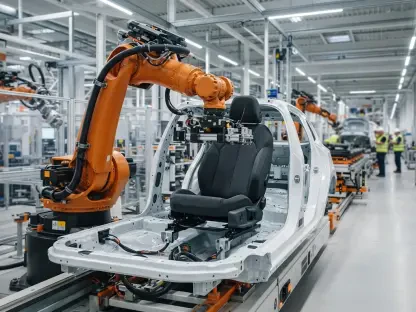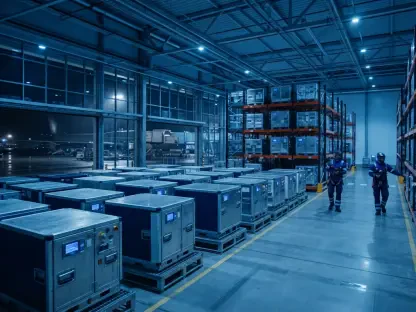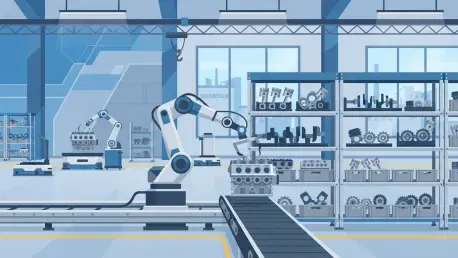

Virtual simulations allow the development team to validate cycle times and safety protocols in a digital space to avoid interrupting live production lines in Ingolstadt. This strategic pilot program at the Audi Production Lab represents a fundamental shift toward the use of mobile humanoid robots in high-stakes automotive environments. Specifically, the initiative addresses the complex challenge of parts sequencing, a logistical cornerstone where various components must be sorted and arranged with extreme precision for assembly. Historically, these tasks remained the domain of human workers because standard industrial arms lacked the necessary adaptability to handle components of diverse shapes and sizes. By collaborating with innovators such as Agile Robots and NVIDIA, the team aimed to determine if robotic platforms could master the one million daily picks required for seamless operations. This approach underscores a move away from static automation toward flexible, intelligent systems capable of managing delicate materials.
The Agile One Platform: Technical Evolution of Robotic Dexterity
The technical centerpiece of this modern initiative is the Agile One, a humanoid robot designed to mimic the reach and dual-arm dexterity of a human operator. Unlike traditional robotic arms that are bolted to the floor and restricted to a singular workspace, the Agile One is mounted on a mobile wheeled base. This design allows the machine to navigate existing factory floors without requiring manufacturers to overhaul their current infrastructure or redesign established workstations. This inherent flexibility is vital for managing the high-volume material flow of modern car production, where robots must interact with a variety of containers and racks. By utilizing a humanoid form factor, the robot can access areas and perform movements that were previously impossible for bulkier machines. The integration of high-resolution sensors ensures that the robot can move through busy logistics zones safely, avoiding obstacles while maintaining the speed necessary to keep pace with the demanding requirements.
Beyond physical mobility, the success of the program hinged on the advanced AI-powered perception systems that allow the robot to see and interpret its surroundings. Identifying unsorted parts within a cluttered container is a significant hurdle in automation, as components often overlap or arrive in unpredictable orientations. The AI models developed for this project enable the robot to determine the most effective way to grasp each item without causing damage. This is particularly important when dealing with semi-rigid or deformable materials that might shift during the picking process. By processing visual data in real time, the system can adjust its grip and approach angle dynamically, mirroring the natural adjustments a human would make. This level of coordination represents a major leap forward in robotic intelligence, moving from pre-programmed routines to reactive, decision-based actions. The ability to handle approximately one million daily picks with high reliability was a core metric of the pilot.
Virtual Validation: Strategic Integration and Future Implementation
Building on this foundation of physical agility, the project leveraged a sophisticated digital twin strategy using Dassault Systèmes’ 3DEXPERIENCE platform and NVIDIA Omniverse. These tools allowed engineers to create a high-fidelity replica of the Ingolstadt facility, where every robotic movement could be tested against the constraints of the real world. Virtual simulations provided a risk-free environment to optimize the coordination between the AI’s decision-making and the physical constraints of the hardware. By running thousands of iterations in a digital space, the team identified potential bottlenecks and ergonomic challenges long before the physical robots were even powered on. This methodology ensured that the integration of humanoid systems would not lead to costly downtime or safety hazards during the pilot phase. The use of Omniverse libraries specifically enhanced the realism of the simulation, accounting for the physics of the parts and the lighting conditions of the factory floor for maximum accuracy.
The pilot program at the Production Lab ultimately demonstrated that humanoid robots could serve as a viable solution for the most nuanced logistics tasks in automotive manufacturing. While specific error rates remained proprietary, the project confirmed that mobile, AI-driven platforms could operate alongside human workers without necessitating significant structural changes to the facility. Manufacturers looking to replicate this success were encouraged to prioritize the development of robust digital twins as a foundational step before investing in physical hardware. The focus shifted toward refining the reliability of AI coordination and ensuring that robotic perception could handle an even wider variety of components from 2026 to 2028. Decision-makers concluded that the transition to humanoid automation required a phased approach, starting with non-critical logistics before moving toward the primary assembly line. These efforts provided a clear blueprint for future scalability and robotic efficiency.