
The traditional automotive assembly line, once characterized by rigid monuments to industrial repetition, has finally evolved into a hyper-responsive digital nervous system capable of recalibrating itself in real-time to meet the erratic demands of the global market. At the heart of this transformation lies the BMW Group’s digitalization strategy, most notably evidenced in its San Luis Potosí operations. This facility is no longer just a site of physical assembly but a sophisticated testing ground for software-defined manufacturing. By integrating cloud computing, artificial intelligence, and high-speed data analytics, the company has effectively bridged the gap between the unpredictability of human preference and the cold precision of industrial robotics. This review examines how this digital ecosystem functions as a competitive moat in an industry increasingly dominated by speed and software.
The Foundation of BMW’s Digital Transformation
The shift toward a fully digitalized production environment was born out of a necessity to manage extreme manufacturing complexity. BMW’s “build-to-order” model allows customers to modify vehicle specifications up to six days before assembly begins, a policy that would be logistically impossible under traditional management systems. In San Luis Potosí, this means coordinating the arrival of thousands of components, some of which require a 28-day transit from overseas, with a volatile production schedule that changes almost daily. The core principle of this transformation is the “Digital Twin” concept, which creates a virtual mirror of every physical process on the shop floor, allowing for simulation and optimization before a single bolt is tightened.
This digital foundation is underpinned by a massive expansion of the regional supplier network, which has grown to over 850 locations across North America. The technology acts as a unifying thread between these disparate suppliers, ensuring that high-variability components, such as seats with over one billion possible configurations, are produced in the exact sequence required by the assembly line. By moving away from local, isolated data storage toward a global architecture, the facility has achieved a level of transparency that allows for the synchronization of the entire value chain. This context is critical because it highlights that digitalization is not merely an IT project but a fundamental reorganization of how an automotive company interacts with its physical assets and partners.
Core Pillars of the Digital Manufacturing Ecosystem
Cloud-Based Data Integration and Global Connectivity
Central to the technological architecture is the BMW Data Lake, a centralized repository that connects the San Luis Potosí plant to the broader global manufacturing network. This cloud-based integration ensures that insights generated in Munich or Shenyang are instantly accessible in Mexico, facilitating a global exchange of best practices. Instead of relying on manual reports and delayed feedback loops, production managers utilize real-time dashboards to monitor every aspect of the plant’s health. This connectivity is what enables the facility to maintain rigorous German manufacturing standards while operating thousands of miles away from headquarters.
The performance of this cloud integration is measured by its ability to eliminate information silos. When data flows freely between the logistics department and the assembly line, the system can automatically adjust for delays in sea freight or customs bottlenecks. This global connectivity also supports the “just-in-sequence” model by providing suppliers with real-time visibility into the production queue. By ensuring that everyone in the ecosystem is working from a single version of the truth, BMW has reduced the need for expensive inventory buffers, effectively turning data into a substitute for physical storage space.
Artificial Intelligence in Logistics and Production
Artificial intelligence serves as the operational intelligence that makes sense of the vast amounts of data within the cloud. In the logistics sector, AI-driven predictive analytics provide a 20-day advance warning of potential supply chain disruptions. This allows the plant to pivot from sea to air freight before a shortage occurs, preventing the costly idling of assembly lines. Furthermore, the implementation of AI in outbound logistics has optimized the transport of finished vehicles to ports, recommending the most cost-effective routes based on rail and truck availability. This specific application saved the company over one million euros in its first year, demonstrating that AI’s value is found in granular operational efficiency.
Beyond logistics, AI is being integrated directly into the production process through computer vision and automated goods reception. At the San Luis Potosí site, truck drivers now use automated kiosks that scan paperwork and verify shipments in minutes, a task that previously took hours. This reduction in “dwell time” increases the throughput of the loading docks and ensures that the assembly line is never starved of parts. The significance of this technology lies in its ability to handle repetitive, high-volume data processing tasks, freeing human workers to focus on complex problem-solving and quality control.
Current Trends and Strategic Innovations
The most significant shift currently influencing the technology landscape is the move toward “Physical AI,” where machine learning is applied to the physical movements of robots. This trend is moving beyond simple pre-programmed tasks to a model where robots can learn to interact with their environment in more fluid, human-like ways. In the manufacturing sector, this manifests as smart transportation robots that navigate the factory floor autonomously, avoiding obstacles and optimizing their own paths. This innovation is critical as the industry transitions toward more flexible, modular production layouts that can easily be reconfigured for different vehicle models.
Moreover, there is an emerging trend toward the democratization of data within the workforce. BMW has prioritized training over 1,000 employees as digital experts, ensuring that the people on the factory floor are capable of utilizing and even refining the digital tools at their disposal. This human-centric approach to innovation recognizes that the most effective digital systems are those that empower, rather than replace, human labor. By automating over 2,000 hours of manual tasks daily, the company is shifting the focus of its workforce toward high-value activities that will be essential as vehicle architectures become more complex and software-heavy.
Real-World Implementations in High-Flexibility Production
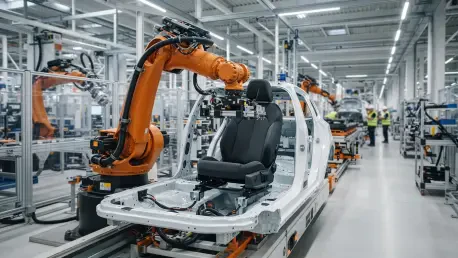
The practical application of these digital tools is most evident in the production of the 2 Series Coupe, a vehicle manufactured exclusively in San Luis Potosí for the global market. The high level of customization offered for this model requires a manufacturing process that is both incredibly precise and remarkably flexible. The digitalization of the assembly line allows for the seamless integration of high-performance M2 models and standard 3 Series sedans on the same production line. This level of flexibility is a significant competitive advantage, as it allows the plant to respond quickly to shifts in consumer demand without requiring extensive retooling.
Another notable use case is the management of the seat assembly process. Given the near-infinite combinations of colors, materials, and features, the seats must be delivered to the line in a specific sequence that matches the incoming vehicle frames. The digital system tracks the progress of each chassis and communicates directly with the Tier 1 supplier located adjacent to the plant. This real-time coordination ensures that the correct seat arrives at the assembly station with a precision window of just a few hours. Such implementations prove that digitalization is the only way to maintain a high-flexibility, build-to-order model at a scale of 460 cars per day.
Navigating Technical and Regional Challenges
Despite the successes, the path to digitalization is fraught with hurdles, particularly when operating in complex regional environments. The automotive sector currently faces a global competition for semiconductors, which are being increasingly diverted to the burgeoning AI infrastructure market. This shortage forces manufacturers to be even more precise with their component allocations. In Mexico specifically, the plant must contend with external factors such as cargo theft, security risks, and occasional labor strikes that can block major transportation arteries. These challenges make the predictive capabilities of AI not just a luxury, but a vital necessity for maintaining operational continuity.
Technical limitations also persist in the realm of full automation. While smart robotics have become more cost-effective, the business case for replacing human labor is still difficult in regions with lower labor costs. However, the increasing complexity of electric vehicle components, which require higher levels of precision than human hands can often provide, is slowly tilting the scales toward more advanced robotics. The ongoing development effort is focused on “human-robot collaboration,” where machines handle the heavy lifting and precise positioning while humans provide the final assembly and sensory verification. This hybrid approach seeks to mitigate the limitations of both parties.
The Future Roadmap: Electrification and Autonomous Systems
Looking ahead from the current landscape of 2026, the trajectory for the San Luis Potosí facility is centered on the total integration of electric vehicle production. The near completion of the on-site battery assembly plant marks a pivotal shift toward a more localized and vertically integrated supply chain. From 2026 to 2030, the facility will focus on launching the next generation of electric vehicle architecture, which relies even more heavily on digital integration than current internal combustion models. This transition will require a new level of precision in battery management and electric motor assembly, further driving the need for advanced AI monitoring.
The roadmap also includes the expansion of autonomous yard movements, where finished vehicles will drive themselves from the end of the assembly line to the shipping docks. This technology will eliminate one of the final manual steps in the production chain and reduce the risk of minor damage during transport. As the plant moves toward a more autonomous future, the digital thread will extend beyond the factory walls, connecting the vehicle’s onboard software with the manufacturing data to create a permanent record of its creation. This long-term impact will redefine the relationship between the manufacturer and the vehicle throughout its entire lifecycle.
Conclusion and Strategic Assessment
The review of BMW’s digital transformation in San Luis Potosí established that the company successfully navigated the transition from traditional manufacturing to a data-driven ecosystem. The integration of cloud-based connectivity and artificial intelligence showed that high-flexibility production is achievable even in the face of significant logistical and regional challenges. It was observed that by empowering the workforce and automating thousands of hours of manual labor, the plant improved both its operational efficiency and its ability to respond to market fluctuations. The strategy proved that digitalization functioned as a vital catalyst for the upcoming shift toward full electrification.
Moving forward, the industry must recognize that digital infrastructure is as essential as the physical machinery on the shop floor. Future considerations should focus on further refining “Physical AI” and expanding autonomous systems to minimize human error in high-stakes environments. The decisive verdict of this review is that BMW’s investment in digitalization created a resilient, scalable, and highly adaptable production hub that is well-positioned for the next decade of automotive evolution. The actionable next step for the sector involves standardizing these digital protocols across the entire global supply chain to ensure that the speed of software matches the reality of hardware production.