
The movement of hazardous radiological isotopes across a sprawling network of highways and industrial corridors represents one of the most complex logistical challenges currently facing the Mexican government and its energy sector. To address these evolving threats, the Ministry of Energy, commonly known as SENER, recently unveiled a comprehensive regulatory framework designed to overhaul the safety and security protocols governing the transport of nuclear and radioactive materials. This mandatory standard, designated as NOM-042-NUCL-2026, was meticulously crafted by the National Commission for Nuclear Safety and Safeguards to close existing vulnerabilities within the national supply chain. By prioritizing rigorous surveillance and precise tracking, the government intends to protect the public from accidental exposure while simultaneously deterring acts of theft or sabotage. This shift marks a pivotal moment in the country’s modernization of its nuclear infrastructure, ensuring that high-risk substances are handled with the scrutiny required by international safety benchmarks.
A Specialized Framework: Risk Management Protocols
Security Categorization: Implementing a Graded Approach
At the heart of the new security architecture lies a “graded approach” that fundamentally shifts how materials are categorized and protected based on their inherent risk profile. Rather than applying a uniform set of rules to every shipment, the regulation distinguishes between substances like high-grade enriched uranium and lower-activity industrial isotopes. This categorization considers the quantity, physical form, and the potential for certain materials to be diverted for non-peaceful purposes. For example, a shipment containing significant quantities of fissile material will now trigger the highest level of mandatory security protocols, including armed escorts and dedicated clearance windows. Conversely, smaller amounts of medical isotopes used in hospitals will be managed under a simplified yet robust set of guidelines that prioritize rapid transit without compromising safety. Every carrier must now submit a comprehensive security plan that justifies these classifications, providing a transparent audit trail for the National Commission to review and approve before any journey begins on public roads.
Technical Standards: Requirements for Transport Surveillance
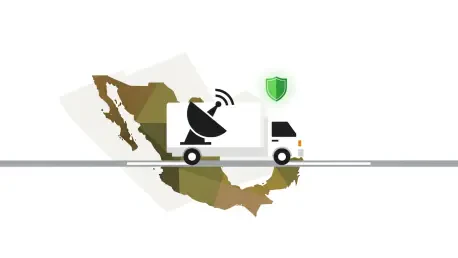
Beyond mere classification, the regulatory framework mandates a technological revolution for all authorized transport providers operating within the country. All vehicles used for the transport of category-one and category-two radioactive materials must be outfitted with continuous, real-time satellite tracking systems that integrate with government monitoring centers. These systems are programmed to trigger immediate alerts if a vehicle deviates from an approved corridor or makes an unscheduled stop. To bolster physical security, the new standard requires the installation of advanced tamper-evident devices on all shipping containers, which provide immediate visual and electronic proof if any access point has been manipulated. Trained security personnel are also required to maintain constant physical or visual contact with the cargo, creating a human layer of defense that complements the digital oversight. These measures are designed to ensure that if a security incident does occur, it is identified and countered within seconds rather than several hours later.
Operational Logistics: Incident Response and Redundancy
Route Selection: Planning for Tactical Unpredictability
Strategic logistical planning has become a mandatory component of the transport process as the government seeks to eliminate the predictability that often precedes criminal interference. Under the current mandates, transport operators are no longer allowed to rely on a single, fixed path for repetitive shipments; instead, they must develop and maintain a rotation of primary and secondary routes. This requirement forces carriers to conduct thorough risk assessments of various geographic areas, avoiding regions known for civil unrest or high rates of organized crime whenever possible. By frequently altering delivery schedules and diversifying travel itineraries, the industry can prevent external actors from establishing patterns necessary to plan a successful interception. Furthermore, the selection of routes must prioritize infrastructure that minimizes mechanical stress on vehicles, reducing the likelihood of a breakdown that could leave a sensitive shipment vulnerable in a remote location. This focus on tactical unpredictability is an essential deterrent.
Reliable Connectivity: Communication and Chain of Custody
Reliability in communication serves as the backbone of the new operational standard, particularly when shipments must traverse the varied and sometimes isolated terrain of the Mexican landscape. Carriers are now required to utilize redundant communication platforms that combine traditional cellular networks with satellite-based systems to ensure connectivity is never lost, even in areas without mobile coverage. In the event of a technical failure or a security breach, the driver and escort team must have immediate access to dedicated emergency channels that connect them directly to national response forces and the Ministry of Energy. The regulation also establishes a rigid chain of custody protocol that defines clear hand-off procedures between the shipper, the carrier, and the ultimate recipient of the material. A shipment is only considered officially secure once the receiver has digitally verified the arrival and integrity of the cargo through an encrypted portal. This rigorous verification process ensures that no gaps in oversight exist during the transition points where materials are most susceptible to being misplaced.
National Accountability: Legal and Strategic Integration
Joint Responsibility: Regulatory Oversight and Compliance
A major paradigm shift in the Mexican legal landscape is the implementation of a joint responsibility model that eliminates the ability of individual entities to deflect blame during a security failure. Under NOM-042-NUCL-2026, the shipper, the transportation company, and the final recipient are all held legally accountable for ensuring that every aspect of the safety protocol is strictly followed. This means that if a third-party contractor is hired to move material, the primary owner of the substance is still responsible for verifying that the contractor’s equipment and personnel meet the national standards. Legal contracts must now explicitly detail these security duties, leaving no room for ambiguity regarding who is responsible for specific tasks like route monitoring or incident reporting. Additionally, the National Commission for Nuclear Safety and Safeguards retains the authority to override standard operational plans at any time if intelligence suggests a heightened threat level. This centralized control ensures that the federal government can react with agility to national security concerns.
Strategic Progress: Global Standards and Future Outlook
These comprehensive updates successfully aligned the domestic energy sector with the best practices established by the International Atomic Energy Agency and other global security bodies. Although the transition required significant initial investments in specialized training and high-tech tracking hardware, the long-term benefits clearly outweighed the costs by preventing catastrophic radiological emergencies. The industry responded by modernizing its fleets and adopting more sophisticated risk management software, which ultimately enhanced the efficiency of the national supply chain for both medical and industrial isotopes. As the full implementation date of January 11, 2027, approached, the government provided clear guidance that allowed companies to adapt their internal workflows without disrupting critical services. To maintain this momentum, stakeholders focused on establishing regular auditing schedules and investing in workforce development programs. Future success relied on the continuous integration of cyber-physical security measures to protect against hybrid threats.