
As an expert in environmental justice and urban transportation policy, my career has been dedicated to untangling the complex relationship between logistics infrastructure and community health. For decades, I have worked alongside coalitions to address how the “last-mile” delivery boom—while convenient for the consumer—often leaves a heavy, toxic footprint on the neighborhoods least equipped to handle it. We are currently navigating a pivotal moment in New York City’s history, where legislative tools like the Delivery Protection Act and the Warehouse Indirect Source Emissions Reduction (WISER) program are finally being utilized to hold e-commerce giants accountable. In this conversation, we explore the shift toward a more equitable logistics model, focusing on the mechanics of indirect source rules, the specific clean-air investments required from warehouse operators, and the ongoing fight to prioritize the breath of residents over the speed of a parcel.
How have you seen the rapid expansion of e-commerce distribution centers transform the daily lived experience of residents in New York’s environmental justice communities?
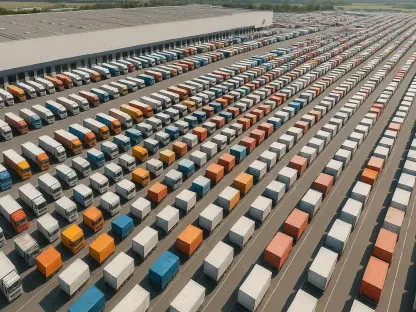
The transformation has been both sudden and staggering, often feeling like these massive facilities appeared out of thin air without any community input or environmental oversight. In neighborhoods like Red Hook, Brooklyn, and the South Bronx, residents have seen their quiet streets turned into 24-hour thoroughfares for heavy diesel trucks that rattle the windows of homes and coat windowsills in a fine, black soot. We are talking about communities of color and low-income districts that were already overburdened by industrial pollution, now facing a new wave of noise and toxic emissions that make simply walking to the store a hazardous task. For mothers in the South Bronx, this isn’t just a logistical change; it is a direct threat to their children’s health, as they watch asthma rates climb alongside the number of delivery vans. The sensory experience is overwhelming—the constant hum of idling engines, the smell of exhaust that lingers in the humid summer air, and the sheer physical danger of navigating streets that were never designed to handle such a concentrated surge of heavy vehicle traffic.
Could you explain the mechanics of the proposed Warehouse Indirect Source Emissions Reduction (WISER) program and how it shifts accountability to the facilities themselves?
The WISER program is a game-changer because it moves away from the traditional model of only regulating tailpipes and instead focuses on the “indirect source”—the warehouse that attracts the traffic in the first place. Modeled after the successful WAIRE program in Southern California, this policy assigns every facility over 50,000 square feet a specific “points obligation” based on the volume and type of vehicle trips they generate. Essentially, the more trucks a warehouse brings into a neighborhood, the more “points” they are required to earn by investing in clean-air initiatives. This shifts the burden of proof and the cost of mitigation from the public onto the private operators who are profiting from these logistics networks. By setting these thresholds, the Department of Environmental Protection can finally track the cumulative impact of these “last-mile” facilities, ensuring that companies like Amazon cannot simply hide behind third-party contractors to avoid responsibility for the pollution their business model creates.
What concrete steps can mega-warehouse operators take right now to meet their air quality obligations without sacrificing the speed of delivery that consumers expect?
Operators have a comprehensive menu of clean-air investments they can choose from to fulfill their points obligation, and many of these actions actually improve long-term operational efficiency. The most significant move is the transition to zero-emission vehicles and the installation of robust EV charging infrastructure right on-site, which eliminates the need for diesel-spewing yard trucks. We are also seeing a major push for “micro-mobility” solutions, such as replacing heavy vans with electric cargo bikes for those final delivery stretches in dense urban corridors, which reduces both congestion and emissions. Furthermore, facilities can install advanced anti-idling technology to ensure that trucks aren’t burning fuel while waiting at loading docks, and they can provide incentives for their own employees to use public transit or carpooling. These aren’t just theoretical ideas; they are practical, scalable actions that allow for next-day delivery to coexist with a commitment to breathable air, provided the will and the regulatory pressure are there.
Given the health risks like asthma and heart disease associated with heavy truck traffic, how does the Delivery Protection Act prioritize public health over corporate logistics?
The core philosophy of the Delivery Protection Act is that no New Yorker’s health should be the “cost of doing business” for a trillion-dollar corporation. By mandating an indirect source rule, the city is prioritizing the reduction of dangerous pollutants like NOx and particulate matter, which are known triggers for chronic respiratory and cardiovascular conditions. We are pushing for a framework that doesn’t just hold the line but actually reduces emissions below the levels we saw before the e-commerce boom began. This includes rigorous air quality monitoring around these facilities to ensure that the data reflects the lived reality of the neighbors, rather than just the curated reports of the companies. When we talk about prioritizing people over profit, it means that if a warehouse cannot operate without causing a spike in local ER visits for asthma, then that warehouse must change its operations or face significant penalties that fund community health initiatives.
What is your forecast for the future of urban logistics in New York City over the next several years?
I anticipate a total paradigm shift where the “unregulated surge” of the past few years is replaced by a highly monitored, zero-emissions logistics grid. By the end of this decade, the sight of a smoke-belching delivery truck in a residential neighborhood will likely be a thing of the past, replaced by quiet electric fleets and cargo bike hubs that integrate seamlessly into the urban fabric. We will see the results of the informational sessions held on September 15 and 16 manifest as stricter zoning laws that prevent mega-warehouses from being built directly adjacent to schools and parks. Ultimately, my forecast is that New York will set the national standard for how a global city can enjoy the convenience of modern commerce while aggressively protecting the environmental justice of its most vulnerable citizens. We are moving toward a city where “fast delivery” finally loses its status as a leading cause of childhood illness.