
With decades of experience navigating the intricate web of global supply chains and delivery systems, Rohit Laila has become a leading voice in the transformation of digital commerce. As a seasoned expert who has witnessed the evolution of logistics from manual tracking to AI-driven automation, he brings a unique perspective on how physical infrastructure dictates the success of virtual storefronts. In this conversation, we explore the shifting landscape for small businesses in South Africa, where the challenge is no longer about getting a business online, but about surviving the operational demands that follow the first click. Laila breaks down the critical barriers of marketplace participation, the hidden costs of digital maintenance, and the untapped potential of women entrepreneurs who are currently leading the charge in digital-first strategies.
The discussion delves into the specific pressures facing urban small and medium enterprises, highlighting the stark contrast between digital readiness and the logistical hurdles that impede true scalability. We examine why a majority of businesses remain hesitant to join major marketplaces despite their proven online sales capabilities and how the “logistics gap” has replaced connectivity as the primary threat to growth. Laila also provides deep insights into the shallow adoption of artificial intelligence, suggesting that while marketing tools are widespread, the next frontier lies in automating the complex back-end operations that currently drain small business resources.
Nearly all small businesses today are utilizing the internet, yet only about a third of them are actually participating in major marketplaces. What do you believe is the root cause of this disconnect between being “online” and being “integrated” into these larger platforms?
It is a fascinating paradox to see 99.6% of urban SMMEs fully connected to the internet while only 32% take the leap into established marketplaces. From my perspective in the logistics trenches, this disconnect stems from a deep-seated perception barrier where 21% of business owners falsely believe their operations are simply too small or insignificant to qualify for these global stages. They see a marketplace not as a ladder, but as a complex fortress with high walls, an idea reinforced by the 39% who cite daunting application requirements and fees as their primary deterrents. While 86% are successfully generating sales through their own websites or social media, they are often operating in a silo, unaware that a marketplace is less about “permission” and more about expanding their existing channel mix. The real challenge is convincing these digitally capable sellers that moving beyond their own 96% reliance on private websites is the only way to break through their current operational ceiling.
The most recent data suggests that the “hard part” of e-commerce has shifted away from building a website toward the chaos that happens after a customer hits the purchase button. How are logistics and fulfillment currently reshaping the survival of these small ventures?
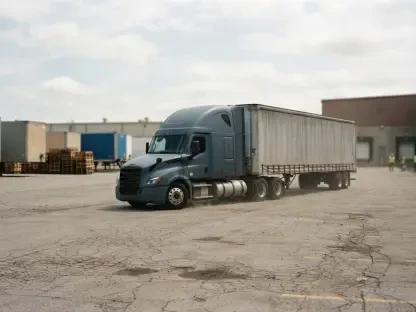
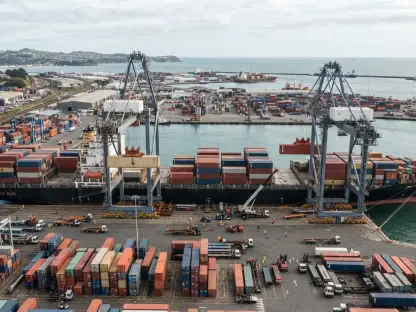
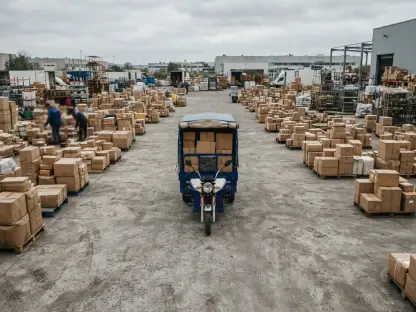
We have reached a decisive turning point where the physical movement of goods is the new battlefield for survival, with 62% of online sellers now identifying logistics and delivery as their single greatest headache. The days when connectivity or payment systems were the primary hurdles are gone, as seen by the mere 12% who struggle with payments and only 5% who still face connectivity issues in these urban hubs. Managing the “last mile” and the messy, often emotional reality of returns—which plagues 46% of businesses—creates a level of operational friction that can easily sink a small venture that lacks a dedicated fleet or warehouse. When a small business owner has to personally pack a box and worry about a courier’s reliability, they aren’t focusing on their product; they are drowning in the 62% of logistical pressures that larger infrastructure, like fulfillment services, is designed to absorb. It’s no longer about having a digital storefront; it’s about the sweat and precision required to get a package to a customer’s doorstep on the same day without the costs spiraling out of control.
Financial barriers seem to have evolved from one-time setup costs into a cycle of ongoing operational drains. How is this shift toward recurring costs impacting the long-term scalability of these businesses?
The financial pressure on small businesses has become a slow, persistent burn rather than a sudden shock, which is actually more dangerous for long-term health because it’s harder to plan for. Only 14% of businesses are now concerned about initial setup costs, which tells us that the “entry fee” to digital commerce has plummeted, but the “staying fee” is climbing significantly. We see 48% of owners struggling under the weight of recurring subscription and administration fees, while another 41% are feeling the constant pinch of digital transaction fees on every single sale they make. These aren’t just numbers on a balance sheet; they represent the thin margin between a business that can reinvest in new inventory and one that is just barely keeping the lights on. This cost burden explains why many are hesitant to scale; they fear that more sales will simply lead to more transaction fees and higher administrative overhead, effectively trapping them in a state of “digital subsistence.”
Women-owned businesses appear to be outpacing their male counterparts in adopting digital-first strategies, yet they report lower access to mentorship. What do you make of their success and the specific hurdles they still face in the current market?
The resilience and strategic clarity of women entrepreneurs in this landscape is nothing short of a masterclass in adaptation, as they are now twice as likely as men to be online-first operations. It is incredible to see 27% of women-owned businesses earning more than three-quarters of their revenue online, compared to just 13% of male-owned businesses, which suggests a much deeper commitment to the digital economy. They are also leading the way in structured selling, with 38% utilizing major marketplaces, yet they are doing this while navigating a stinging disparity in professional support. Only 41% of these women have access to mentorship, while 51% of men have those vital lifelines, creating a gap where the most digitally active segment of our economy is also the most isolated. This tells me that women are succeeding through sheer competence and the adoption of tools like AI marketing, but they are doing so without the safety net of experienced guidance that could help them manage those rising operational costs more effectively.
While AI adoption is widespread in marketing, it seems surprisingly shallow when it comes to deep operational tasks like inventory or customer service. How can small businesses bridge this gap to move beyond simple social media automation?
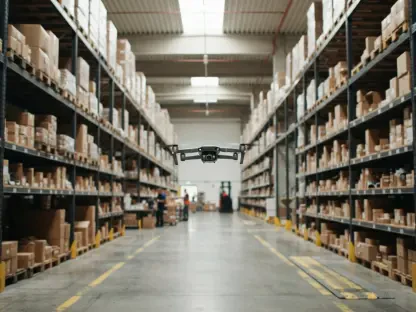
We are currently seeing a very “loud” but narrow adoption of AI, where 59% of businesses use it to scream into the social media void through marketing tools, yet a tiny 4% are applying it to the high-stakes world of inventory management. This imbalance is a major missed opportunity because the real value of AI isn’t in writing a clever caption; it’s in ensuring you don’t run out of stock or lose 13% of your customers because of slow service. The barrier here is twofold: 54% of businesses are scared off by the perceived cost, and 37% feel they lack the technical skills to implement deeper sales insights or customer service bots. To bridge this, we need to move toward “invisible AI”—tools that are baked into the marketplace infrastructure, like automated listing builders or inventory predictors, so the owner doesn’t need to be a data scientist to benefit. There is a massive appetite for this, with 76% of businesses expressing a high interest in affordable AI, showing that the will is there if we can just lower the technical and financial hurdles.
What is your forecast for the South African marketplace landscape over the next few years?
I anticipate a period of rapid consolidation and professionalization where the 67% of businesses currently selling through social media and the 51% on WhatsApp will realize they need more robust systems to survive the increasing competition. As the marketplace gap finally begins to close, we will see a surge in “hybrid” sellers who use major platforms specifically to offload the 62% of logistics challenges they currently face, allowing them to focus entirely on product innovation. The successful businesses of the next few years won’t just be “online”—they will be hyper-efficient, using AI to manage the 4% of inventory tasks that are currently neglected and turning returns management from a 46% headache into a competitive advantage. Ultimately, the shift will be away from mere digital presence toward operational excellence, fueled by infrastructure that makes global-tier fulfillment and same-day delivery accessible to even the smallest local shop. Small businesses will stop trying to be logistics companies and start being the brand-builders they were always meant to be.