
Modern enterprise software can now be deployed at a global scale much faster than the legacy resource planning systems that manufacturers have relied on for decades. This technological acceleration has allowed SPARETECH to secure a $20 million Series B funding round, co-led by Blume Equity and Insight Partners, alongside participation from Headline. The manufacturing landscape is currently navigating a period of intense pressure where every minute of downtime translates into astronomical costs, yet the traditional response—warehousing massive amounts of surplus equipment—has become financially unsustainable. By focusing on enterprise AI, SPARETECH aims to help industrial giants reclaim billions of dollars in trapped working capital. The company’s primary objective is to facilitate a 60% reduction in spare parts inventory within the next three years. This shift represents more than just a logistical adjustment; it is a fundamental reimagining of how the industrial supply chain functions in an era defined by data-driven intelligence and global connectivity.
Addressing Global Industrial Inventory Challenges
Solving the Dilemma: Why Over-Provisioning Occurs
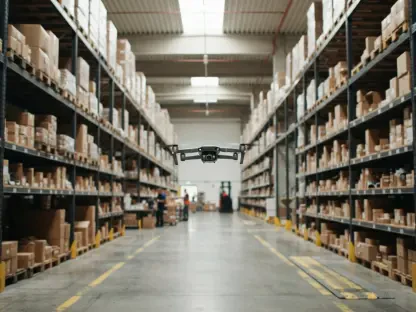
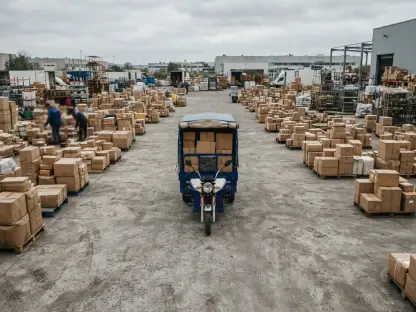
For decades, the manufacturing world operated under a rigid “just-in-case” philosophy that prioritized massive inventory stockpiles to prevent the nightmare of a production line halt. When a single faulty sensor or a worn-out motor can cost a facility thousands of dollars per minute in lost output, the natural reaction for maintenance teams is to over-provision every conceivable component. Recent 2026 industry benchmarks suggest that large-scale manufacturing companies now carry an average of $169 million in spare parts inventory across their global networks. This massive investment often sits untouched in dark warehouses, gradually succumbing to physical degradation or technological obsolescence. While this strategy successfully mitigates the immediate risk of downtime, it simultaneously strangles the company’s financial agility. The capital tied up in these physical assets is essentially frozen, preventing organizations from investing in vital modernization or expanding their footprint.
Analyzing Data Management: The Root of Inefficiency
This pervasive over-provisioning is ultimately a symptom of a much deeper data management failure rather than a lack of mechanical foresight. Manufacturers often operate as a collection of isolated silos, where one plant in North America may be completely unaware that an identical, redundant part is sitting on a shelf in a sister facility located in Europe. Without a unified digital architecture to oversee these assets, companies are forced to purchase new components even when they already own the necessary resources somewhere within their own organization. This lack of visibility creates a cycle of redundant spending and inefficient storage, which compounds over years of operation. SPARETECH identifies this specific inefficiency as a massive opportunity for optimization, suggesting that true supply chain resilience does not require more physical items, but rather a more intelligent way to track and share them. Transitioning away from this legacy model allows for a leaner, more responsive network.
Standardizing Industrial Data: The Power of AI
The central engine driving this transformation is an advanced AI platform that addresses the linguistic and clerical chaos inherent in industrial catalogs. One of the most significant barriers to efficient inventory management is the inconsistent naming of parts; a simple bearing might be cataloged under its manufacturer number at one plant and a generic internal description at another. To resolve this, SPARETECH utilizes a sophisticated AI engine that cross-references internal inventory data with a massive, verified catalog containing over 40 million unique components. This database is built through collaborations with 15,000 global partners, providing a level of granular detail that manual auditing simply cannot achieve. By standardizing this information, the software provides a single source of truth that spans the entire corporate enterprise. This baseline of data integrity is essential for any high-level strategic decisions, as it removes the guesswork typically associated with procurement.
Optimizing Procurement: Creating a Single Source of Truth
Once this standardization is achieved, the AI platform unlocks several layers of operational value that were previously inaccessible to maintenance managers. The system automatically identifies duplicate stock across the organization, allowing teams to consolidate their holdings without impacting machine reliability. Furthermore, the platform facilitates internal redistribution by highlighting surplus parts in one location that could fulfill a critical shortage in another, effectively turning the company’s internal warehouses into a private, high-speed marketplace. Beyond internal transfers, the software optimizes procurement by connecting maintenance teams directly with original equipment manufacturers and authorized suppliers. This direct link ensures that parts are sourced at the best possible price and with verified specifications, reducing the risk of purchasing counterfeit or incorrect components. By cleaning and organizing fragmented data, the platform turns a static liability into a dynamic resource.
Market Traction and Future Strategic Vision
Proving Scalability: Success with Global Industrial Leaders
The rapid commercial expansion of SPARETECH serves as a powerful validation of its underlying technology and business model. Since the start of 2024, the company has reported a remarkable fivefold increase in revenue, reflecting a surging demand for AI-driven industrial solutions. Its growing roster of clients includes some of the most prestigious names in global industry, such as Porsche, Volkswagen, Bosch, and Sanofi. These companies operate complex, high-stakes manufacturing environments where even minor inefficiencies can have significant financial consequences. The adoption of the platform by such industry leaders indicates a broader shift in the manufacturing sector, where digital maturity is increasingly viewed as a prerequisite for competitive survival. These organizations are not just looking for marginal improvements; they are seeking fundamental shifts in how they manage their physical assets and operational risks. The ability to scale across such diverse industries highlights the software’s versatility.
Evaluating Global Deployments: The Nestlé Success Story
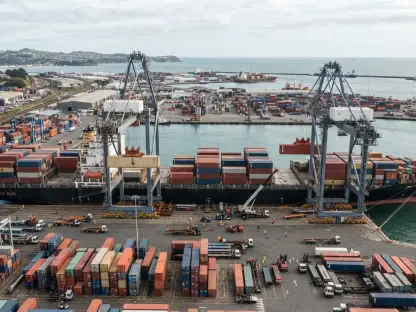
Perhaps the most compelling evidence of the platform’s scalability is its recent implementation within the global manufacturing network of Nestlé. The multinational food and beverage giant successfully rolled out the software across 320 manufacturing plants in 70 different countries in less than 12 months. This aggressive timeline demonstrates that modern, cloud-native AI can be deployed with a speed and efficiency that was previously impossible with legacy enterprise resource planning systems. Such a massive rollout involves coordinating thousands of data streams and integrating with local facility management teams, yet the AI-driven approach simplified these complexities. The success at Nestlé serves as a benchmark for other global organizations, proving that geographic dispersion and local operational differences are no longer insurmountable barriers to centralized inventory management. This project highlights a future where global supply chains are managed through a unified digital interface.
Building Resiliency: The Move Toward Industrial Circularity
The long-term vision for SPARETECH extends far beyond providing mere visibility into existing inventory; it aims to foster an active ecosystem of resource circulation. This approach seeks to move manufacturing away from a linear “purchase and store” model toward a circular framework where surplus components are actively redistributed or resold within a wider industrial network. By coordinating data between manufacturers, suppliers, and external customers, the platform ensures that no critical part sits idle if it is needed elsewhere. This circularity not only reduces the total volume of manufacturing required for spare parts but also ensures that components remain in active use rather than gathering dust. For many companies, this means they can guarantee part availability even when those parts are not physically stored on their own site. This strategy essentially converts inventory from a static overhead cost into a dynamic, flowing asset that supports the entire industrial ecosystem’s health.
Securing the Future: Modernizing the Industrial Stack
The recent expansion of SPARETECH underscored a pivotal moment where industrial AI successfully transitioned from a theoretical concept to a proven operational standard. Organizations that participated in these digital transformations realized substantial financial benefits by converting dormant inventory into active capital. Throughout this period of growth, the platform established a new benchmark for supply chain resilience by prioritizing high-speed data coordination over the traditional hoarding of physical parts. Industry leaders integrated these automated systems into their daily workflows, ensuring that part availability was maintained with a significantly smaller physical footprint. The results from early implementations across global networks showed a clear reduction in waste and a marked improvement in maintenance responsiveness. By the conclusion of this initial scaling phase, the manufacturing sector gained a powerful blueprint for balancing equipment uptime with financial efficiency. These strategic advancements positioned manufacturers to operate with greater agility.