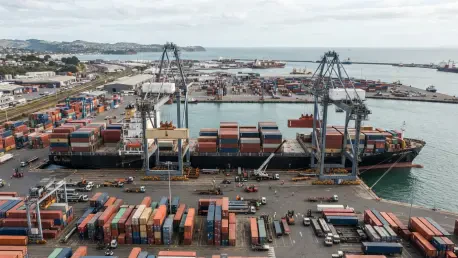

Geopolitical instability and shifting trade regulations have rendered the traditional focus on cost and scale insufficient for modern logistics. The global landscape shifted from a period of relative predictability to an era where volatility is the only constant. For years, supply chain managers optimized every link for the lowest possible cost, operating on razor-thin margins and expecting a seamless flow across international borders. However, this rigid efficiency became a significant liability when faced with sudden border closures, regional conflicts, and rapid regulatory changes. Today, the priority has moved toward creating systems that absorb shocks rather than shatter under external pressure. Success is no longer measured solely by how fast a product moves from point A to point B, but by how effectively a company can reroute, reschedule, or rethink that journey when the unexpected happens. This evolution requires a fundamental change in mindset, viewing the supply chain not as a simple cost center, but as a dynamic engine of strategic resilience and long-term stability.
The Strategic Transition: Toward Nearshoring Resilience
The restructuring of global trade patterns is most evident in the accelerating trend of nearshoring, where companies move production facilities much closer to the end consumer. This shift represents a departure from the pursuit of the lowest possible labor costs in favor of proximity, speed to market, and operational reliability. Manufacturing hubs are expanding rapidly across Central and Eastern Europe, providing a necessary buffer against the long-distance disruptions that have plagued transcontinental shipping routes. By shortening the distance between the factory floor and the customer’s doorstep, businesses significantly reduce their exposure to maritime bottlenecks and rising fuel surcharges. This regionalization strategy allows for faster response times to local market fluctuations, ensuring that inventory levels remain aligned with actual demand rather than outdated sales forecasts. It is a transition that prioritizes the overall stability of the supply chain over the immediate, often illusory, savings of offshore labor in distant regions.
Simultaneously, the Middle East has cemented its position as a critical connective hub that effectively bridges the gap between Asian production and Western consumption. The strategic investments in logistics infrastructure throughout this region have created a sophisticated corridor that offers diverse routing options for global shippers. Rather than relying on a single geographic path, companies now utilize the Middle East as a pressure valve, redirecting cargo through high-tech air and seaports when primary trade routes face congestion or closure. This geographic diversification is essential for maintaining the flow of goods during periods of heightened geopolitical tension or environmental challenges. The integration of advanced multimodal transport systems in the region allows for a seamless transition between different modes of carriage, further enhancing the agility of the global network. By leveraging these strategic locations, organizations are building a safety net that ensures the continuity of trade even when traditional corridors are compromised.
Integrated Logistics: Combining Advanced Technology With Human Expertise
Technological advancement is the cornerstone of this new logistics paradigm, specifically through the implementation of predictive visibility powered by artificial intelligence. Modern supply chains generate vast quantities of data, but the true value lies in the ability to process this information in real time to anticipate disruptions before they occur. Artificial intelligence and machine learning algorithms now analyze weather patterns, port congestion data, and social sentiment to provide early warning signs of potential delays. This shift from reactive tracking to proactive planning enables logistics providers to intervene early, securing alternative capacity or rerouting shipments before a crisis peaks. Predictive visibility provides the clarity needed to manage the inherent complexity of global trade, turning chaotic data points into actionable strategic insights. Consequently, businesses that embrace these high-tech tools find themselves better equipped to maintain customer promises in an unpredictable environment.
Organizations recognized that the integration of high-tech insights with human expertise was the only path toward sustainable growth in a volatile economy. To achieve this, leaders implemented a strategy that prioritized physical network flexibility alongside digital transformation. They ensured that logistics professionals were empowered with predictive data to make rapid decisions on the ground, effectively bridging the gap between theory and execution. The focus shifted toward diversifying sourcing locations and investing in multimodal transport hubs to avoid single points of failure. These actions allowed businesses to maintain operational stability and secure customer loyalty even during periods of intense global disruption. By treating the supply chain as a strategic asset rather than a cost to be minimized, companies successfully navigated the complexities of the modern trade environment. The transition to a resilience-first model proved that agility and predictability were the most valuable currencies in the global marketplace.