
The foundational framework of enterprise management is currently undergoing its most radical transformation since the industrial revolution as decision-making power shifts from human experts to autonomous algorithmic agents. For decades, the global supply chain has functioned as a delicate web of manual oversight and periodic planning, yet this traditional approach is becoming increasingly obsolete in a world that demands instantaneous responsiveness. As organizations transition from using artificial intelligence as a simple analytical tool to employing it as a primary decision-making authority, the very definition of operational efficiency is being rewritten. This shift necessitates a move beyond the classic management pillars toward a more sophisticated model that prioritizes systemic logic over individual intuition. The goal is no longer just to automate tasks but to orchestrate entire ecosystems of intelligent systems that can navigate complexity without constant human intervention.
The Evolution of Supply Chain Management and the Role of AI
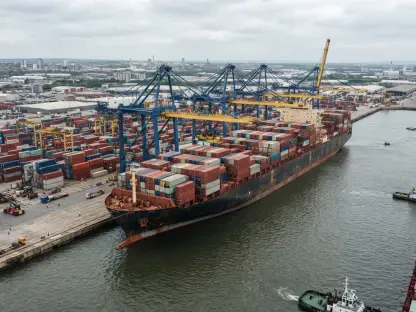
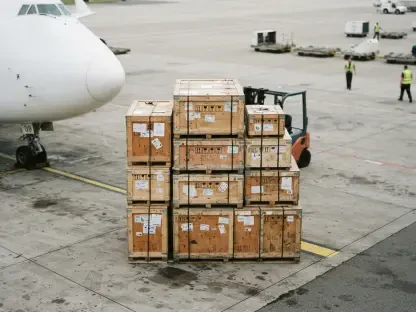
The current state of supply chain management is characterized by an unprecedented level of volatility and a massive expansion in the volume of data generated across global networks. Modern logistics involves a vast array of segments, including procurement, manufacturing, distribution, and last-mile delivery, all of which are deeply influenced by technological shifts. Historically, the industry relied on systems of record, such as Enterprise Resource Planning or Warehouse Management Systems, to store data and provide snapshots of past performance. However, the significance of these systems has evolved as they move from mere data repositories to active participants in the orchestration of physical goods and digital information. This evolution is driven by the need to manage global disruptions and labor constraints that make legacy manual processes insufficient for maintaining a competitive edge in a crowded marketplace.
Within this landscape, the role of artificial intelligence has moved from a speculative innovation to a core requirement for enterprise survival. Initially, AI served as a tool for predictive modeling, helping planners anticipate demand spikes or potential equipment failures. Today, the technology has expanded its scope to include prescriptive and autonomous functions, where algorithms not only identify problems but also execute the necessary corrective actions. This shift has introduced a new level of technological influence, where market players are increasingly judged by the sophistication of their algorithmic logic rather than just the physical scale of their operations. Relevant regulations, particularly those concerning data privacy and algorithmic transparency, are also beginning to shape how these technologies are deployed, forcing companies to balance innovation with ethical compliance.
Despite these advancements, the industry still struggles with the legacy of fragmented operations and functional silos that prevent a truly unified view of the enterprise. The traditional approach to managing these segments involved manual reconciliation between departments, where a decision in transportation might unintentionally harm inventory levels or warehouse labor efficiency. This fragmentation is the primary driver behind the current push for a more integrated artificial intelligence framework that can span the entire lifecycle of a product. As the significance of supply chain resilience continues to grow, the industry is seeing a consolidation of market players who can offer end-to-end intelligence, effectively merging planning and execution into a single, cohesive workflow that operates at the speed of global trade.
Emerging Trends and Market Dynamics in Intelligent Logistics
The Shift From Sequential Processes to Real-Time Autonomy
One of the most significant trends affecting global operations is the abandonment of sequential, batch-based workflows in favor of continuous, real-time autonomy. In the past, supply chain planning occurred in silos, with demand planners passing their forecasts to procurement teams, who then coordinated with manufacturing and logistics. This linear progression created inherent delays and allowed errors to compound as information moved through different stages of the organization. Today, evolving consumer behaviors and the expectation for near-instant fulfillment have made this slow-moving model untenable. Organizations are now implementing architectures where data flows horizontally across all departments simultaneously, allowing for autonomous adjustments as soon as a market signal is detected or a disruption occurs.
This transition toward autonomy is fueled by the emergence of agentic AI systems that can operate independently within predefined parameters. These agents do not wait for a weekly planning cycle to adjust a route or reorder supplies; instead, they monitor real-time data streams and make micro-adjustments that keep the entire system in balance. This shift represents a move away from human-led exception management toward a model where the algorithm handles the vast majority of routine variances. Market drivers such as the need for cost reduction and the scarcity of skilled planners are pushing more companies toward this autonomous reality. This creates new opportunities for enterprises to redirect their human talent toward high-level strategy and complex relationship management, rather than data entry and routine troubleshooting.
Growth Projections for Agentic AI in Global Operations
The financial and operational impact of these intelligent systems is reflected in the aggressive growth projections for the logistics technology sector. Market data indicates that investment in autonomous orchestration systems is expected to rise sharply from 2026 to 2030, as companies seek to reclaim margins lost to inefficiency and rising labor costs. Performance indicators suggest that early adopters of agentic AI are already seeing a double-digit reduction in total cost to serve, alongside significant improvements in inventory turnover. This forward-looking perspective suggests that by the end of the decade, the ability to deploy and manage autonomous agents will be the primary differentiator between market leaders and those struggling to maintain operational viability.
Forecasting based on current adoption rates suggests that the integration of artificial intelligence will not be limited to large multinational corporations but will increasingly penetrate mid-sized enterprises. As the cost of implementing sophisticated decision architecture decreases, more organizations will have access to the same level of predictive power and execution speed as industry giants. This democratization of technology is expected to lead to a more resilient global economy, where supply chains can better withstand external shocks and adapt to changing geopolitical conditions. The data points toward a future where the value of a company is deeply tied to the quality of its decision architecture and the efficiency with which its autonomous systems can navigate the complexities of international trade.
Overcoming the Limitations of Traditional Management Frameworks
Traditional management frameworks, specifically the long-standing triad of People, Process, and Technology, are increasingly failing to account for the speed and autonomy of modern systems. This legacy model was built on the assumption that technology would provide the data, processes would define the steps for using that data, and people would provide the final judgment. However, in an era where AI can process information and execute actions in milliseconds, the human element often becomes a bottleneck rather than a safeguard. The obstacle lies in the fact that human-led processes are naturally sequential and periodic, while algorithmic decision-making is continuous and dynamic. This mismatch creates friction that prevents organizations from fully realizing the benefits of their technological investments.
Furthermore, these traditional frameworks often struggle with the inherent conflict between different functional silos within an enterprise. For instance, a transportation department might use an optimization tool to minimize freight costs by consolidating shipments, unaware that this decision will lead to inventory stockouts and lost sales for the retail division. In a manual environment, these trade-offs are often negotiated in meetings that take place days or weeks after the initial decision. To overcome these complexities, strategies must shift toward a more holistic decision architecture that can evaluate the economic impact of an action across the entire organization simultaneously. This requires a departure from localized optimization and a move toward enterprise-wide value creation, where every algorithmic choice is weighed against the ultimate goal of the business.
Technological and market-driven challenges also include the pervasive issue of poor data quality and the lack of standardized business logic. Many organizations have tribal knowledge trapped in the heads of senior employees, which makes it difficult to encode that expertise into an autonomous system. The strategy for overcoming this involves a rigorous documentation of operational rules and the creation of a clean, unified data foundation. Without these prerequisites, an AI system may execute decisions that are technically rational within a narrow scope but commercially damaging in a broader context. Leaders must focus on building a robust infrastructure that provides the necessary context for autonomous agents to make decisions that align with the company’s long-term financial objectives and customer service commitments.
Establishing Governance and Accountability in Autonomous Systems
As enterprises grant more authority to autonomous systems, the regulatory landscape is shifting to ensure that these actions remain transparent, ethical, and accountable. Significant laws and standards are emerging that require companies to maintain a clear audit trail of why and how an AI reached a specific operational decision. This is particularly important in supply chain management, where a single automated choice can involve millions of dollars in spending or impact the livelihoods of workers in global manufacturing hubs. Compliance is no longer just a legal hurdle but a strategic necessity that protects the brand and ensures that the business operates within the bounds of international labor and trade regulations.
Security measures must also evolve to protect these intelligent systems from both internal errors and external threats. An autonomous supply chain that can spend company funds and coordinate shipments is a high-value target for cyberattacks, requiring a level of protection far beyond traditional data encryption. The effect on industry practices has been a surge in the adoption of “governed AI” frameworks, where every autonomous action is monitored by a set of guardrails that prevent the system from exceeding its authorized limits. This structure ensures that while the machine has the speed to execute, the human supervisors have the visibility to intervene when a situation becomes too complex or commercially sensitive for an algorithm to handle effectively.
The establishment of governance also addresses the problem of accountability when things go wrong in a highly automated environment. Industry standards are being developed to define who is responsible for an algorithmic error that leads to a significant financial loss or a breach of contract. By formalizing the relationship between human authority and machine execution, organizations can create a stable environment where innovation can flourish without exposing the enterprise to unmanageable risk. This regulatory clarity is essential for fostering trust among investors, customers, and employees, ensuring that the transition to an autonomous operating model is viewed as a responsible and well-managed evolution rather than a reckless leap into the unknown.
The Future Landscape of Deliberately Orchestrated Supply Chains
The industry is heading toward a state of deliberate orchestration, where the focus is on the seamless alignment of all physical and digital assets. Emerging technologies like digital twins and high-fidelity simulations are allowing companies to test their decision logic in virtual environments before deploying it in the real world. This capability is a potential market disruptor, as it allows firms to be much more aggressive in their optimization efforts without risking their actual operations. Consumer preferences are also shifting toward more sustainable and transparent sourcing, which will require supply chains to provide real-time visibility into the environmental and social impact of every product move.
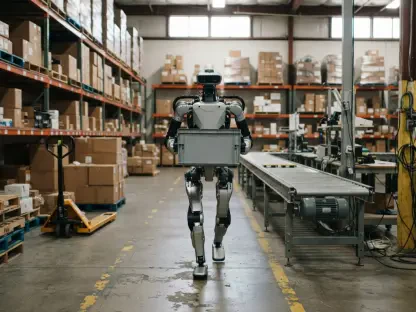
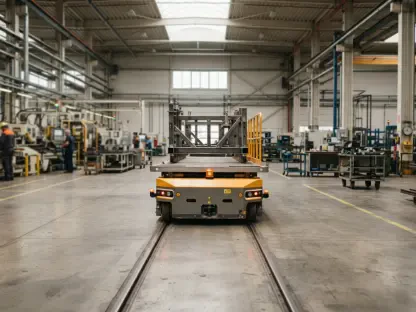
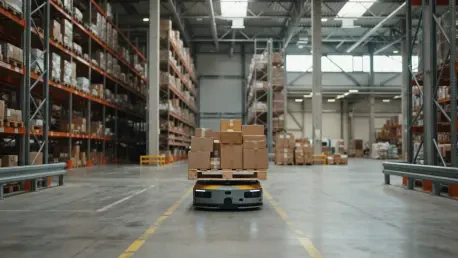
Innovation in the coming years will likely center on the concept of resilience as a service, where organizations use AI to build redundant and flexible networks that can adapt to global economic conditions automatically. This moves away from the “just-in-time” philosophy toward a more balanced “just-in-case” approach that prioritizes reliability over raw cost savings. Future growth areas include the integration of autonomous trucking and robotic warehouse systems with a centralized intelligence layer that coordinates their movements in real time. As global trade becomes more complex, the ability to orchestrate these disparate elements into a unified whole will be the ultimate competitive advantage, allowing companies to thrive in a volatile market.
The future landscape will also be shaped by the interplay between technological innovation and global regulation, as different regions develop their own standards for AI usage and data sovereignty. Companies will need to maintain a flexible architecture that can comply with varying rules while still providing a consistent service level to their global customers. This environment will favor organizations that treat their supply chain as a strategic asset rather than a cost center, investing in the logic and infrastructure necessary to support high-speed, autonomous operations. The end goal is a supply chain that is not just efficient but also intelligent enough to self-correct and self-optimize in the face of constant change, ensuring long-term sustainability and profitability.
Strategic Recommendations for Implementing Decision Architecture
The analysis of current industry shifts demonstrated that the successful implementation of artificial intelligence required a fundamental departure from traditional management structures. The findings indicated that organizations which failed to establish a formal decision architecture often experienced uncoordinated autonomy, where different functional areas optimized their own performance at the expense of the overall enterprise. It became clear that the value of AI was not merely in the speed of its calculations but in the clarity of the logic it followed. Therefore, the report identified that the most critical step for any organization was the formalization of its business rules and the weighted priorities that govern operational trade-offs.
Leaders who achieved the highest returns on their technological investments were those who prioritized organizational redesign alongside software deployment. The research showed that these pioneers moved their human expertise “upstream,” focusing on the design of the systems and the commercial strategy rather than the execution of daily tasks. They realized that for an autonomous agent to be effective, it needed to be empowered with delegated authority that was clearly bounded by financial and ethical guardrails. This shift in management philosophy proved to be a decisive factor in maintaining accountability while still capturing the massive productivity gains offered by real-time algorithmic orchestration.
The prospects for the industry remained highly positive for those willing to commit to a rigorous and disciplined transformation process. The report concluded that the move toward a deliberately orchestrated supply chain was an inevitable consequence of the increasing complexity and speed of the global market. Strategic recommendations for growth focused on the continuous improvement of data quality and the development of a culture that embraced algorithmic collaboration. By viewing decision architecture as the essential fourth pillar of management, enterprises positioned themselves to navigate the challenges of the coming decade with confidence and resilience, ensuring that their supply chains became a source of sustained competitive advantage.