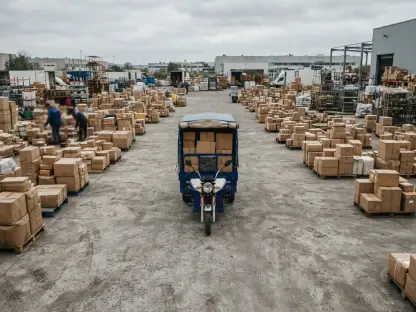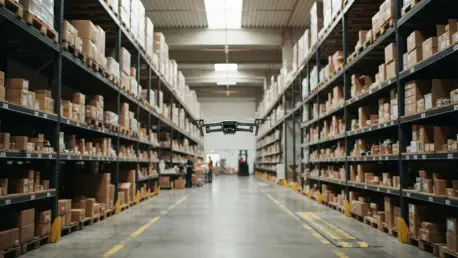

The automation of the Byhalia facility highlights a broader strategic move toward smart warehousing to meet the high-volume demands of modern e-commerce and wholesale fulfillment. Asics America has successfully integrated autonomous drone technology at its massive distribution hub in Mississippi, an 855,000-square-foot facility that serves as the nerve center for the brand’s regional operations. Housing nearly three million units of inventory across approximately 44,000 unique SKUs, the site faced the daunting task of maintaining precise data in an increasingly complex omnichannel environment. By deploying the Corvus One drone system, the company transitioned from labor-intensive manual auditing to a high-frequency digital oversight model. This strategic move was designed to bridge the gap between physical stock and digital records, ensuring that the warehouse operates with maximum precision. The implementation addresses the critical need for real-time visibility where every misplaced pair of shoes represents a lost opportunity.
Transitioning From Manual Audits to Automation
Historically, the inventory management process at the Mississippi site was a monumental task that relied heavily on manual labor and infrequent checks. Before the drone deployment, the facility conducted comprehensive inventory counts only twice a year because the sheer size of the building made more frequent manual counts economically infeasible. This semiannual schedule created significant gaps in data visibility, meaning that if an item was misplaced or a record was inaccurately logged, the error might persist for up to six months before being discovered. The warehouse staff frequently dealt with “ghost inventory,” where items appeared in the digital system but were physically absent from their designated slots. This inefficiency trickled down to every department, from procurement to customer service, often resulting in fulfillment delays. The shift to autonomous drones represents a fundamental change in how the company perceives asset management, moving toward proactive data verification.
By integrating Corvus One drones, Asics moved from a semiannual schedule to a monthly cycle-counting frequency that significantly enhanced operational awareness. This shift was particularly critical in two high-stakes areas of the facility: the singles area and the case reserve space. The singles area, containing individual pairs of shoes and processed returns, is prone to high turnover and frequent movement, making it a primary hotspot for inventory discrepancies. Similarly, the case reserve space handles bulk shipments where a single misplaced pallet can represent thousands of dollars in lost revenue. The ability to monitor these sections with higher frequency allowed the brand to identify and rectify discrepancies in real-time. Instead of allowing inventory drift to accumulate over several quarters, the distribution center now maintains a near-perfect alignment between physical assets and digital records. This heightened visibility proved essential for meeting the rapid fulfillment expectations of modern wholesale partners.
Technical Execution and Strategic Outcomes
The technical execution of the drone flights was designed to minimize disruption to daily warehouse activities by operating during off-peak hours. The Corvus One drones operate autonomously at night, typically beginning their missions around 7:00 p.m. to navigate through narrow aisles that are difficult for standard machinery to access. Equipped with advanced sensors and imaging technology, the drones scan Universal Product Codes and count physical boxes with high precision. To ensure accuracy, the system follows a strict logic where every ten detected boxes must match ten corresponding scans, which is effective for managing mixed stock. While the drones handle the grueling task of data collection, human inventory associates review the captured visual data each morning to resolve discrepancies. This hybrid approach successfully eliminated approximately 200 manual labor hours, allowing the staff to focus on high-level problem-solving. The system identified misplaced inventory 60% faster than previous manual methods used at the facility.
The deployment of autonomous drones at the Byhalia facility successfully addressed long-standing logistical hurdles and improved the company’s financial health. By surfacing errors sooner, Asics ensured that the inventory reflected in the Warehouse Management System matched the actual contents of the shelves. This reliability fostered brand loyalty because it significantly reduced the occurrence of order cancellations caused by missing items. Furthermore, the increased data confidence allowed the company to stop the practice of hedging its inventory on digital marketplaces. Previously, the brand held back up to 15% of its stock from online listings to avoid the risk of selling products that were not physically present. The project demonstrated that aerial robotics provided a scalable solution for high-density, vertical storage environments. Executives moved to analyze how similar autonomous systems could be applied to inbound logistics to further streamline the supply chain. This transition to a drone-assisted model served as a definitive proof of concept for the retail industry.