
As market penetration nears ninety percent, providers must pivot from acquiring new users to replacing legacy systems with high-value software. The North American fleet management sector is currently undergoing a massive transformation, moving from a niche aftermarket service to a core component of vehicle manufacturing. This fundamental change is driven by the demand for real-time visibility and operational efficiency across the entire supply chain. By the end of this decade, the industry is expected to reach near-total digitization, fundamentally changing how commercial vehicles are operated and maintained across the continent. This shift involves a transition from simple GPS tracking to integrated, high-level operational intelligence that defines the modern logistics landscape. Logistics managers no longer view connectivity as an optional luxury but as a vital lifeline for safety and profit. The evolution is not merely about tracking locations but about harnessing data to predict outcomes and streamline complex workflows.
Market Expansion: Strategic Growth and Industry Consolidation
The trajectory for the North American fleet management market shows a relentless climb toward saturation as the infrastructure matures. Between the current year and 2030, the number of active fleet management units in the region is projected to surge from approximately 21 million to over 36 million. This growth represents a robust compound annual rate of 11.2 percent, signaling a future where telematics is an essential operational requirement rather than an optional upgrade. With market penetration expected to hit nearly 90 percent by the end of the decade, the industry is entering a phase where the digital footprint of commercial vehicles is almost universal. Such a high level of adoption implies that virtually every truck on the road will be part of a larger, interconnected data network. Consequently, the primary driver for industry revenue is shifting from basic connectivity hardware to the sophisticated analytics that make sense of the massive data streams generated daily.
As the market matures, the competitive landscape is becoming increasingly concentrated, with a few dominant giants like Geotab and Samsara leading the charge. These top-tier vendors already manage millions of units, and the gap between them and smaller providers continues to widen through aggressive expansion and innovation. Recent high-profile acquisitions, such as Platform Science’s purchase of Trimble’s telematics division and Powerfleet’s expansion through MiX Telematics, illustrate a market where scale and broad footprints are necessary for long-term survival. This trend of consolidation suggests that smaller, specialized players must either find highly unique niches or face absorption by larger platforms seeking to bolster their data capabilities. For fleet operators, this means working with massive ecosystems that offer a wider array of integrated tools and global support. The move toward consolidation ensures that the industry leaders have the necessary research and development budgets.
Factory Integration: The Shift Toward Embedded Connectivity Systems
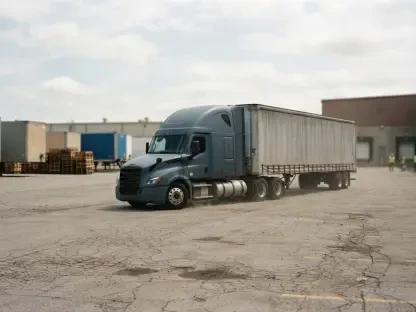
A pivotal change involves original equipment manufacturers like Ford, General Motors, and Daimler Truck integrating connectivity directly into vehicles during production. This factory-installed approach removes the need for third-party hardware installations, making basic diagnostics and tracking tools more accessible and affordable for fleets of all sizes. By building these features into the assembly line, manufacturers are becoming central participants in the data ecosystem that was once dominated by independent hardware vendors. This vertical integration allows for more reliable data collection and seamless software updates without the downtime associated with manual hardware installs. As a result, the barrier to entry for small businesses to adopt telematics has dropped significantly, leading to a broader democratization of fleet technology. Vehicle manufacturers are no longer just selling trucks; they are providing connected mobility solutions that stay linked to the factory throughout the vehicle’s life.
As hardware becomes a standard factory feature, the primary value for telematics vendors is shifting toward sophisticated software-as-a-service models. This evolution forces providers to focus on collaborative ecosystems where open platforms allow for seamless data sharing between vehicle manufacturers and specialized software developers. In this new environment, the ability to manage complex data streams from different vehicle brands within a single dashboard will become a major competitive advantage. Providers are moving away from proprietary hardware locks and toward flexible applications that can be downloaded directly onto the vehicle’s infotainment or control system. This approach mimics the smartphone app economy, where the truck acts as the hardware platform for a variety of productivity tools. Fleet managers can now customize their software stacks to include specific modules for dispatching, compliance, or cargo monitoring, paying only for the features that provide direct value to their specific operations.
Strategic Imperatives: Advanced Intelligence and the Road to Success
Future innovations will focus on high-level operational intelligence, including AI-powered video telematics to monitor driver behavior and enhance safety on the road. These systems use machine vision to identify distractions or fatigue in real time, providing immediate feedback that can prevent accidents before they occur. Predictive maintenance will also play a critical role, using real-time vehicle diagnostics to fix mechanical issues before they lead to costly breakdowns or dangerous roadside failures. Additionally, fleet management tools will be vital for managing the transition to electric vehicles, offering specialized data on battery health, range estimation, and charging infrastructure management. By integrating weather, traffic, and topography data, AI algorithms can optimize routes for electric trucks to maximize efficiency and minimize downtime. These advanced technologies transform the telematics unit from a passive tracking device into a proactive co-pilot that manages the vehicle’s health and performance.
The industry has successfully transitioned toward a model defined by interoperability and actionable insights. Success is no longer measured by the number of connected trucks, but by the ability to turn raw data into increased profitability for the operator. Providers that master cross-platform integration and offer clear, AI-driven solutions for efficiency will dominate the North American market as 2030 approaches. Decision-makers prioritize platforms that offer open APIs and deep integration with existing workflow tools to ensure long-term flexibility. Moving forward, the focus remains on the quality of data interpretation rather than simple data collection. Stakeholders who invest in robust cybersecurity and scalable cloud architectures position themselves to thrive in a landscape where data has become the most valuable asset. The evolution of fleet management proves that connectivity is merely the foundation for a much larger digital ecosystem that reshapes the logistics industry into a more sustainable and safe enterprise.