
While most global retail giants treat the movement of physical goods as a necessary expense, Home Depot has successfully weaponized its logistics to command a market lead that few competitors can hope to bridge. In the high-stakes environment of retail, the supply chain has evolved from a back-office necessity into a proactive, integrated powerhouse that drives nearly $170 billion in annual sales. This strategic evolution represents a shift from reactive shipping to a sophisticated network that balances massive physical scale with the surgical precision required for modern e-commerce. This article explores how the home improvement leader moved away from decentralized vendor shipping to create a system that thrives on agility and control.
From Utility to Competitive Advantage: The Evolution of Logistics
Logistics is no longer just about moving items from point A to point B; it is a vital engine for growth. Home Depot transformed its operations to move away from a model that simply responded to demand, creating instead a system that anticipates it. This evolution highlights a fundamental change where shipping is treated as a strategic asset rather than a cost center. By integrating every stage of the journey, the retailer ensured that its physical reach became its greatest competitive edge in a saturated market.
Moving Beyond the “Direct-to-Store” Era
Two decades ago, the infrastructure relied heavily on vendors shipping directly to individual locations. This decentralized approach, while requiring less initial capital, led to cluttered stores and fragmented inventory management that could not scale. Recognizing that this passive role hindered growth, the company began a multi-year transition toward a controlled, sophisticated system. This shift was essential for moving away from vendor-heavy reliance and creating a framework capable of handling the complexities of the modern consumer landscape.
The Architecture of a Modern Logistics Fortress
Reclaiming Control Through Centralized Distribution
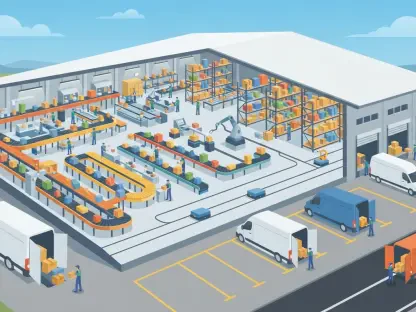
The centerpiece of this transformation involved the establishment of rapid-deployment centers to reclaim control over the product flow. These facilities allow for the aggregation of orders, ensuring the right inventory reaches specific stores exactly when it is needed. By eliminating dead time in the supply chain, the company gained the visibility required to manage a global inventory with data-driven precision. This centralized control provides the stability needed to pivot quickly when market demands shift unexpectedly.
Diversification and the $20 Billion E-commerce Engine
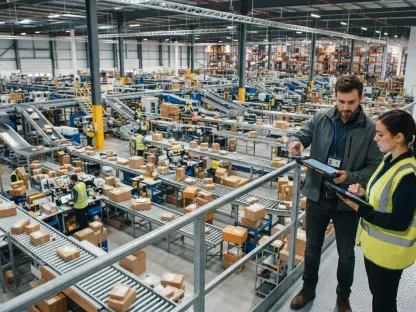
Consumer habits necessitated a tiered distribution strategy to manage everything from bulky contractor supplies to small residential parcels. Specialized flatbed centers were developed for oversized items like lumber, while dedicated fulfillment hubs powered a massive e-commerce segment. This diversified approach mitigated the risk of bottlenecks by ensuring that heavy machinery and small packages never competed for space in the same fulfillment channel, allowing for specialized handling of every product class.
Turning Physical Stores into Digital Assets
The most innovative move was revaluing 2,300 brick-and-mortar locations as local fulfillment hubs. By treating physical stores as mini-warehouses, Home Depot solved the last-mile delivery puzzle in a way that digital-only competitors could not. This strategy proved that when physical assets are integrated correctly, they become the ultimate weapon in providing rapid pickup and delivery services. This approach effectively addresses the modern requirement for speed while maximizing the utility of existing real estate.
Navigating the New Era of Rapid Fulfillment and Agility
The retail market is now defined by the transition from two-day delivery to same-day turnarounds. To stay ahead, the focus has shifted toward predictive analytics and automation to anticipate regional demand spikes before they occur. Maintaining agility allows the network to absorb economic shocks while scaling up instantly to meet rising expectations. Lessons from previous demand swings highlighted the necessity of building flexibility into every platform to ensure continued dominance in the home improvement sector.
Strategic Blueprints for Navigating Modern Supply Chain Demands
Businesses looking to replicate this success must prioritize reclaiming control over their distribution networks rather than outsourcing them entirely. Existing physical assets should be viewed as potential fulfillment nodes rather than overhead costs. Success in this area requires building a unified inventory view that bridges the gap between digital storefronts and local product availability. Organizations must treat their supply chains as dynamic systems that require continuous investment and refinement to remain competitive.
A Legacy Built on Dynamic Logistics
Home Depot’s transition toward a centralized and agile shipping model established a new standard for operational excellence. By repurposing its physical footprint and diversifying its distribution hubs, the company created a logistics engine that operated with remarkable speed. This transformation demonstrated that legacy retailers could thrive in a digital-first economy by adapting their delivery methods to the customer’s pace. Ultimately, the strategy ensured that the brand remained resilient and ready for future market shifts.