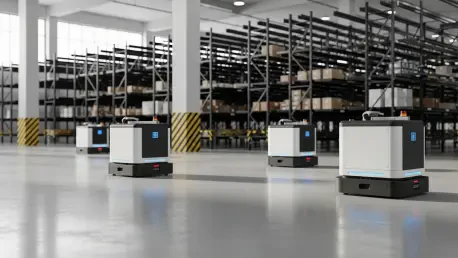

The logistical landscape is undergoing a radical shift as global supply chains move away from static, labor-intensive models toward fully integrated, autonomous ecosystems that prioritize speed and density. At the MODEX trade show in Atlanta, Locus Robotics unveiled its latest innovation, the Locus Array, marking a decisive move into the realm of high-density autonomous fulfillment. This platform distinguishes itself by moving beyond simple picking assistance to provide an end-to-end solution that integrates mobile robotics with advanced picking arms and AI-driven perception. By introducing the Robots-to-Goods (R2G) category, the system allows autonomous units to navigate directly to inventory locations, effectively eliminating the need for manual transport or fixed conveyor systems. This launch represents a significant milestone for a sector that has long struggled with the limitations of traditional warehouse infrastructure, offering a scalable path for facilities that require immediate, high-throughput improvements.
Technological Integration: Driving Operational Efficiency
The underlying technology of the Locus Array is built upon the LocusONE AI orchestration platform, which serves as the “brain” for the entire fleet, managing complex task assignments in real time. This software enables the new units to operate in tandem with established models like the Locus Origin and Locus Vector, creating a heterogenous environment where different robots handle specialized tasks. The inclusion of an integrated picking arm allows the Locus Array to perform high-precision maneuvers, such as reaching into deep shelving or handling fragile items without damaging the goods. Sophisticated sensors and AI-driven perception systems allow the robot to identify and grasp items with a level of accuracy that was previously reserved for human pickers. Furthermore, the system’s ability to conduct putaway and replenishment tasks means it is no longer just a picking tool but a comprehensive inventory manager that helps logistics providers overcome the persistent challenges of labor scarcity.
Operational efficiency is the primary driver behind this technological leap, as the Locus Array is designed to maximize throughput while minimizing the physical footprint of the warehouse. By utilizing high-density storage configurations, the system allows facilities to increase their storage capacity without needing to expand their square footage. The robots are capable of working in narrow aisles and navigating around obstacles with ease, which ensures that throughput remains consistent even during peak periods. One of the most compelling aspects of the system is its ability to operate 24/7, reducing the reliance on human shifts and potentially cutting manual labor requirements by up to 90 percent. Unlike fixed automation solutions, which often require months of installation and significant structural changes, this platform can be deployed in just a few weeks. The flexibility of the Robotics-as-a-Service model also provides a low-barrier entry point for companies that need to scale quickly.
Strategic Scalability: Global Market Impact
Strategic partnerships have played a crucial role in validating the efficacy of the Locus Array, with industry leaders like DHL Supply Chain taking a front-row seat in its deployment. Sally Miller, the Global CIO of DHL, noted that this technology represents a fundamental transition from assisted picking to a new paradigm of high-density autonomous fulfillment. By integrating these units into live warehouse environments, DHL has demonstrated that high-level autonomy can coexist with existing workflows to improve order accuracy and cycle times. This collaboration underscores the importance of real-world testing in the development of robotics, ensuring that the features are tailored to the specific needs of modern logistics hubs. The success of these pilot programs has paved the way for broader adoption across the logistics industry, proving that the technology is ready for large-scale commercial use and helping companies witness the tangible benefits of this specific autonomous integration.
The global scaling of the Locus Array signifies a broader trend toward the decentralization of advanced automation, moving it out of specialized tech hubs and into mainstream logistics operations. After proving its value in the North American market, Locus Robotics is now focusing on expanding its reach into the European and Asia-Pacific regions, where demand for efficient fulfillment is at an all-time high. This expansion is supported by a sophisticated support network and a focus on modularity, allowing the platform to adapt to different regional warehouse layouts. By offering a system that can be updated and reconfigured through software, the company ensures that its hardware remains relevant as warehouse needs evolve. This approach contrasts with the hype-driven nature of early automation projects, providing instead a reliable tool that delivers immediate return on investment for companies looking to stabilize fulfillment and ensure long-term resilience.
Logistics leaders who moved early to adopt these autonomous systems successfully addressed the critical bottlenecks that previously hindered their fulfillment speed and overall accuracy. They recognized that the transition to high-density autonomous fulfillment required a strategic focus on data integration and the workforce’s ability to manage robotic fleets rather than perform repetitive physical tasks. The implementation of the Locus Array proved that functional autonomy was achievable without the massive capital expenditures associated with fixed warehouse automation. Decision-makers evaluated their current infrastructure to identify where AI-driven orchestration could most effectively bridge the gap between human labor and robotic precision. By focusing on modularity and scalability, these organizations prepared themselves for the demands of the current market, ensuring that their supply chains remained agile and responsive to shifting global trade conditions.