
The relentless pressure on global supply chains has reached a critical tipping point where traditional fulfillment methods can no longer keep pace with the volatile demands of modern commerce and the high expectations of instant delivery services. This evolution is not merely a response to temporary market fluctuations but a permanent shift toward a dynamic operational model centered on full intelligent autonomy. Unlike previous generations of automation that required fixed tracks and highly predictable environments, modern systems leverage advanced artificial intelligence and sensor arrays to navigate the unpredictable nature of a busy distribution center. This transition effectively transforms the warehouse from a passive storage unit into a proactive ecosystem that can sense, learn, and respond to real-time data inputs. By prioritizing flexibility over fixed infrastructure, organizations are finding they can maintain high throughput even when labor markets are tight or consumer behavior shifts suddenly.
Economic Pressures: Addressing the Persistent Labor Shortage
One of the most significant factors driving the adoption of intelligent systems is the ongoing difficulty in recruiting and retaining skilled workers within the logistics sector. As a large portion of the industry faces persistent talent shortages, companies have turned to technology to fill the widening gap between available manual labor and rising distribution volumes. Research indicates that investment in warehouse automation is growing rapidly because businesses have realized that traditional methods cannot sustain the throughput required in today’s hyper-connected market. To remain competitive, organizations require systems that can scale almost instantly without necessitating a massive influx of new staff members. By delegating repetitive and physically demanding tasks to autonomous machines, warehouse operators are able to maintain consistent performance levels regardless of external labor market conditions. This shift represents a move toward a more resilient business model.
Beyond the immediate need for personnel, the financial justification for integrating autonomous systems has become increasingly compelling for large-scale distribution centers and small-scale operations alike. While the initial capital expenditure for robotic fleets can be substantial, the long-term reduction in operational overhead provides a clear path to profitability and sustainable growth. Automated platforms operate with a level of accuracy that significantly reduces the costs associated with picking errors, returns, and damaged inventory. Furthermore, these systems allow facilities to operate around the clock without the diminishing returns typically seen with human shifts during overnight hours. This continuous operational capability ensures that high-priority orders are processed with the same speed and precision at midnight as they are at noon. As the cost of sensing technology continues to decrease, the barrier to entry for smaller logistics firms has lowered significantly.
Digital Twins: the Rise of Autonomous Navigation Systems
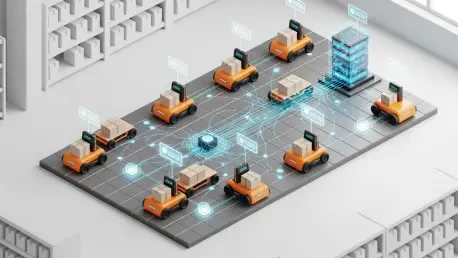
Historically, warehouse technology relied on fixed setups like conveyor belts and automated storage and retrieval systems that functioned best in highly predictable and static environments. However, contemporary warehouses are often characterized by chaotic workflows where inventory levels and floor layouts change on a daily or even hourly basis. Modern innovations in mobile robotics and computer vision now allow machines to navigate these dynamic spaces without the need for a heavily controlled environment or physical guide wires. Experts have noted that a growing number of facilities are moving toward a human-optional model where technology handles the vast majority of physical movement and data processing. These autonomous mobile robots use sophisticated algorithms to calculate the most efficient paths in real time, avoiding obstacles and adapting to the presence of human workers or other machines. This ensures that the facility can be reconfigured without expensive downtime.
A major hurdle in traditional logistics has long been the lack of up-to-the-minute information regarding inventory locations and storage density. Digital twins address this challenge by creating a high-fidelity virtual version of the warehouse that remains synchronized with the physical world through a network of sensors and connected robots. This real-time visibility allows facility managers to identify and correct operational errors, such as misplaced pallets or localized bottlenecks, as soon as they occur. By closing the gap between the actual stock on the floor and the digital records in the warehouse management system, companies have achieved much higher order accuracy rates. This level of transparency also facilitates better predictive maintenance, as the digital twin can alert technicians to mechanical issues before they lead to a system-wide failure. The result is a highly responsive infrastructure that maximizes the utilization of every square foot of available storage space.
Operational Safety: the Strategic Implementation Process
Rather than merely replacing the workforce, the transition to autonomous systems focused on shifting human employees into safer and more strategic roles within the distribution center. As robots assumed responsibility for the most repetitive and physically taxing jobs, the workforce began to concentrate on managing complex exceptions and optimizing the overall flow of the facility. This shift significantly improved workplace safety by reducing the frequency of manual handling injuries and warehouse vehicle accidents. Leadership teams prioritized the retraining of staff to oversee robotic fleets and analyze the massive streams of data generated by autonomous units. By combining human judgment with the precision of machines, the warehouse environment became a more efficient and sustainable workplace. Early adopters of this model discovered that their employees reported higher job satisfaction when removed from mundane tasks. The integration of these technologies proved to be the most effective way forward.
Successful organizations achieved a smooth transition by implementing phased pilot programs that allowed for iterative testing and refined data integration strategies. These companies recognized that high-quality data hygiene was a prerequisite for effective machine learning applications and invested heavily in cleaning their inventory records before full-scale deployment. Managers also fostered a culture of transparency, ensuring that the workforce understood how autonomous systems would augment their capabilities rather than simply competing for their positions. This proactive communication helped maintain morale during implementation phases and encouraged employees to contribute valuable insights. The result of these strategic initiatives was a robust infrastructure that lowered operating costs and increased throughput simultaneously. It became clear that the most resilient businesses were those that viewed autonomy as a long-term investment. These steps provided a definitive blueprint for the entire industry.