
Texas has officially solidified its standing as the primary nervous system of North American commerce, moving more tonnage across its borders and through its ports than any other domestic territory this year. This dominance is not merely a result of geographical luck but rather the consequence of massive infrastructure investments and a strategic pivot toward becoming the ultimate multimodal gateway. As the global supply chain seeks more resilient routes, the Lone Star State offers a unique combination of deep-water access, extensive rail networks, and the most active land border crossings in the Western Hemisphere. Businesses looking to navigate this landscape must understand that the logistics environment in 2026 is defined by high-speed data integration and a relentless push for efficiency.
The Lone Star State as a Global Logistics Powerhouse
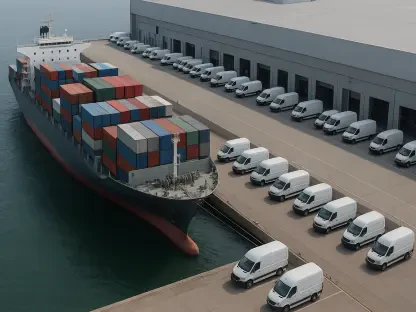
The role of Texas as the central corridor for trade between the United States and Mexico has reached a new peak in 2026. With the continued trend of nearshoring, where manufacturing shifts from overseas to North America, the state serves as the primary intake point for industrial components and finished goods entering from the south. The Gulf of Mexico provides a secondary but equally vital front, as the Port of Houston now handles larger vessels than ever before following the completion of major channel deepening projects. This dual-access model allows Texas to function as a stabilizer for the national economy, providing an alternative to West Coast congestion and East Coast volatility.
Shipping in the state is supported by several critical pillars that cater to a wide variety of commercial needs. International freight forwarding remains the backbone for the state’s massive export economy, particularly in energy and chemicals. Meanwhile, regional parcel delivery has seen a surge as the population of the Texas Triangle continues to expand, requiring sophisticated last-mile solutions. Specialized project logistics also form a significant portion of the market, handling the oversized equipment necessary for the state’s aerospace and renewable energy sectors. These segments do not operate in isolation but rather form an interconnected web that supports everything from small-scale retail to heavy industrial construction.
Technological integration has become the standard for Texas-based carriers this year. Automation and digital freight matching platforms have replaced traditional manual brokerage, allowing for real-time adjustments to routes and capacity. In 2026, the use of digital twins for supply chain modeling is helping companies predict bottlenecks before they happen, ensuring that the movement of goods remains fluid across the state’s vast highway system. This tech-first approach has allowed smaller, specialized carriers to compete with global giants by offering more transparent and responsive service models that cater to the modern demand for visibility and speed.
The diversity of the Texas economy requires a logistics sector that is equally varied and capable. Shipping providers have moved beyond general transport to offer highly specialized support for the state’s unique mix of industries. For instance, the energy sector relies on carriers that understand the complexities of moving hazardous materials and heavy drilling machinery, while the aerospace industry in North Texas and South Texas requires high-precision handling for sensitive components. The e-commerce boom has also forced a transformation in how urban centers are served, with providers developing specialized networks to handle the rapid turnover of consumer goods in cities like Austin and Dallas.
Navigating the 2026 Texas Logistics Landscape
Emerging Trends in Freight and Supply Chain Management
The freight forwarding sector is currently undergoing a massive shift driven by artificial intelligence and high-level data analytics. Platforms are now capable of optimizing routes across the Texas Triangle with unprecedented precision, accounting for real-time traffic data, weather patterns, and port wait times simultaneously. This allows shippers to move goods between Houston, Dallas, and Austin with minimal idling and maximum fuel efficiency. The result is a more predictable supply chain where the estimated time of arrival is no longer a guess but a data-driven certainty that businesses can rely on for their inventory management.
Sustainability has also moved from a peripheral concern to a core operational requirement in major urban centers across Texas. The adoption of electric delivery fleets is particularly evident in cities like San Antonio and Austin, where local regulations and corporate carbon-neutral initiatives are driving the transition away from internal combustion engines. Many shipping companies are also investing in carbon-offset programs and renewable energy for their warehouse operations. This shift is not just about environmental responsibility; it is also about operational longevity, as green logistics models often lead to lower long-term energy costs and better compliance with evolving federal standards.
Cross-border synergy remains the most significant growth driver for the Texas shipping industry this year. Laredo has further cemented its status as the primary land gateway for North American trade, benefiting from the massive influx of nearshoring manufacturing in Mexico. The logistics companies operating in this space have developed specialized expertise in bridging the gap between Mexican production and American consumption. This involves not only physical transport but also sophisticated customs management and synchronized warehousing that allows for a seamless transition of goods across the border, reducing the time shipments spend in transit and minimizing the risk of delays.
Market Growth Projections and Economic Performance
Volume forecasts for 2026 indicate a robust upward trajectory for both ocean and air freight in the state. The Port of Houston is seeing record container throughput as more global shipping lines reroute their service to the Gulf to avoid coastal bottlenecks elsewhere. Similarly, DFW International Airport has expanded its air cargo capacity to meet the growing demand for high-value, time-sensitive shipments, particularly in the technology and pharmaceutical sectors. These growth trends suggest that the Texas logistics market is not just expanding in size but also in the complexity and value of the goods it handles.
Infrastructure investment continues to be a primary catalyst for this economic performance. State-wide highway expansions, particularly along the I-35 and I-10 corridors, are significantly improving the speed and reliability of trucking operations. Port deepening projects and the modernization of rail terminals have also increased the state’s overall capacity to handle heavy and oversized loads. These investments represent a long-term commitment to maintaining the state’s competitive edge, ensuring that the logistics sector can scale alongside the broader economic growth of the region.
Overcoming Obstacles in Modern Texas Shipping
Infrastructure bottlenecks remain a persistent challenge, particularly in the rapidly growing metro areas of Austin and San Antonio. The sheer volume of passenger and commercial traffic on major arteries often leads to congestion that can disrupt even the most well-planned schedules. To manage this, shipping companies are increasingly utilizing off-peak delivery windows and satellite distribution centers located on the outskirts of major cities. This strategy allows for the bulk movement of goods during low-traffic hours, with smaller, more nimble vehicles handling the final-mile delivery into congested urban cores.
The labor market is also undergoing significant shifts as the demand for specialized logistics personnel continues to outpace the available supply. There is a notable shortage of long-haul drivers and technicians capable of managing the sophisticated technology now integrated into modern fleets. Companies are addressing this through a combination of aggressive recruitment programs, enhanced training initiatives, and the implementation of assistive technologies that make the job less physically demanding. By investing in their workforce, logistics providers are ensuring they have the human capital necessary to support the technological and operational advancements of the current year.
Supply chain volatility continues to be a concern, driven by global economic shifts and the potential for climate-related disruptions in the Gulf region. The logistics industry has responded by developing more resilient models that prioritize flexibility and contingency planning. This includes diversifying transport modes so that a disruption in one area, such as a port closure, can be mitigated by shifting volume to rail or road. Furthermore, the use of advanced weather tracking and predictive modeling allows companies to move assets out of harm’s way before a major storm hits, ensuring that operations can resume as quickly as possible once the danger has passed.
The Regulatory Framework and Compliance Standards
Customs and trade compliance have become increasingly complex in 2026, making the role of customs brokerage more critical than ever. Navigating the intricacies of international trade laws and the specific regulations within the USMCA requires a high level of expertise and constant vigilance. Professional shipping companies in Texas now employ dedicated compliance teams to ensure that all documentation is accurate and that shipments meet all legal requirements before they reach the border or the port. This proactive approach prevents costly delays and legal complications, providing a smoother experience for businesses engaged in international trade.
Security and safety protocols have also seen significant advancements, particularly for the transport of hazardous materials in the energy sector. Mandatory safety standards now include the use of advanced cargo tracking systems that provide real-time data on the condition and location of sensitive shipments. These systems can alert operators to potential issues, such as temperature fluctuations or unauthorized access, allowing for immediate intervention. By implementing these high standards, the Texas shipping industry is protecting not only the cargo but also the public and the environment from the risks associated with transporting dangerous goods.
The regulatory environment regarding emissions and fuel efficiency for heavy-duty trucking is also evolving rapidly. Shipping companies must stay ahead of both state and federal mandates to avoid penalties and maintain their operational licenses. This has led to a wider adoption of fuel-efficient technologies, such as aerodynamic truck designs and advanced engine management systems. Moreover, many providers are participating in voluntary programs to reduce their environmental impact, recognizing that a commitment to sustainability is increasingly important to their customers and the broader community in 2026.
Future Directions: Innovation and Market Disruptors
The expansion of same-day delivery services has fundamentally changed consumer expectations and retail logistics. Last-mile specialists are now utilizing a network of micro-fulfillment centers located within urban neighborhoods to meet the demand for nearly instantaneous delivery. This hyper-local approach reduces the distance that goods must travel for the final leg of their journey, lowering costs and improving speed. In 2026, the ability to offer same-day service is no longer a luxury but a requirement for businesses looking to remain competitive in the modern retail landscape.
Autonomous freight and robotics are also making significant strides on Texas highways and in major distribution centers. Self-driving trucks are currently being piloted on several long-haul routes, with human drivers often taking over for the more complex task of navigating urban streets. In the warehouses of Dallas and Houston, robotic sorting and picking systems have become standard, dramatically increasing the speed and accuracy of order fulfillment. While full autonomy is still a work in progress, the integration of these technologies is already providing tangible benefits in terms of efficiency and safety.
The market is also seeing a shift toward specialization over generalization, with businesses increasingly seeking niche providers for their most sensitive cargo. Whether it is the transport of life sciences products requiring strict temperature control or the movement of massive aerospace components, specialized providers offer a level of expertise that general carriers cannot match. This trend is driving a more fragmented but highly capable logistics market where the focus is on providing tailored solutions for specific industry needs. By specializing, these companies can offer higher levels of service and better risk management for their clients.
Selecting the Right Partner for Success in 2026
When evaluating the best-in-class providers for international freight, AIT Worldwide Logistics stood out for its comprehensive global reach combined with a strong local presence in Texas. Their ability to manage complex air and ocean shipments while providing integrated customs support made them a top choice for businesses with diverse international needs. In contrast, for those focused on the energy and aerospace sectors, Texas International Freight proved to be the leader in heavy project cargo. Their expertise in moving oversized and technically demanding shipments through the Port of Houston and beyond provided a level of reliability that was essential for industrial success.
Regional express needs were often best served by Lone Star Overnight, which utilized its deep knowledge of the Texas geography to provide dependable next-day service across the state and the Southwest. For businesses requiring rapid, customer-facing delivery, Dropoff emerged as the premier specialist in last-mile logistics, offering real-time tracking and professional courier services that catered to the healthcare and retail sectors. Meanwhile, Freight Cowboy offered a tech-forward approach to truckload and LTL shipping, providing manufacturers and distributors with the digital tools necessary to manage their inland freight with maximum transparency and cost control.
Decision makers in 2026 prioritized providers that offered a high degree of multimodal capability and digital transparency. The ability to see exactly where a shipment was and to receive proactive communication regarding potential delays became the baseline for any successful logistics partnership. Companies that invested in their own technology platforms and maintained strong relationships with customs officials and port authorities were viewed as more reliable than those that relied solely on third-party services. Ultimately, the choice of a shipping partner depended on the specific requirements of the cargo and the strategic goals of the business, as the Texas market offered a provider for every possible logistics challenge.
The final outlook on the Texas shipping industry remains overwhelmingly positive, as the state continued to serve as the premier destination for logistics investment and business growth. The combination of world-class infrastructure, a tech-savvy workforce, and a business-friendly environment ensured that Texas remained at the forefront of the global supply chain. As the year progressed, the integration of sustainability and automation became even more deeply embedded in the logistics culture, setting a standard for the rest of the country to follow. For any company looking to succeed in North American trade, the logistics providers of the Lone Star State provided the essential infrastructure for growth and innovation.
The strategic importance of the Texas-Mexico border was emphasized as trade volumes through Laredo and El Paso reached unprecedented levels by the end of the year. Logistics firms that successfully navigated the regulatory and operational complexities of cross-border trade were rewarded with significant market share and long-term contracts. This era of shipping was defined by those who could blend traditional transport excellence with modern data analytics, ensuring that the movement of goods was as much about information as it was about physical delivery. In the competitive landscape of 2026, the winners were those who embraced the complexity of the Texas market and turned it into a competitive advantage.
Infrastructure developments throughout the year aimed to future-proof the state’s logistics network, with a focus on integrating smart technology into highways and ports. These projects were designed to accommodate the next generation of transport, including electric and autonomous vehicles, ensuring that Texas remained prepared for the shifts of the late decade. The focus on resilience and adaptability was a common theme among the top shipping companies, as they recognized that the only constant in global trade was change. By maintaining a forward-looking perspective, the Texas logistics sector successfully navigated the challenges of 2026 and positioned itself for continued dominance in the years ahead.
Businesses that aligned themselves with the right logistics partners found that they could scale their operations more effectively and respond to market demands with greater agility. The availability of diverse shipping options, from high-speed parcel delivery to massive ocean freight coordination, meant that no business was too large or too small to benefit from the state’s logistics prowess. As the year concluded, the Texas shipping industry had not only met the demands of a complex global economy but had also set a new benchmark for what a modern, integrated logistics hub could achieve. This success was a testament to the state’s enduring role as the heart of North American commerce and a leader in global trade.
Looking toward the second half of the decade, the focus of Texas logistics providers was expected to remain on the refinement of last-mile delivery and the further expansion of international trade lanes. The lessons learned during the peak of 2026 served as the foundation for new strategies aimed at reducing environmental impact and increasing social responsibility within the industry. The collaborative efforts between private carriers and state government agencies were essential in maintaining the fluidity of the supply chain, demonstrating the power of a unified approach to economic development. With a strong foundation in place, the Texas shipping industry was well-equipped to handle the evolving needs of the global marketplace.
Efficiency gains from artificial intelligence continued to reshape the internal operations of the most successful firms, allowing them to lower costs without sacrificing service quality. This technological maturity meant that even the most complex global supply chains could be managed with a level of precision that was previously impossible. The best shipping companies in Texas were those that viewed technology not as a disruption but as an essential tool for providing superior value to their clients. As the industry moved beyond 2026, these tech-driven models became the standard for logistics excellence throughout the region.
The resilience of the Texas shipping sector was also tested by shifting trade policies and global economic fluctuations, yet it consistently demonstrated an ability to pivot and adapt. This agility was a direct result of the state’s diverse economic base and its commitment to maintaining open and efficient trade corridors. Shipping companies that maintained a broad portfolio of services were best able to weather these changes, proving the value of a multimodal and diversified approach. The year proved that the Texas logistics industry was not just a service provider but a critical partner in the success of every sector of the state’s economy.
By the close of 2026, the state had successfully integrated its physical infrastructure with its digital capabilities, creating a logistics environment that was both powerful and precise. The shipping companies that thrived were those that understood the importance of both local expertise and global connectivity. As Texas continued to grow as a worldwide leader in logistics, the importance of selecting a partner with the right mix of technology, experience, and specialization became clearer than ever. The state’s logistics story was one of continuous improvement and unwavering commitment to being the best destination for moving the world’s goods.