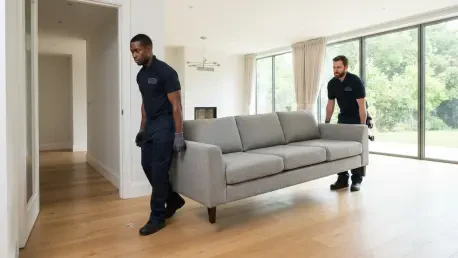

Branded tracking pages and live dispatcher-to-driver chat features have become essential tools for maintaining professional communication during the delivery process. In the high-stakes environment of 2026, furniture retailers face a logistics landscape far more complex than that of standard parcel delivery. Transporting bulky, high-value items requires more than just a truck and a driver; it demands a synchronized orchestration between warehouse staging, precise appointment scheduling, and white-glove assembly services. When a customer spends thousands of dollars on a custom sectional or a solid wood dining set, the final mile of delivery becomes the most critical touchpoint for brand reputation. Consequently, the industry has seen a massive shift toward specialized software that can handle the unique nuances of two-person crews and rigorous condition reporting. Retailers now find themselves navigating a market split between all-in-one operational systems and niche tools that master specific segments like route optimization or legal documentation.
The fundamental challenge for modern furniture logistics lies in bridging the gap between inventory availability and the actual arrival at the consumer’s home. A successful delivery is no longer just about the destination; it is about the preparation that happens hours or even days before the truck leaves the loading dock. Retailers are increasingly looking for solutions that address the professionalization of the proof-of-delivery process while managing granular time windows that respect the customer’s schedule. As the industry moves further into 2026, the demand for transparency and accountability has reached an all-time high, forcing companies to move away from legacy manual processes and toward digital-first strategies. This evolution has transformed last-mile software from a mere convenience into a strategic necessity that directly impacts the bottom line by reducing liability and increasing repeat business through superior service levels.
Integrated Operations and Technical Precision
Grasshopper Labs: The Warehouse Connection
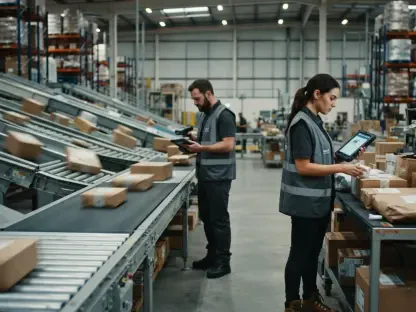
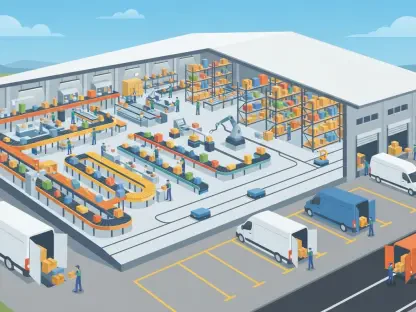
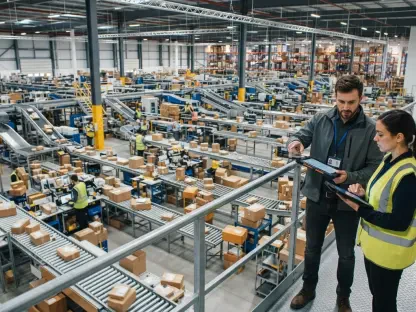
Grasshopper Labs distinguishes itself as a premier solution for retailers who need to bridge the gap between the stockroom and the final destination. Its standout feature is a dedicated warehouse application that manages the receiving, picking, and staging of inventory with meticulous detail. By providing real-time visibility on the warehouse floor, the platform ensures that dispatchers can confirm every item is correctly staged before a truck ever leaves the bay. This high level of integration is particularly vital for furniture retailers who often deal with multi-component orders where a single missing leg or hardware kit can ruin an entire delivery experience. The software facilitates a seamless handoff by allowing warehouse staff to update the status of items instantly, which then flows directly into the route planning module for the delivery teams.
Building on this foundation of internal visibility, Grasshopper Labs also supports complex service workflows that are often neglected by generic logistics platforms. It allows for the assignment of specialized two-person crews and provides tools for customer self-scheduling, which has become a standard expectation in 2026. By connecting the receiving department directly to the driver’s mobile app, the system creates a single source of truth for the entire lifecycle of an order. This holistic approach minimizes the risk of misplaced items and ensures that the delivery team is fully informed about any specific handling instructions or customer requests before they arrive on-site. For retailers aiming to eliminate the friction between the back-of-house operations and the customer-facing delivery, this integrated warehouse functionality serves as a significant competitive advantage.
Onfleet: Execution and Documentation
Onfleet is positioned as a high-end choice for retailers who prioritize the actual execution of the delivery and the legal protection provided by robust documentation. Known for its sophisticated user interface, the software includes built-in driver-to-dispatcher chat and branded tracking for customers at every tier, ensuring that communication remains professional and transparent. In the current 2026 market, where consumer expectations for real-time updates are non-negotiable, Onfleet’s ability to provide accurate ETAs and live tracking links is invaluable. The platform is designed to be user-friendly for drivers, reducing the learning curve for new hires and allowing teams to focus on the physical demands of moving heavy furniture rather than struggling with a clunky mobile interface.
Recent updates to the Onfleet platform have introduced barcode-enabled scanning and mandatory “failed-stop” photo requirements, which are essential for furniture retailers dealing with high-value goods. These features ensure that the correct items are loaded onto the vehicle and provide a clear, indisputable record of why a delivery could not be completed, such as a narrow hallway or a customer not being home. By enforcing these strict documentation protocols, Onfleet protects the retailer from liability and helps resolve disputes regarding item condition or delivery attempts. The software’s focus on the “on-the-road” experience makes it an ideal fit for organizations that already have functional warehouse management but need to elevate their driver performance and customer communication to a more professional standard.
OptimoRoute: Algorithmic Efficiency
For organizations where the primary challenge is the complexity of the routes themselves, OptimoRoute offers an algorithm-driven solution focused on maximum schedule density. It is particularly effective for furniture retailers because it accounts for variable job durations, distinguishing between a simple drop-off and a time-consuming dining set assembly. This nuance is critical; a route that treats every stop as a fifteen-minute window will inevitably fail when a crew spends an hour building a bed frame. OptimoRoute allows dispatchers to input specific time estimates for different service types, ensuring that the resulting routes are realistic and achievable. This prevents driver burnout and reduces the likelihood of late arrivals, which are a leading cause of customer dissatisfaction in the bulky goods sector.
The platform further enhances operational efficiency through “skill matching,” a feature that ensures only crews with assembly training are assigned to technical orders. Not every delivery driver is skilled in furniture assembly, and sending an unqualified team to a white-glove job can lead to damaged products and frustrated clients. OptimoRoute automates the process of matching the right team to the right task while considering vehicle constraints like height and weight limits. This level of algorithmic precision allows retailers to operate with diverse fleet sizes, from small vans to large box trucks, without manual planning headaches. By optimizing for both time and expertise, the software helps retailers maximize their daily stop counts without compromising the quality of service provided to each individual customer.
Accuracy and Scalability in Delivery Networks
Track-POD: Item-Level Detail
Track-POD addresses the common industry headache of partial deliveries and multi-piece orders, which are frequent occurrences in furniture retail. In scenarios where a single damaged item or a missing carton could jeopardize an entire order, Track-POD provides granular data through per-item barcode scanning. This capability allows drivers to verify each individual piece of a sectional sofa or a bedroom suite as it is unloaded from the truck. If one component is damaged, the system can record a partial delivery, allowing the rest of the order to proceed while instantly triggering a replacement request in the back office. This level of precision prevents the “all or nothing” approach that often leads to total delivery rejections and expensive return shipping costs for the retailer.
Beyond simple scanning, the software allows retailers to create custom Proof of Delivery (POD) forms that include specific condition reports tailored to different furniture types. For example, a form for a leather sofa might require a photo of all four corners and the upholstery, while a dining table form might focus on the wood finish. These digital forms are stored in a centralized database, providing a searchable history of every delivery that occurred in 2026 and beyond. This item-level tracking is essential for managing the fallout of incomplete shipments and ensuring that the retailer has photographic evidence of the item’s condition at the moment of handoff. By digitizing these detailed reports, Track-POD helps furniture companies professionalize their claims process and maintain higher standards of accountability across their entire delivery fleet.
Bringg: Multi-Carrier Orchestration
Bringg is designed for enterprise-level retailers who manage complex logistics networks involving both internal fleets and third-party carriers. Functioning as a “control tower,” the platform provides a unified map of all moving parts, regardless of whether the truck is owned by the retailer or an external 3PL partner. This visibility is crucial for large-scale operations that need to scale their capacity during peak seasons without losing sight of the customer experience. Bringg uses automated business rules to select the best carrier for a specific job based on cost, labor skills, and service level commitments. This automation ensures that a high-end white-glove delivery is never accidentally assigned to a standard curb-side carrier, maintaining the integrity of the brand’s service promises.
Because the platform supports “relay handoffs” across multiple legs of a journey, it is the most scalable solution for large-scale operations moving furniture over long distances. An order might start in a regional distribution center, move to a local hub via a line-haul carrier, and then be picked up by a final-mile crew for home delivery. Bringg tracks the item through every transition, ensuring that the data follows the product. However, the high complexity of the tool requires significant implementation planning and staff training to reach its full potential. It is not an “off-the-shelf” solution but rather a robust logistics infrastructure for companies that have outgrown simpler routing tools and need a sophisticated engine to power a hybrid delivery model across broad geographic regions.
Evaluating Software Through Strategic Metrics
Key CriteriSelection Metrics
When evaluating last-mile software, furniture retailers should measure candidates against specific operational metrics that go beyond basic GPS tracking. The ability to handle customer appointment windows with high precision is the most critical factor for success in 2026. A system that cannot provide a narrow two-hour window will lead to missed deliveries and increased costs. Furthermore, the software must account for vehicle and service constraints, such as neighborhood parking restrictions or the need for specialized equipment like lift-gates. Retailers also need real-time dispatcher visibility to proactively manage delays before they become customer complaints. If a crew is running behind on an assembly, the office should know immediately so they can adjust the rest of the day’s schedule.
Another vital metric is how the system handles automated customer updates. Modern delivery software must proactively notify the recipient when the truck is a certain distance away, reducing the “no-show” rate that plagues the furniture industry. These notifications should include a link to the live tracking page, which has become a standard requirement for maintaining a competitive edge. Finally, the software must offer delivery evidence robust enough to withstand insurance disputes. High-resolution photos and electronic signatures are the bare minimum; the best systems also timestamp and geotag every interaction. Retailers should also consider how well the software integrates with their existing Order Management Systems (OMS) to ensure that the handoff from the sale to the delivery is completely seamless and error-free.
Analyzing Proof of Delivery and Pricing
The evolution of the industry has moved beyond simple signatures toward “visual proof of delivery,” where high-resolution photos serve as the definitive record of an item’s condition in the customer’s home. This trend reflects a broader understanding that delivery failures are often born in the warehouse or during transit, not just at the doorstep. By documenting the product in its final resting place, retailers can prove that it was delivered without damage, significantly reducing the cost of fraudulent claims. This documentation also serves as a quality control tool for assembly services, allowing managers to review the work of their crews remotely. As we move through 2026, the reliance on visual evidence has become the primary method for resolving disputes and maintaining high service standards.
This shift in operational focus is mirrored by a change in pricing models within the software industry. Many providers are moving from driver-centric monthly fees to task-centric models that allow retailers to scale their costs based on volume. This is particularly beneficial for the furniture sector, which sees massive spikes in activity during events like Black Friday or seasonal clearance sales. A task-based model allows a company to add twenty temporary trucks to their fleet for a single week without committing to a year-long license for those drivers. This flexibility ensures that the software remains a cost-effective force multiplier, spanning the entire process from the initial pick in the warehouse to the final placement in the customer’s living room.
Final Strategic Recommendations
The comprehensive analysis of the current market suggests that Grasshopper Labs is the most well-rounded choice for retailers managing their own inventory and internal delivery fleets. Its deep integration with warehouse operations solves the “upstream” problems that often lead to delivery failures, making it a powerful tool for maintaining control over the entire supply chain. However, niche needs may lead a company toward other specialized providers depending on their specific bottlenecks. For instance, Onfleet remains the superior choice for companies that prioritize sleek customer communication and a top-tier driver interface, while OptimoRoute excels in solving the most complex routing puzzles for high-density urban environments.
For retailers dealing with the unique challenges of multi-piece sets and frequent partial shipments, Track-POD remains the leader for detailed item scanning and custom reporting. In contrast, Bringg stands out as the only viable option for enterprise-level organizations managing a complex hybrid of internal and external fleets across vast distances. The right choice is always dictated by the retailer’s specific operational hurdles and their long-term growth strategy. By selecting a tool that aligns with their most pressing needs—whether that is warehouse coordination, routing efficiency, or carrier orchestration—furniture retailers can turn their delivery operations into a powerful engine for customer loyalty and sustainable business growth.
Practical Implementation Advice
The investigation into the most effective implementation strategies revealed that the most successful retailers were those who tested software against a “typical” delivery day. These companies often ran pilot programs that included common edge cases, such as on-site assembly tasks and failed delivery attempts due to customer absence. It was observed that seeing how a platform handled real-world disruptions provided far more insight than any feature list could offer. The analysis concluded that the ability of a system to communicate appointment changes and condition records back to customer service teams was the deciding factor in long-term success. Retailers who focused on these communication loops reported higher satisfaction scores and lower operational overhead throughout the year.
Furthermore, the data showed that integrating the last-mile software with existing back-office systems was a critical step that was often underestimated. The most successful implementations involved a high degree of collaboration between the IT department and the logistics team to ensure data flowed accurately between the point of sale and the driver’s app. It was also found that providing drivers with adequate training on the mobile interface was essential for ensuring the accuracy of the proof-of-delivery data. Ultimately, the transition to these advanced digital tools proved to be a transformative move for retailers who were willing to invest in the necessary organizational changes. By prioritizing transparency and documentation, these companies ensured a seamless experience for the end consumer and fortified their operations against the rising costs of the modern supply chain.