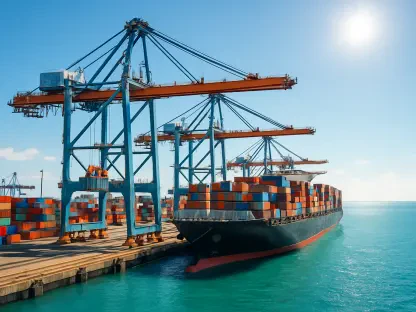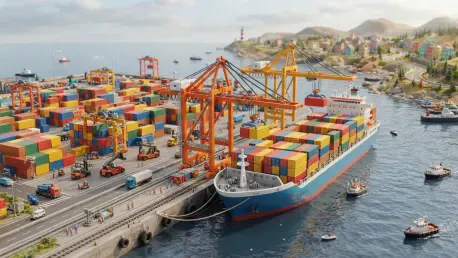

The European Bank for Reconstruction and Development has pledged a €45 million financing package to modernize the Port of Aktau and reduce average container-handling times. This strategic financial infusion arrives at a pivotal moment for the Middle Corridor, formally recognized as the Trans-Caspian International Transport Route, which has become a vital lifeline for Eurasian commerce. As logistical firms seek reliable alternatives to routes through Russia, this path connecting China to European markets via Kazakhstan and the Caucasus has experienced an unprecedented surge in relevance. The Kazakh government is currently spearheading an intensive industrial push to solidify this route as a permanent fixture of global logistics. However, this maritime expansion is currently grappling with a complex intersection of economic opportunity and severe environmental instability. The project represents a bold attempt to redraw the map of trade, but the success of this endeavor depends on more than financial capital.
Scaling Capacity Amidst Growing Global Demand
The current momentum behind this trade route is fueled by a dramatic spike in container traffic that began accelerating earlier this year. Between January and August 2026, the volume of goods moving along this route reached 44,200 twenty-foot equivalent units, marking a significant 58% increase compared to the previous twelve-month cycle. This surge is most visible in the number of container trains departing from China, which nearly doubled from 228 to 419 during the same timeframe. Such rapid growth indicates that international shippers are no longer viewing the corridor as a temporary workaround but as a core component of their long-term supply chain strategies. This shift has placed immense pressure on existing infrastructure, necessitating a rapid scale-up of logistics capabilities at every junction of the route. The ability of the corridor to absorb this influx without massive bottlenecks remains the central focus of regional maritime authorities.
Looking toward the future, the World Bank has highlighted the corridor’s long-term potential, suggesting that trade volumes could triple by 2040 if the right investments are maintained. This transformation would likely cut delivery times by 50%, making the route highly competitive with traditional maritime shipping lanes that bypass the Caspian entirely. Beyond speed, the economic impact is projected to be profound, potentially catalyzing a 3.3% increase in the combined GDP of the nine nations currently connected to the network. Such growth is expected to generate approximately two million new jobs across the region, fostering stability and industrial development in Central Asia and the Caucasus. To prepare for this future, Kazakhstan is moving forward with an aggressive roadmap through KTZ Express Shipping, aiming to increase its domestic fleet to 13 vessels by 2028. This expansion is designed to provide the necessary deadweight tonnage to keep the corridor flowing.
Strategic Alliances and Maritime Fleet Expansion
A major component of this maritime strategy involves high-level joint ventures, most notably the partnership between Kazakhstan’s Kazmortransflot and the AD Ports Group of the United Arab Emirates. This collaboration is currently focused on the development of high-capacity container ships that will more than double the carrying capacity of the vessels currently navigating the Caspian Sea. By transitioning to these larger ships, which are scheduled to be operational by the end of 2027, operators aim to achieve significant economies of scale. The goal is to lower the per-container transit cost, which has historically been a barrier to the corridor’s competitiveness against northern rail routes. These new vessels will boast a capacity of 780 TEUs each, a significant jump from the 350-TEU capacity of existing ships. This scaling of the fleet is a direct response to the necessity of moving larger volumes of cargo with greater efficiency as global trade patterns continue to reorganize.
To support this expansion, Kazakhstan has secured international contracts with several prominent shipyards in China and Azerbaijan. These agreements focus on the construction of multipurpose dry cargo ships and specialized river-sea vessels that are tailored to the unique geography and inland waterways of the region. For instance, Jiangsu Haizhongzhou Shipping Industry in China is tasked with building four versatile vessels that can carry 537 TEUs, while the Baku Shipyard is currently handling the production of dry cargo vessels intended to bolster regional capacity. These partnerships reflect a multi-national effort to provide a diverse fleet that can handle various types of freight, from electronics to agricultural products. By diversifying the types of vessels in service, the national railway company Kazakhstan Temir Zholy hopes to minimize the risk of logistical gaps during seasonal shifts in demand. This industrial push represents one of the most significant investments in Caspian maritime assets in decades.
Navigating the Crisis of the Receding Caspian Sea
Despite the technological and economic progress, the shrinking water levels of the Caspian Sea pose a fundamental threat to the long-term viability of the Middle Corridor. As the sea retreats due to climate change and shifting hydrological patterns, the depth of approach channels at critical ports like Aktau and Kuryk is steadily diminishing. This environmental shift has created a logistical paradox where the new, larger ships being built may not be able to operate at their full potential. Shallower waters force these high-capacity vessels to carry lighter loads to avoid grounding in the receding berths. This reduction in draft depth directly undermines the economies of scale that the fleet expansion was intended to achieve. If the water levels continue to drop at the current rate, the investment in larger ships could face diminishing returns, as the vessels will be restricted by the physical realities of the seafloor rather than the demand for cargo space.
The impact of the receding sea is already being felt by freight operators across the region, with recent reports indicating that certain ferries are limited to 80% of their maximum capacity. This inefficiency drives up operational costs, as more frequent trips are required to move the same amount of cargo, which in turn increases fuel consumption and labor expenses. The Organisation for Economic Co-operation and Development has flagged that these falling water levels are already contributing to higher freight rates. Furthermore, port operations are already restricted for approximately 75 days a year due to adverse weather conditions, and shallower drafts make vessels even more vulnerable to wind and wave action. This combination of environmental factors creates a volatile operating environment that threatens to slow the momentum of the corridor. Addressing these physical constraints requires a massive commitment to dredging and coastal engineering to ensure that the ports remain accessible.
Digital Integration and Infrastructure Resilience
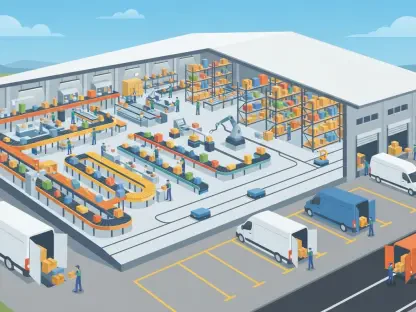
The government successfully channeled approximately $179 million into port modernization and specialized dredging operations to mitigate environmental hurdles. This initiative, which received backing from the European Union and international financial institutions, targeted the deepening of approach channels and the upgrading of existing berths to accommodate larger vessels. The acquisition of advanced cargo-handling equipment significantly reduced the time required to move containers from rail cars to ships, addressing a critical bottleneck in the intermodal process. By streamlining these transitions, operators managed to cut container-handling times to just two and a half minutes per unit. These physical upgrades proved essential for maintaining the corridor’s reliability during a period of significant hydrological change. The successful implementation of these engineering solutions ensured that the ports of Aktau and Kuryk remained primary transit hubs for the Eurasian continent throughout the year.
The regional authorities realized that physical infrastructure alone was insufficient, so they focused on a comprehensive digital transformation to streamline the movement of goods. Transport departments from Kazakhstan, Azerbaijan, Georgia, and China implemented a unified schedule for container trains and established automated systems for exchanging cargo data. These digital tools optimized the intermodal transition, ensuring that freight moved seamlessly across borders with minimal idling time in the ports. This coordinated effort allowed the Middle Corridor to function as a single, integrated logistics entity rather than a series of disconnected national segments. Stakeholders acknowledged that the future of trade in the region depended on maintaining these technological standards and continuing to adapt to the hydrological challenges of the Caspian. Moving forward, the focus shifted toward sustainable dredging practices and further harmonization of customs procedures to ensure that the corridor remained a viable link.