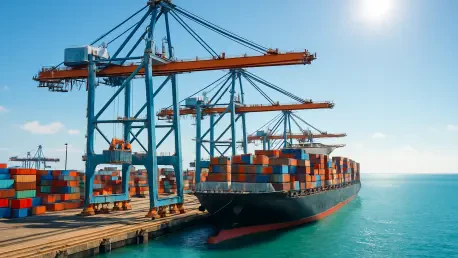

The historical reliance on traditional shipping routes has transformed into a complex web of interconnected supply chains where a single delay can trigger a cascading failure across entire national economies. In the Central America, Panama, Mexico, Dominican Republic, and Haiti (CAPDR) region, this reality defines the modern economic landscape. These nations serve as a critical bridge between global markets and domestic stability, making the efficiency of their logistics ecosystems a matter of national security. As trade integration deepens, the region finds itself at a crossroads where the benefits of global commerce are increasingly tied to the resilience of local infrastructure.
The Vital Intersection of Trade Integration and Logistical Frameworks in the Region
High levels of imported inputs and the integration of transport services create a unique economic profile for the CAPDR region. This trade exposure is a primary driver of growth, allowing businesses to access sophisticated components and international consumer bases. However, such deep integration also introduces systemic vulnerabilities. When external shocks disrupt the flow of goods, the lack of a robust logistical buffer can lead to rapid economic contraction. The reliance on foreign transport services means that local markets are often at the mercy of global price fluctuations and container shortages, highlighting the need for a more stable domestic framework.
The structural pillars of the regional logistics industry are diverse, ranging from the world-class maritime port operations in Panama and Mexico to the vast inland transportation networks that crisscross Central America. Transshipment hubs act as the valves of regional trade, determining the speed at which goods move from sea to land. Yet, the strength of these pillars is uneven, often creating a fragmented network that struggles to maintain fluidity during crises. For these economies, a fluid supply chain is no longer just a business advantage for individual firms; it is an essential safeguard for national GDP, protecting the economy from the volatility inherent in global trade.
Evolution of Supply Chain Dynamics and Regional Performance Metrics
The global trade environment has undergone a fundamental shift from hyper-globalization toward a model centered on resilience. The industry focus has transitioned from just-in-time efficiency, which prioritized lean inventories and minimal costs, to just-in-case reliability. This change is a direct response to the recurring shocks that have plagued the global economy in recent years. In CAPDR, this shift requires a complete reimagining of supply chain dynamics, moving away from a passive acceptance of delays and toward a proactive strategy of risk mitigation and redundancy.
Emerging Trends and Technological Drivers in Global Trade
Digitalization has emerged as the most significant technological driver in this transformation. The adoption of real-time tracking, blockchain for customs documentation, and automated inventory management has fundamentally altered how goods move across borders. These tools provide much-needed transparency, allowing logistical providers to identify bottlenecks before they lead to total stoppages. Furthermore, evolving consumer behavior, characterized by a demand for faster and more predictable delivery times, is forcing regional industries to modernize their operations or risk becoming irrelevant in an increasingly competitive global market.
Moreover, the rise of intelligent systems is allowing for better coordination between different modes of transport. Logistics providers are now integrating maritime data with inland trucking schedules to ensure that cargo does not sit idle at ports. This technological leap is essential for maintaining a competitive edge. By reducing the time goods spend in transit, CAPDR nations can better serve the North American market and improve their standing in the global trade hierarchy.
Comparative Market Data and Growth Projections
Analyzing regional performance through a data-driven lens reveals a persistent logistics deficit. The CAPDR region currently maintains an efficiency score of -0.04, which lags behind the broader Latin American and Caribbean average. This gap is not merely a statistical curiosity; it represents a significant drag on economic potential. When compared to advanced economies, the discrepancy becomes even more pronounced, suggesting that the region is missing out on the productivity gains that come with high-performing supply chains. Improving this score is essential for closing the gap with global competitors.
The economic impact analysis shows that supply chain stress correlates directly with substantial financial losses. For the average regional economy, these disruptions result in an annual GDP loss of approximately $85 million. Such figures underscore the high stakes involved in logistical reform. However, forward-looking performance indicators suggest a path toward recovery. By narrowing the logistics gap and improving chain fluidity, the region could unlock a new wave of growth. Projections for the period from 2026 to 2028 indicate that targeted investments in operational management could significantly reduce these losses and stabilize national output.
Navigating Structural Obstacles and Mitigating Supply Chain Vulnerabilities
The “unfortunate duality” refers to the high-risk profile of nations that possess significant trade exposure but lack developed logistical infrastructure. In these cases, the economy is wide open to global shocks but lacks the internal mechanisms to absorb them. This creates a scenario where even a minor disruption in global shipping can have an outsized impact on local inflation and manufacturing. Addressing this duality requires a strategic shift in how governments prioritize their development agendas, moving from a focus on trade volume to a focus on trade quality and reliability.
A critical distinction must be made between hard infrastructure and soft connectivity. While physical port capacity is important, it is the fluidity of the entire chain that ultimately determines resilience. Bottlenecks often occur not at the pier, but in the bureaucratic layers of customs and cross-border transit. Regulatory hurdles and administrative inefficiencies act as multipliers for external shocks, turning a minor delay into a week-long stoppage. Strategic solutions must involve regional coordination and public-private partnerships to de-risk national economies by streamlining the movement of goods from point to point.
The Regulatory Framework and Institutional Standards for Secure Trade
Harmonizing regional standards is a prerequisite for a secure and efficient trade corridor. Inter-country agreements that streamline customs processes and reduce transit times are vital for the CAPDR region. By aligning maritime safety and security protocols with international standards, port operations can become more reliable transshipment points. This synchronization reduces the administrative burden on logistics providers, allowing them to focus on the physical movement of cargo. Modernizing these legal frameworks is not just a technical task; it is a strategic necessity for regional integration.
Updated trade laws facilitate digital traceability and reduce the administrative delays that often plague border crossings. When logistics regulation is treated as a proactive macroeconomic defense strategy, it becomes a tool for protecting the economy from external volatility. This approach moves beyond the traditional view of customs as a passive administrative function and positions it as a critical component of national security. Secure trade corridors, backed by strong institutional standards, ensure that the region remains a trusted partner in the global supply chain, attracting further investment and stabilizing economic growth.
Future Horizons: Innovation and Strategic Transformation in CAPDR Logistics
The future of logistics in the region lies in the primacy of intelligent supply chains. Artificial intelligence is beginning to play a central role in managing complex logistics networks, allowing providers to anticipate and reroute around global disruptions. This move toward predictive management represents a significant leap forward in regional competitiveness. Innovation in end-to-end coordination will bridge the gap between maritime arrival and final-mile delivery, creating a more seamless experience for both industrial and retail consumers.
Global economic shifts also present a unique opportunity for nearshoring. As North American markets seek more resilient and geographically closer suppliers, the CAPDR region is perfectly positioned to become a logistical powerhouse. Leveraging geography to create a stable hub for manufacturing and distribution will be a key driver of growth from 2026 through the end of the decade. Additionally, the integration of green logistics and carbon regulations will shape the long-term competitiveness of regional routes, ensuring that economic growth is both sustainable and environmentally responsible.
Strengthening the Economic Foundation Through Logistical Excellence
The synthesis of empirical findings demonstrated that logistics performance served as the primary shock absorber for the volatile economic environment of the CAPDR nations. It became clear that the regions which prioritized soft infrastructure and digitalization were far better equipped to withstand global supply chain pressures. Strategic investments shifted away from mere physical expansion and toward operational excellence, which proved to be a more cost-effective method of safeguarding national GDP. This transition allowed the region to mitigate the annual $85 million loss that had previously hindered its average economic progress.
Policymakers moved toward a model that viewed logistics as a macroeconomic defense rather than a simple administrative task. By focusing on chain fluidity and inter-country coordination, the region effectively transformed its vulnerability into a strategic asset. The strategic outlook for these nations improved as they transitioned from being passive participants in global trade to becoming high-performing logistical hubs. This holistic transformation provided a more stable foundation for economic growth, ensuring that the CAPDR corridor remained resilient in the face of future global disruptions. Future considerations should now focus on scaling these technological advancements to all levels of the domestic transport sector.