
Industrial automation once required a clear line in the sand, a physical or infrared barrier that separated the machine’s path from the human’s reach. This binary environment dictated that safety meant total cessation, where any entry into the “forbidden zone” triggered an emergency stop that crippled productivity for minutes at a time. The introduction of the beRobox PALTZ system represents a pivotal shift in this philosophy, allowing high-speed robotics to harmonize with human presence rather than viewing it as a systemic error. By replacing steel fences with invisible, adaptive barriers, the factory floor has finally moved toward a model of true collaboration.
This transformation is driven by a move away from the “all-or-nothing” safety shutdown approach that has long hampered industrial efficiency. In the modern warehouse, a robot is no longer a blind giant confined to a box; it is an intelligent participant capable of adjusting its behavior based on the proximity of its human colleagues. The PALTZ system achieves this by aligning high-speed robotic power with a sophisticated spatial awareness that allows the machine to slow down or pivot its movement without ever fully stopping the production line.
The End of the “Forbidden Zone” in Industrial Automation
The transition from rigid steel cages to fluid, sensor-driven workspaces has fundamentally altered the blueprint of the modern facility. In earlier decades, safety was a structural concern, relying on heavy guarding that permanently occupied large swaths of floor space. Today, the beRobox PALTZ system utilizes a dynamic approach where the “safe” area is determined by the live interaction between the robot and the operator. This ensures that the robot can operate at its maximum potential until a human presence necessitates a nuanced change in speed or trajectory.
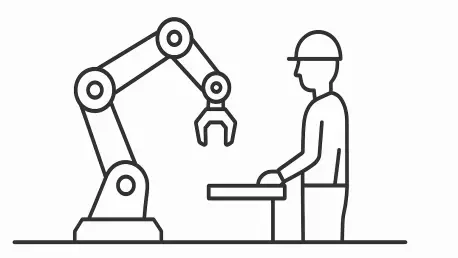
Moving beyond the traditional shutdown protocols, this new era of automation prioritizes continuous uptime. When a worker approaches a robotic cell to perform a task, the system no longer treats this as a catastrophic breach. Instead, the robotics and human presence finally align through real-time communication, ensuring that the machine respects human boundaries while maintaining its workflow in other sections of the workspace. This flexibility is the hallmark of a system designed for a fast-paced logistical environment.
Why Static Safety Is the New Bottleneck for Modern Logistics
Traditional perimeter-based protection, such as fences, light curtains, and floor scanners, has become a significant bottleneck for modern logistics. These systems create static zones that consume valuable floor space, often forcing manufacturers to build larger facilities than necessary to accommodate the “empty” safety buffers required by law. Furthermore, these rigid boundaries hinder facility throughput by making the entire operation vulnerable to the slowest common denominator: the human-machine handover.
The financial and operational cost of machine downtime during routine pallet changeovers is a burden many facilities can no longer afford. Every time a light curtain is tripped and a robot grinds to a halt, the recovery time—including the technical restart and safety checks—eats into the daily output. Addressing the “restart safety” challenge is also critical; traditional scanners often fail to ensure operators remain detected once they are inside a cell, leading to dangerous scenarios where a machine might restart while a human is still present but hidden by an obstacle.
Deconstructing the 3D Dynamic Safety Module
The 3D Dynamic Safety module centers on the “moving safety zone” concept, which effectively shifts the detection logic from the floor to the robot itself. By integrating the Universal Robots UR20 with adaptive spatial awareness, the protective area moves in tandem with the arm. This ensures that the safety zone is always concentrated exactly where the hazard exists. This volumetric safety bubble eliminates the need for sprawling floor-based sensors that can be easily obstructed or triggered by harmless debris.
This real-time synchronization between the robot’s physical position and human proximity allows for a much more compact deployment. By removing complex, fixed safeguarding architectures, companies can install robotic palletizers in tight spaces where traditional automation would be impossible. The system simplifies the entire setup by focusing on the interaction between the machine and the human, creating a protective envelope that is as mobile and flexible as the robot it guards.
The Ultrasonic Advantage: Overcoming the Limitations of Light
At the heart of this innovation is Sonair’s ADAR One, the world’s first SIL 2 / PL d certified 3D ultrasonic sensor. While LiDAR and vision systems have long served as the industry standard, they are often compromised by the harsh realities of a manufacturing environment. Dust particles, smoke, and fluctuating light levels from overhead bays or welding equipment can cause optical sensors to fail. Ultrasonic technology, however, relies on sound waves that penetrate these visual barriers with ease.
The reliability of ultrasound is particularly evident when dealing with the “shrink-wrap” problem, where highly reflective surfaces confuse traditional light-based sensors. In a palletizing environment, plastic wrap is ubiquitous, and its tendency to mirror or scatter laser beams can lead to false stops or, worse, missed detections. Ultrasound remains indifferent to these optical properties, ensuring that a person standing behind a stack of wrapped goods is detected as clearly as if they were in an open field.
Expert Perspectives on Human-Robot Coexistence
beRobox CEO David Demers has frequently noted that technology must reflect the “reality of the production floor,” where movement is constant and unpredictable. He emphasizes that engineering a nuanced response—moving from binary triggers to intelligent, situational reactions—is the only way to achieve peak efficiency. By distinguishing between inanimate objects, such as a full pallet, and human operators, the 3D ultrasonic perception ensures that the robot doesn’t treat every obstruction as a reason to stop the entire operation.
The goal of this nuance is to foster a workspace where humans and robots are not merely co-located but are truly coexisting. Robotic safety engineer Max Walsh highlights that by combining the robot’s internal position data with external 3D sensing, the system can determine the most appropriate reaction to a human’s proximity. This prevents the “all-or-nothing” approach to safety, allowing the robot to continue palletizing at a secondary station while a human works safely at the primary one.
Strategies for Implementing Adaptive Safety in Your Facility
Evaluating the workspace is the first step for any facility manager looking to transition to this new model of automation. Identifying high-traffic zones that would benefit from a reduced safety footprint can reveal significant opportunities for increasing the density of the production line. By optimizing the pallet changeover process through dynamic safety, facilities can maintain continuous production, effectively doubling the efficiency of a single robotic cell compared to one tethered by static light curtains.
Transitioning from hardware-heavy guarding to sensor-integrated robotic cells allowed early adopters to future-proof their assembly lines. The move toward scalable, robot-mounted safety technology meant that as production needs evolved, the safety parameters could be adjusted digitally rather than through the reconstruction of physical fences. This flexibility proved that when machines were empowered to see and understand their surroundings, they became more than just tools; they became reliable partners in the industrial process. Managers who embraced these sensor-driven solutions found that they could deploy more robots in less space, ultimately securing a more resilient and productive manufacturing future.