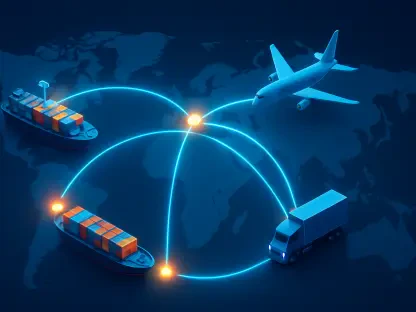

The intersection of algorithmic precision and massive industrial hardware has created a landscape where the velocity of a package is no longer limited by the speed of a conveyor belt but by the computational overhead of the energy grid that powers it. As of 2026, the logistics sector has transitioned from a labor-dependent model to a capital-intensive, high-technology industry. This evolution is driven by the necessity to reconcile the skyrocketing demand for instantaneous fulfillment with the physical limitations of legacy infrastructure. The current review explores how the integration of artificial intelligence and robotics has fundamentally altered the DNA of the supply chain, moving beyond mere mechanical assistance into a realm of autonomous orchestration that governs everything from the spatial orientation of a parcel to the energy consumption of a regional data center.
The shift toward AI-driven industrialization represents a departure from the “blind” automation of the previous decade. Earlier systems relied on fixed paths and pre-programmed logic that struggled with the variability inherent in modern commerce. In contrast, today’s systems utilize real-time computer vision and deep learning to adapt to an infinite variety of package shapes, sizes, and weights. This technological leap has moved the industry away from manual sorting, which was prone to fatigue and human error, toward a continuous-flow model where physical hubs act as large-scale processors. In this context, logistics is no longer just a support function; it has become a primary driver of technological innovation, influencing advancements in semiconductor design, energy storage, and autonomous navigation.
Understanding the broader technological landscape requires an acknowledgment of how deeply integrated these systems have become with the digital economy. The emergence of automated logistics is not an isolated event but a response to the “efficiency ceiling” that manual labor reached years ago. To break through this ceiling, companies have had to reimagine the delivery station not as a warehouse, but as a sophisticated robotic cell. The resulting infrastructure is a complex web of sensors and actuators that operate with a level of synchronicity that mirrors biological systems. This review analyzes the components and strategies that define this era of automated logistics, providing a technical and financial perspective on the state of the industry.
Core Components of Modern Automation
AI-Driven Final-Mile Robotics
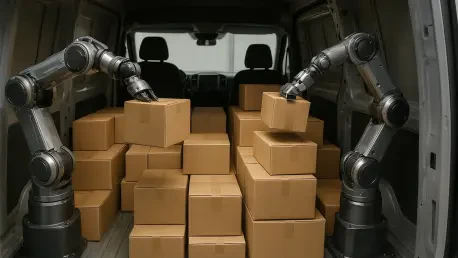
The most critical innovation within the final-mile segment is the deployment of robotic sequencing systems that leverage complex spatial algorithms to solve the “three-dimensional puzzle” of parcel loading. These algorithms do not simply identify a package; they calculate its optimal position within a delivery vehicle based on the specific delivery route and the weight distribution required for vehicle safety. By using what is often referred to as “Project Tetromino” logic, these systems analyze the geometric properties of every item on a conveyor belt in milliseconds. This allows for a level of spatial efficiency that manual loaders cannot match, effectively increasing the cargo capacity of existing fleets without adding new vehicles to the road.
Beyond spatial optimization, these robotic systems utilize advanced sequencing to ensure that the driver has the right package at the right time. As a package moves through a final-mile hub, the AI-driven robotics interact with the routing software to arrange items in the exact reverse order of the delivery stops. This reduces the time a driver spends searching for a parcel at each stop, which is historically the most significant bottleneck in the delivery process. The implementation of these sequences requires a high degree of coordination between the software layer and the physical robotic arms, which must possess the dexterity to handle delicate electronics and heavy industrial parts with the same level of care.
The unique value of this technology lies in its ability to eliminate the “dead time” associated with traditional sorting. By using spatial algorithms that treat the delivery van as a dynamic, three-dimensional grid, companies can maximize every cubic inch of available space. This implementation is unique because it combines predictive analytics with physical manipulation in real-time. While competitors might focus on faster conveyor belts, this approach focuses on the intelligence of the load itself. This transition toward “intelligent packing” is what allows for the massive throughput increases observed in the most advanced delivery stations today.
Autonomous Material Handling Systems
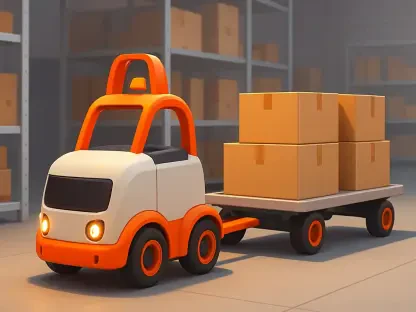
The technical architecture of modern material handling has been revolutionized by the introduction of automated vehicle loading and AI-driven storage tray sequencing. Companies like Boxbot have introduced systems that can expedite the loading phase by a factor of ten compared to traditional methods. These systems rely on a series of autonomous trays that serve as individual transport units for each parcel. Instead of a bulk flow of items, each tray is tracked and moved independently through the facility. This allows for a granular level of control where the system can re-prioritize specific trays based on changing delivery windows or urgent shipping requests.
The technical complexity of these handling systems is found in their ability to manage “multi-agent coordination.” Within a single facility, hundreds of autonomous units must navigate a shared space without colliding while maintaining a constant flow toward the loading docks. This is achieved through the use of decentralized control algorithms where each unit makes local decisions based on a global set of efficiency goals. Such a setup ensures that there is no single point of failure; if one unit malfunctions, the rest of the swarm reroutes automatically. This level of resilience is essential for maintaining the 2.5x faster processing rates that have become the new industry standard.
The use of AI-driven storage tray sequencing is particularly significant because it addresses the problem of throughput variability. In traditional systems, a sudden influx of large or heavy items could slow down the entire line. However, the current generation of autonomous handlers can identify these “outliers” and divert them to specialized processing paths without interrupting the main flow. This makes the system far more adaptable to the unpredictable nature of e-commerce, where package dimensions vary wildly. The integration of these automated loading systems marks the end of the “static warehouse” and the beginning of the “kinetic fulfillment center.”
Emerging Trends and Technological Shifts
The industry is currently witnessing a massive shift toward “Tetris-style” algorithmic parcel packing, a trend that is redefined by the desire for total spatial utilization. This initiative involves the use of neural networks that have been trained on millions of previous loading scenarios to predict the most efficient way to stack irregular objects. The shift is not merely about speed; it is about the physics of transportation. By packing parcels more tightly and securely, the algorithms reduce the likelihood of damage during transit, thereby decreasing the costs associated with returns and replacements. This trend represents a maturation of AI, where the focus has moved from simple identification to complex problem-solving.
Furthermore, there is a clear trend toward the integration of much higher processing rates, with new facilities designed to handle volumes that are 2.5 times greater than those of just a few years ago. This increase in speed is supported by improvements in both hardware and software. On the hardware side, the use of high-speed actuators and carbon-fiber robotic components has reduced the latency of physical movements. On the software side, the transition from centralized “cloud” processing to “edge” computing has allowed for faster decision-making at the point of action. These technological shifts are creating a new baseline for what is considered an efficient logistics operation.
The rise of initiatives like “Project Tetromino” also highlights a broader movement toward the total digitalization of the physical world. Every package is now a data point, and every movement is a transaction in a giant industrial ledger. This shift allows for a level of transparency and traceability that was previously impossible. For example, by using “Tetris-style” packing, companies can generate a digital twin of every loaded vehicle, allowing them to predict precisely how the load will shift during a specific turn or braking event. This convergence of data and physical reality is the defining characteristic of the current technological shift in logistics.
Real-World Applications and Sector Impact
Retail and E-commerce Fulfillment
In the realm of retail, the deployment of final-mile robotics is primarily aimed at eliminating the manual inefficiencies that have historically plagued urban delivery hubs. Major retailers are now using these technologies to transform small, high-density locations into high-speed sorting centers. This is particularly relevant in “hyper-local” fulfillment, where the goal is to get a package from a local hub to a customer’s door in under two hours. By automating the sorting and loading process, these hubs can operate with a much smaller footprint, allowing them to be located in expensive urban areas where traditional large-scale warehouses would be cost-prohibitive.
The impact on labor and operational costs in the retail sector is profound. By removing the need for manual sorting in the final mile, retailers can redirect their human capital toward more complex tasks such as customer service or specialized maintenance. Moreover, the increased efficiency of these automated hubs allows for a more consistent delivery experience. The “human element” of fatigue and error is replaced by a system that maintains the same level of precision at 3:00 AM as it does at 3:00 PM. This reliability is the foundation upon which modern e-commerce giants are building their brand loyalty.
However, the transition to these automated systems is not without its difficulties for the retail sector. The initial integration of robotics requires a complete overhaul of the existing workflow, which can lead to temporary disruptions. Retailers must also invest in retraining their staff to work alongside these new systems. Despite these short-term hurdles, the long-term impact is a significant expansion of profit margins. The ability to process 2.5 times more packages without increasing the physical size of the hub or the number of workers is a powerful economic incentive that is driving the widespread adoption of these technologies across the retail landscape.
Strategic Infrastructure Partnerships
A unique and increasingly vital aspect of the logistics revolution is the collaboration between logistics providers and energy technology firms. The massive power requirements of automated data centers and robotic hubs have turned energy management into a strategic logistics challenge. For instance, partnerships between AI leaders like Nvidia and energy firms like Lancium are becoming the blueprint for future infrastructure. These collaborations aim to secure gigawatt-scale power pipelines that can sustain the computational needs of “AI industrialization.” In this new model, a logistics company is only as good as its energy supply.
These partnerships are not just about securing raw power; they are about energy efficiency and the use of “smart” grids to manage demand. By using advanced reference designs, firms are fitting up to 40% more GPUs into the same power budget, which directly translates into more processing power for the logistics algorithms. This is critical because energy consumption has become the primary bottleneck for scaling AI in the supply chain. The ability to run massive simulations and real-time optimizations requires a constant and reliable flow of electricity, making the relationship with energy providers a core part of the logistics strategy.
Furthermore, these infrastructure partnerships are often driven by the need to meet sustainability goals while maintaining high growth. The shift toward automated data centers that are powered by renewable energy sources is a major trend in 2026. This allows logistics giants to scale their operations without a corresponding increase in their carbon footprint. The integration of 15-gigawatt development pipelines into the logistics network shows the sheer scale of the ambition. It is no longer enough to have a good delivery app; a company must now manage a literal power plant’s worth of energy to keep its robots moving and its algorithms thinking.
Technical Challenges and Market Obstacles
Financial and Capital Hurdles
Despite the clear benefits, the transition to total logistics automation faces massive financial obstacles, primarily due to the astronomical capital expenditure required for phased rollouts. Building a single fully automated delivery station can cost over $100 million, and a comprehensive regional network requires billions in investment. This has led to a reliance on complex financing structures, including what some analysts call “phantom leverage.” This involves off-balance-sheet guarantees and debt backstops that companies use to fund the massive hardware requirements of AI. While this fuels rapid growth, it also creates a significant financial risk if the anticipated efficiency gains do not materialize quickly enough to service the debt.
The rising cost of capital in 2026 has made these investments even more scrutinized. Bond traders are increasingly concerned about the credit profiles of companies that are heavily leveraged to fund their AI initiatives. For example, the cost of insuring the debt of some semiconductor firms has risen significantly as the market weighs the risk of an “AI bubble.” If the demand for automated logistics services were to plateau, the companies that have over-extended themselves to build the infrastructure would find themselves in a precarious position. This financial tension creates a “high-stakes” environment where only the most well-capitalized firms can afford to stay in the race.
Moreover, the financial risks are compounded by the fast pace of technological obsolescence. A robotic system that costs $85 million today might be outdated in three years due to breakthroughs in AI software or robotic dexterity. This creates a “depreciation trap” where companies must constantly reinvest to stay competitive, leading to a cycle of debt that can be difficult to break. To mitigate this, many firms are moving toward “Logistics-as-a-Service” models, where they lease the hardware rather than buying it outright. However, this only shifts the financial risk to the lessors, who must then navigate the same market volatility.
Regulatory and Safety Constraints
On the technical and regulatory front, the development of automated logistics is constrained by the need for robust safety protocols for human-robot collaboration. As robots move out of cages and into the open floor of a delivery station, the “safety-of-flight” requirements for these machines become incredibly complex. Sensors must be able to distinguish between a misplaced parcel and a human worker with 100% accuracy. Regulatory bodies are currently catching up to these technological advances, often implementing strict labor regulations that can slow down the deployment of new systems. These rules are necessary for safety but can act as a drag on the speed of innovation.
Geopolitical sanctions also play a major role in the global tech supply chain. The production of the high-end chips required for logistics AI is concentrated in a few key regions, making the entire sector vulnerable to trade disputes and international tensions. For instance, aggressive economic sanctions against specific nations can suddenly cut off the supply of critical components, delaying the rollout of new automated facilities by months or even years. This geopolitical uncertainty forces companies to build redundant supply chains, which increases costs and further complicates the logistics of the logistics industry itself.
Finally, there is the ongoing challenge of labor relations and the social impact of total automation. As machines take over more of the manual tasks in the final mile, the role of the traditional warehouse worker is being redefined. This has led to pushback from labor unions and advocacy groups, who are concerned about the long-term prospects for employment in the sector. Balancing the drive for efficiency with the need for a stable and satisfied workforce is one of the most difficult challenges facing logistics executives today. The regulatory environment is likely to become more restrictive as governments seek to protect workers from the sudden displacement caused by AI.
Future Outlook and Development Trajectory
The trajectory of logistics automation points toward the eventual transition to gigawatt-scale automated infrastructure, where the entire supply chain functions as a single, unified machine. In the coming years, we can expect to see significant breakthroughs in robotic arm dexterity, particularly through the use of soft robotics and tactile feedback sensors. This will allow robots to handle even the most irregularly shaped or fragile items, such as fresh produce or custom glassware, which are currently still mostly sorted by hand. As these physical capabilities catch up to the intelligence of the AI, the last remaining manual tasks in the warehouse will be eliminated.
Looking toward 2027 and 2028, the industry will likely see a deeper integration of autonomous long-haul trucking with final-mile robotic hubs. This would create a “seamless flow” where a package is never touched by a human hand from the moment it leaves the factory until it arrives at the customer’s doorstep. Such a system would allow for total automation of the global supply chain, leading to massive margin expansion and delivery speeds that were previously unthinkable. However, achieving this goal will require not just better robots, but a total reimagining of the global infrastructure, including the creation of dedicated “autonomous lanes” on major highways and the widespread adoption of standardized robotic interfaces.
The long-term impact of this total automation will be a fundamental shift in the global economy. As the cost of moving goods drops toward zero, the “geographic advantage” of certain regions may diminish, leading to a more decentralized model of production and consumption. Furthermore, the ability to rapidly reconfigure automated facilities will allow companies to respond to market changes in hours rather than months. This level of agility will become the primary competitive advantage in the late 2020s. While the challenges are significant, the potential for a more efficient, resilient, and responsive global logistical landscape is the ultimate promise of this technological evolution.
Summary and Final Assessment
The review of logistics automation technology revealed a sector that has successfully transitioned into a highly sophisticated, AI-driven industrial force. The convergence of spatial algorithms, robotic sequencing, and massive energy infrastructure created a system that is significantly more efficient than any manual alternative. The shift toward “Project Tetromino” style packing and 2.5x faster processing rates was not just an incremental improvement but a paradigm shift in how the physical world is managed. The analysis demonstrated that while the technological capabilities have advanced at a breathtaking pace, they remained tethered to the harsh realities of capital expenditure and regulatory oversight.
The financial landscape was characterized by a high-stakes gamble on the future of AI. The reliance on significant leverage to fund these advancements introduced a level of systemic risk that the market began to price in through rising credit costs. In contrast, the strategic partnerships between energy and technology firms provided a glimpse into a future where the supply chain is synonymous with the power grid. These developments suggested that the leaders of the logistics sector in 2026 were no longer just transport companies but were essentially energy and data managers. The tension between the promise of total automation and the burden of the debt required to build it defined the current state of the industry.
Ultimately, the assessment showed that the technology’s role in redefining the global logistical landscape was inevitable. Despite the hurdles of labor regulations and geopolitical supply chain disruptions, the efficiency gains were too great for the market to ignore. The evolution of robotic dexterity and the scaling of gigawatt-scale infrastructure pointed toward a future where the “friction” of the physical world was minimized by the “fluidity” of the digital one. The state of logistics automation was one of rapid, albeit expensive, maturation, setting the stage for a period of unprecedented global margin expansion and the total digitalization of trade. Actionable steps for the industry included the diversification of chip supply chains and the adoption of more transparent financing models to mitigate the risks associated with this necessary, yet volatile, technological leap.