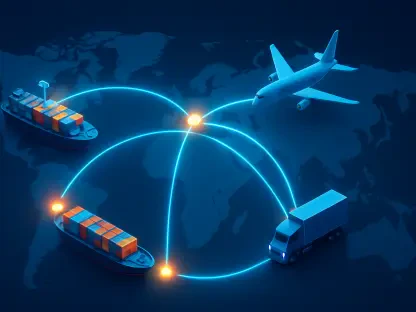

Modern commerce relies on a sophisticated web of high-performance logistics hubs that transform geographic proximity into a competitive advantage for global manufacturers and retailers. These hubs are not merely points on a map where goods are transferred from one mode of transport to another; instead, they represent the convergence of physical infrastructure, advanced technology, and strategic policy. When these elements align, the resulting market velocity allows companies to respond to shifting consumer demands with unprecedented agility. Without this foundational strength, even the most innovative supply chain strategies falter against the friction of inefficient ports, congested highways, and outdated rail systems.
The significance of these logistics centers has reached a critical point in 2026, as global trade patterns become increasingly complex and sensitive to disruption. Establishing a top-tier logistics ecosystem requires more than just investment in concrete and steel; it demands a holistic approach to regional development. This guide explores the best practices for cultivating high-speed logistics hubs, examining how specialized terminal strategies, intermodal connectivity, cargo diversification, and human capital integration create the speed necessary to thrive in a volatile market. By understanding these pillars, stakeholders can better evaluate where to position their assets and how to optimize their existing operations.
How Infrastructure and Strategy Create Market Velocity
The pursuit of supply chain speed presents an inherent paradox where the achievement of rapid, flexible movement is entirely dependent on the presence of massive, immovable assets. Fixed infrastructure, including deep-water berths, sprawling rail yards, and expansive highway interchanges, forms the bedrock upon which all logistics efficiency is built. However, infrastructure alone does not guarantee velocity. It must be complemented by a strategic framework that includes a favorable regulatory environment and a streamlined tax structure. When government and private operators collaborate to eliminate administrative friction, the physical assets can perform at their maximum designed capacity.
A region that prioritizes logistics-friendly policies ensures that its physical investments are never stifled by red tape or inadequate planning. For instance, the coordination between local planning commissions and port authorities allows for the development of industrial parks that have direct, unimpeded access to maritime terminals. This synergy reduces the distance and time associated with drayage, which in turn lowers carbon emissions and operating costs. Moreover, a proactive approach to maintaining these assets prevents the gradual decay that often leads to bottlenecks in older industrial corridors.
The dynamic nature of global trade in 2026 requires that these infrastructure projects be developed well ahead of anticipated demand. Forward-thinking regions view capital expenditure not as a reactive necessity but as a competitive tool to capture market share. By building capacity before it is strictly required, a logistics hub can offer reliable service even during unexpected surges in volume. This stability attracts major shippers who prioritize consistency, as it allows them to plan their inventory cycles with greater precision and less reliance on expensive safety stocks.
The Vital Role of High-Performance Logistics Ecosystems
Following best practices in logistics hub development is essential because these ecosystems serve as the fundamental engines of regional and national economic prosperity. A high-performance hub creates a virtuous cycle of investment and efficiency that benefits every stakeholder in the supply chain. When a port or rail terminal operates at peak efficiency, it lowers the overall landed cost of goods, making local industries more competitive on the global stage. This economic advantage then attracts further private investment, which expands the tax base and funds additional infrastructure improvements, perpetuating a cycle of growth.
The primary benefits of a well-integrated logistics ecosystem include enhanced security, significant cost savings, and operational resilience. A highly organized hub utilizes sophisticated tracking and monitoring systems that provide end-to-end visibility, reducing the risk of cargo theft or loss. Furthermore, the efficiency gained through optimized terminal operations directly translates into reduced fuel consumption and lower labor costs per unit of freight moved. These savings are critical in a market where margins are thin and the pressure to deliver goods faster and cheaper is constant.
Beyond mere efficiency, these ecosystems provide a buffer against the unpredictability of global trade. A logistics hub that integrates multiple modes of transport and handles diverse cargo types is better equipped to handle disruptions in any single sector. If a particular shipping lane faces congestion or a specific commodity market fluctuates, a diversified hub can pivot its resources to maintain steady throughput. This resilience is a key differentiator for businesses looking to mitigate risk in their supply chain, as it ensures that their products keep moving regardless of external market pressures.
Best Practices for Building and Managing Top-Tier Logistics Hubs
Creating a world-class logistics hub requires a disciplined adherence to several core principles that prioritize throughput and reliability. The most successful regions do not attempt to be everything to everyone; instead, they identify their unique geographic and economic strengths and build their infrastructure to support those specific areas. This process begins with a commitment to specialization and the separation of cargo types to prevent cross-contamination of workflows. When different varieties of freight are handled in dedicated facilities, the specific equipment and labor required for each can be optimized without interference from unrelated operations.
In addition to physical specialization, the management of these hubs must prioritize seamless connectivity between different transport modes. The goal is to minimize the “dwell time” of cargo at any single point in the transition from ship to rail or truck. Achieving this requires not only physical proximity between terminals but also the digital integration of scheduling and manifest systems. When all parties have real-time access to the status of a shipment, the coordination of labor and equipment becomes a precision exercise rather than a series of reactive adjustments.
Implementing a Specialized Dual-Port Strategy
A specialized dual-port strategy involves the deliberate separation of cargo types into distinct terminals based on their handling requirements and end destinations. This approach allows a port authority to tailor its infrastructure, such as crane specifications and storage yard layouts, to the specific needs of different freight categories. For example, high-volume containerized cargo requires massive berths and rapid ship-to-shore cranes, whereas roll-on/roll-off cargo needs expansive staging areas and specialized ramps. By segregating these operations, a port avoids the congestion that occurs when disparate cargo types compete for the same dock space and gate access.
Implementing this strategy requires a long-term commitment to infrastructure development and a clear understanding of regional market demands. It involves identifying which commodities drive the local economy and ensuring that the facilities for those goods are second to none. This specialization also extends to the workforce, as labor can be trained in the specific safety and handling protocols required for specialized freight. The result is a more predictable and efficient environment where truckers, vessel operators, and terminal managers can synchronize their activities with a high degree of confidence.
Case Study: The Georgia Ports Authority’s Specialized Terminal Approach
The Georgia Ports Authority provides a compelling example of how a dual-port strategy can drive regional dominance. By designating the Garden City Terminal in Savannah primarily for containerized cargo and the Colonels Island Terminal in Brunswick for roll-on/roll-off freight, Georgia has optimized its maritime operations for maximum throughput. This separation ensures that the rapid-fire requirements of the container market do not conflict with the specialized handling needs of automotive and heavy machinery manufacturers. Each terminal operates with a level of focus that would be impossible in a multi-purpose facility.
The success of this approach is evident in the remarkable efficiency metrics reported by these terminals. At the Garden City Terminal, truck turn times average just 43 minutes for dual transactions, a feat made possible by the dedicated infrastructure and streamlined gate processes. This efficiency allows drayage operators to complete more daily cycles, significantly increasing the velocity of cargo moving into the inland supply chain. Meanwhile, Brunswick has solidified its position as a premier hub for the automotive industry, providing a reliable gateway for both imports and exports of vehicles.
Maximizing Intermodal Connectivity and “Speed to Rail”
Intermodal connectivity is the heart of a high-speed logistics hub, as it defines how quickly cargo can transition from maritime arrivals to inland distribution networks. The most effective hubs prioritize “speed to rail,” a metric that measures the time it takes for a container to be unloaded from a ship and placed on a departing train. Minimizing this window is essential for reaching distant inland markets where trucking may be cost-prohibitive. To achieve this, terminals must feature on-dock or near-dock rail facilities that eliminate the need for lengthy drayage moves over public roads.
Maximizing this connectivity requires intensive coordination between port authorities, Class I railroads, and government transportation departments. It often involves significant civil engineering projects, such as grade-separated rail crossings and dedicated heavy-haul corridors that bypass local traffic. In 2026, the integration of automated terminal tractors and rail-mounted gantry cranes has further accelerated this process, allowing for the precise and rapid movement of containers even during peak volume periods. When rail becomes a seamless extension of the maritime terminal, the entire supply chain gains a massive boost in efficiency.
Case Study: Savannah’s 20-Hour Ship-to-Rail Transition Efficiency
The efficiency of the ship-to-rail transition in Savannah serves as a benchmark for the global logistics industry. By achieving an average transition time of just 20 hours, the port has set a standard that few other facilities can match. This rapid movement is supported by the Mason Mega Rail terminal, a massive infrastructure project that expanded the port’s rail capacity and allowed for the simultaneous building of multiple long-haul trains. This facility enables direct service to major inland hubs, reducing the reliance on regional distribution centers and shortening the total transit time for shippers.
The impact of this efficiency extends far beyond the port gates, as it influences the site selection decisions of major retailers and manufacturers. Companies are increasingly looking to establish distribution centers in regions where they can rely on fast, consistent rail service to replenish their inventory across the country. The 20-hour window in Savannah provides a level of predictability that allows these businesses to operate with lower inventory levels, directly improving their financial performance. This case study illustrates that the physical speed of the rail transition is a primary driver of a region’s economic attractiveness.
Leveraging Regional Demand and Cargo Diversification
While specialization is vital for operational efficiency, cargo diversification is equally important for long-term economic resilience. A logistics hub that handles a wide array of commodities—including energy products, construction materials, and consumer goods—is less vulnerable to downturns in any single market sector. This diversification allows a port to serve as a comprehensive energy and construction gateway for its surrounding region. By leveraging regional demand, particularly in areas with growing populations, a logistics hub can ensure a steady stream of cargo that supports local development and infrastructure projects.
Achieving this balance requires flexible terminal designs that can be repurposed or adjusted as market needs shift. For example, a terminal that primarily handles bulk commodities like limestone or cement must also be capable of managing project cargo for large-scale energy installations. This flexibility is supported by having diverse storage options, such as climate-controlled warehouses, open-air staging areas, and specialized silos. By being a “one-stop shop” for various freight needs, a logistics hub becomes an indispensable part of the regional economy, providing the raw materials and finished goods necessary for sustained growth.
Case Study: Port Tampa Bay’s Resilience Through Multi-Commodity Handling
Port Tampa Bay exemplifies the strength of a diversified cargo strategy, serving as a vital lifeline for Florida’s booming construction and energy sectors. By handling everything from containers and breakbulk cargo to liquid bulk and roll-on/roll-off freight, the port has maintained a multi-billion dollar economic impact despite fluctuations in specific global markets. This variety is particularly important given Tampa’s proximity to the I-4 corridor, one of the fastest-growing industrial and consumer regions in the country. The port’s ability to supply the raw materials for Florida’s infrastructure—such as cement and steel—while also serving as a major hub for fuel, highlights its regional importance.
The port’s resilience is further enhanced by its ability to handle specialized project cargo, such as components for renewable energy projects and large-scale manufacturing equipment. This capability ensures that as the regional economy evolves toward new industries, the port remains a central player in the supply chain. By not over-relying on a single cargo type, Port Tampa Bay has created a stable economic foundation that supports thousands of jobs and drives regional investment. This model of diversification provides a roadmap for other hubs looking to build a sustainable and adaptable logistics ecosystem.
Integrating Human Capital and Advanced Digital Systems
No amount of physical infrastructure can achieve peak performance without the integration of skilled human capital and advanced digital systems. In 2026, the logistics industry requires a workforce that is as comfortable with data analytics and automated systems as they are with traditional freight handling. High-performance hubs invest heavily in workforce development, creating talent pipelines through partnerships with local universities and technical colleges. This ensures a steady supply of logisticians, engineers, and technicians who can manage the complex technologies that define modern supply chains.
Digital integration is the “connective tissue” that allows different stakeholders to work in unison. This includes the use of AI-driven Warehouse Management Systems, real-time cargo tracking, and digital twins that simulate terminal operations to identify potential bottlenecks before they occur. However, technology is only effective when paired with strong professional relationships. The human element—such as the collaboration between warehouse operators and railroad crews—remains essential for navigating the inevitable disruptions that occur in global trade. A successful hub fosters an environment where technology empowers people to make faster, more informed decisions.
Example: WSI’s Relationship-Based Logistics and Tech-Driven Fulfillment
WSI provides a clear example of how private sector expertise can maximize the potential of public infrastructure through a combination of technology and relationship-based management. By operating a network of rail-served warehouses and specialized transloading facilities, WSI bridges the gap between the primary transport modes and the final customer. Their approach emphasizes the importance of human connections with railroad personnel, which allows for more agile problem-solving when schedule changes or equipment issues arise. This “soft infrastructure” of relationships is often what makes the difference between a minor delay and a major supply chain disruption.
In addition to its focus on human capital, WSI leverages advanced fulfillment technology to serve the needs of omnichannel retailers. Their tech-driven approach allows for the seamless integration of e-commerce orders with traditional wholesale distribution, providing customers with a unified view of their inventory. This capability is essential in a market where consumers expect rapid delivery across multiple channels. WSI’s success demonstrates that for a logistics hub to be truly effective, it must be supported by operators who can manage the complexity of modern fulfillment with both technological precision and personal expertise.
Evaluating the Future of Logistics Hub Development
The evolution of high-performance logistics hubs demonstrated that the traditional boundaries between transport modes and geographic regions effectively disappeared. The transition toward a more integrated and digital-first approach to global trade allowed the most forward-thinking regions to capture a disproportionate share of economic growth. Stakeholders who invested in these ecosystems realized that the value of a port or rail terminal was no longer measured solely by its acreage or berth depth, but by the speed and reliability of the data and freight moving through its gates. This era marked the end of isolated infrastructure projects and the beginning of the interconnected, high-velocity logistics network that defined the middle of the decade.
The success of these developments rested on a shared recognition that human talent was the ultimate differentiator in an increasingly automated world. While robots and AI systems handled the repetitive tasks of moving cargo and optimizing routes, the strategic decisions were still made by professionals who understood the nuances of global relationships and local market dynamics. Regional leaders who prioritized education and specialized training programs ensured that their workforce remained indispensable, even as the tools of the trade became more complex. This focus on the human element provided the necessary flexibility to navigate the unforeseen challenges of a rapidly changing global landscape.
The legacy of this period was a logistical framework that prioritized resilience and diversification over simple volume. The regions that thrived were those that built their hubs to handle a variety of cargo types and energy sources, ensuring they remained relevant regardless of shifts in consumer preferences or industrial technologies. As the industry moved beyond 2026, the principles of specialization, connectivity, and digital integration became the standard requirements for any site wishing to compete on the world stage. Those who adopted these best practices early not only secured their own prosperity but also provided the essential foundations for the continued expansion of global trade.