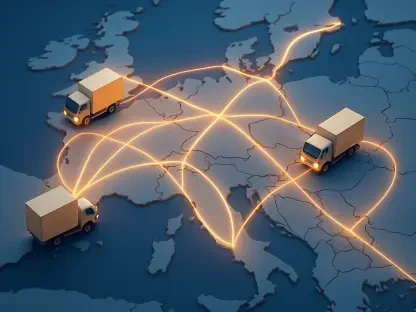

The rhythmic pulse of the North American economy currently vibrates through the engine blocks of thousands of commercial trucks crossing the Rio Grande, yet this vital flow faces a pivotal transformation as federal agencies tighten the reins on regulatory compliance. This intensification of oversight represents a significant shift in how the United States manages its most critical commercial boundary, moving away from a primary focus on sheer volume toward a more nuanced strategy centered on legal integrity and safety. For years, the border has functioned as a high-speed conveyor belt for industrial components and finished consumer goods, but the current environment demands a higher degree of accountability from every participant in the supply chain. Stakeholders are now observing a more rigorous enforcement climate that challenges traditional operational models while simultaneously paving the way for a more digitized and secure trade corridor.
The current state of the US-Mexico trade corridor remains the most essential artery for North American commerce, supporting billions of dollars in annual economic activity. However, federal agencies, most notably U.S. Customs and Border Protection and the Federal Motor Carrier Safety Administration, have launched a comprehensive crackdown on trucking operations to address long-standing safety and documentation concerns. This effort is not merely a temporary surge in inspections but a structural change in how cross-border freight is monitored. By focusing on driver qualifications and vehicle standards, authorities aim to synchronize the safety protocols of both nations, ensuring that the heavy flow of traffic does not come at the cost of public safety or domestic market stability.
The Southern border has solidified its role as the primary gateway for industrial parts, automotive components, and consumer electronics. As the geopolitical landscape shifts, the interplay between major market players and government regulators has become increasingly complex. The ongoing movement toward nearshoring has moved manufacturing centers closer to the United States, which in turn has placed an immense strain on existing border infrastructure. Consequently, the shift toward stricter enforcement is partly a response to this increased pressure, as regulators seek to manage the rising density of freight while maintaining a level playing field for domestic and international carriers alike.
Navigating the New Era of Cross-Border Logistics and Enforcement
Managing the logistics of the Southern border now requires a sophisticated understanding of both physical transport and regulatory data. The crackdown initiated by the Federal Motor Carrier Safety Administration targets specific operational discrepancies that have often been overlooked during periods of high demand. These include rigorous checks on hours-of-service compliance and the mechanical integrity of trailers crossing into the American interior. For many carriers, these inspections represent a significant time investment that must be factored into delivery schedules to avoid cascading delays across the broader supply chain.
The strategic significance of the border has never been higher, as it serves as the linchpin for the integrated manufacturing networks of North America. This vital role means that any regulatory friction has the potential to impact production lines in the Midwest or retail shelves on the East Coast. Major logistics firms are therefore collaborating more closely with government agencies to anticipate changes in enforcement priorities. This cooperative approach is essential for navigating a landscape where the rules of engagement are being rewritten to favor transparency and technological verification over traditional manual processes.
Key Market Drivers and the Rebound of Border Trade
Emerging Trends in Nearshoring and Digitalization
The nearshoring movement has profoundly altered regional freight volumes, leading to an unprecedented demand for warehouse space and distribution facilities near the border. Companies are increasingly relocating their production from overseas to Mexican industrial hubs to mitigate the risks of global supply chain disruptions. This shift has not only increased the number of trucks on the road but has also necessitated a total reimagining of how those trucks are processed. In response, there has been a significant push toward digital documentation to replace the cumbersome paperwork that historically slowed down border crossings.
One of the most impactful developments in this digital transition is the Electronic Export Manifest pilot program, which is scheduled to finalize its current testing phase on October 23. This program allows for the seamless exchange of cargo data between shippers, carriers, and customs officials before a vehicle even reaches the port of entry. Furthermore, voluntary security programs like the Customs Trade Partnership Against Terrorism are gaining more influence as carriers realize that certification can lead to expedited processing. These digital and security-focused initiatives are becoming the new standard for companies that want to maintain a competitive edge in a highly regulated environment.
Market Projections and Economic Growth Indicators
Economic data indicates that while there was a brief dip in trade volumes in 2025, the recovery in 2026 has been robust and sustained. This rebound is driven by the continued integration of North American manufacturing and a steady consumer demand for goods produced in the region. Forecasts for the Texas-Mexico logistics corridor suggest that freight volumes will continue to climb from 2026 to 2028, reflecting a long-term commitment to regionalized supply chains. International carriers that have invested in modern fleets and compliant driver pools are seeing the strongest performance indicators in this growing market.
Growth in the logistics sector is also being fueled by the expansion of secondary trade lanes that connect Mexican industrial centers directly to emerging markets in the American South and West. Financial analysts expect that the infrastructure investments currently underway will support a higher ceiling for trade capacity in the coming years. However, the success of these projections depends on the ability of the industry to adapt to the shifting regulatory standards. Carriers that fail to align their operations with the new enforcement priorities may find themselves excluded from the most lucrative contracts as shippers prioritize reliability and legal compliance.
Critical Obstacles in Compliance and Operational Fluidity
The central challenge facing the industry is the inherent tension between the need for rigorous law enforcement and the demand for efficient trade flow. While the crackdown is intended to improve safety, the intensity of these inspections can lead to significant bottlenecking at major ports of entry. Logistics managers are often caught between government mandates and the strict deadlines of their clients. Finding a balance that allows for thorough inspections without paralyzing the movement of goods is the primary focus of ongoing discussions between the private sector and federal authorities.
Moreover, there is a persistent concern regarding the inconsistent application of rules by border personnel, which can lead to unpredictable delays for carriers. When enforcement standards vary from one port to another, it creates confusion and complicates the planning process for international shipments. Strategic responses to these challenges often involve the use of specialized software to track real-time border wait times and regulatory changes. Additionally, the industry continues to grapple with a persistent driver shortage that is only exacerbated by stricter qualification standards and English-language proficiency requirements.
Collaborative strategies between the Mexican trucking association CANACAR and United States authorities have become essential for mitigating these operational obstacles. By engaging in a continuous dialogue, both sides can identify potential friction points before they result in a total logistics breakdown. These partnerships are focused on developing standardized training programs that help drivers meet the new expectations of American inspectors. Such efforts are crucial for ensuring that the border remains a bridge for commerce rather than a barrier, especially as the volume of freight continues to rise toward the end of the decade.
The Regulatory Landscape and Enhanced Enforcement Measures
Strict scrutiny of cabotage violations has become a cornerstone of the current enforcement strategy to maintain the integrity of the domestic market for United States carriers. Cabotage rules prohibit foreign drivers and vehicles from transporting freight between two points within the American interior, a practice that has occasionally been used to undercut domestic pricing. By intensifying audits and roadside checks, the Federal Motor Carrier Safety Administration is sending a clear message that compliance with these domestic transport laws is non-negotiable. This move is broadly supported by American trucking associations that seek to protect the interests of their members.
Simultaneously, there has been an intensified enforcement of English-language proficiency requirements for all commercial drivers operating in the United States. Federal law dictates that drivers must be able to communicate effectively with law enforcement and understand highway signs for safety reasons. This requirement has historically been enforced with varying degrees of strictness, but the current directive leaves little room for ambiguity. Drivers who cannot demonstrate the required level of fluency during inspections risk being placed out of service, which poses a significant logistical risk for carriers that have not invested in language training for their workforce.
The crackdown also extends to the misuse of B-1 business visitor visas, which are intended for drivers facilitating international trade but are sometimes used inappropriately for domestic trucking operations. Consular interviews and documentation audits have become much more rigorous, with officials looking for specific evidence that a driver’s activities align with the legal limitations of their visa. This heightened level of scrutiny requires carriers to maintain meticulous records of every shipment and driver assignment. Ensuring legal cross-border transport now involves a complex layer of administrative oversight that begins long before a truck reaches the international boundary.
Future Outlook for North American Supply Chain Integration
The physical landscape of North American logistics is being reshaped by the expansion of mega-logistics hubs in Texas, such as the M2 Global Logistics campus in Houston. This massive 830,000-square-foot industrial campus represents the future of integrated trade, offering a centralized location for warehousing, domestic distribution, and customs services. By situating these hubs in strategic proximity to both the border and major maritime ports, developers are creating a more resilient framework for international commerce. These facilities are designed to handle the increased complexity of modern trade, providing the infrastructure needed to support advanced technological integration.
Localization of fulfillment services is also accelerating in the Dallas-Fort Worth metroplex, where companies are investing in value-added manufacturing and rapid distribution centers. This trend reflects a desire to move final assembly and customization closer to the end consumer, further driving the demand for efficient cross-border transport of raw materials and sub-assemblies. The long-term impact of technological integration, such as automated inspection systems and blockchain-based tracking, will likely reduce the friction caused by manual inspections. These innovations offer a path toward a more seamless border experience where compliance is verified through data rather than physical intervention.
Potential disruptors, including global economic shifts and evolving trade policies, remain on the horizon as stakeholders look toward the future. The stability of the North American trade block is increasingly dependent on its ability to function as a self-contained ecosystem that can withstand external shocks. As the industry moves forward, the focus will likely remain on how to refine the balance between security and speed. The evolution of North American trade will be defined by the success of these technological and infrastructural investments in creating a supply chain that is both highly regulated and exceptionally efficient.
Summary of Industry Prospects and Strategic Recommendations
The industry recognized that the growing pains of a more regulated border environment required a fundamental shift in operational strategy. Leaders identified that balancing legal accountability with the necessity for supply chain speed was the only viable path forward for long-term regional stability. It became clear that the era of loose enforcement had ended, replaced by a system where transparency and documentation were the primary currencies of trade. Carriers that successfully navigated this transition did so by embracing a culture of compliance that permeated every level of their organization, from executive leadership to the drivers on the road.
Recommendations for carriers focused on the urgent need to invest in comprehensive driver training and advanced digital compliance tools to mitigate the risks associated with stricter federal audits. Stakeholders found that proactive engagement with programs like the Customs Trade Partnership Against Terrorism provided a significant advantage in maintaining operational fluidity. Moreover, the industry realized that investing in language proficiency and legal documentation was not merely a regulatory burden but a strategic necessity for accessing the most competitive shipping lanes. These actions helped to ensure that the supply chain remained resilient despite the increased pressure of a more rigorous enforcement climate.
Ultimately, the resilience of the US-Mexico trade lane proved to be a cornerstone of regional stability as the industry adapted to the new rules of the road. The transition toward a more regulated and digitized border environment was marked by significant initial challenges, yet it ultimately produced a more secure and predictable framework for commerce. Moving forward, the focus remained on the continuous refinement of these systems to ensure that North American trade could continue to grow without compromising safety or legal integrity. The efforts of regulators and private sector leaders alike established a foundation for a more integrated and efficient continental economy.