
Rohit Laila is a seasoned veteran in the logistics and supply chain sector, bringing decades of operational wisdom to the table. His career has tracked the industry’s evolution from traditional haulage to the high-tech, data-driven ecosystems that define modern global trade. As a key voice in the integration of last-mile services within the CEVA Logistics and CMA CGM Group framework, Laila offers a unique perspective on how technology can bridge the gap between massive scale and the personal touch required at the customer’s doorstep.
The following discussion explores the strategic unification of Colis Privé and PAACK, focusing on the synergy between operational infrastructure and digital innovation. We delve into the complexities of managing a vast network of 17,000 out-of-home delivery points, the operational benefits realized by major international retailers, and the critical role of the last mile in the end-to-end supply chain. Finally, we look toward the upcoming brand transition and what it signals for the future of European e-commerce logistics.
CEVA Logistics is merging Colis Privé and PAACK into a single brand across five European markets. How will combining Colis Privé’s operational scale with PAACK’s technology change daily logistics, and what specific steps are necessary to ensure 150 million annual parcels move through the network without disruption?
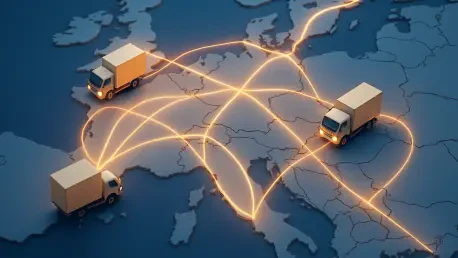
When you combine the operational muscle of Colis Privé with the digital intelligence of PAACK, you aren’t just moving boxes; you’re orchestrating a symphony of 150 million annual deliveries. This integration allows us to take a massive physical footprint and refine it through high-tech routing and real-time data, making every journey more efficient. To keep those 150 million parcels moving without a hitch, we are focusing on unifying our digital nervous system so that every warehouse scan and courier movement is visible across France, Belgium, Luxembourg, Spain, and Portugal. It requires a rigorous alignment of sorting protocols and a phased technology integration that ensures our “digital brain” can handle the sheer weight of our physical volume. We want the consumer to feel the speed and precision of a tech startup while benefiting from the reliability of a logistics giant.
The unified network features over 17,000 out-of-home delivery points across countries like France, Belgium, and Spain. What are the primary logistical challenges of managing such a vast international footprint, and how do these localized delivery points simplify the experience for e-commerce retailers compared to traditional home delivery?
Managing 17,000 points across multiple borders is a massive coordination puzzle that involves complex local regulations and varying consumer habits. In France alone, we manage 8,000 points, while Spain contributes another 8,000, and Belgium adds 1,500 more, each requiring precise inventory management and timely drop-offs. For retailers, these localized points are a game-changer because they eliminate the “sorry we missed you” frustration of traditional home delivery, which can be costly and carbon-intensive. By consolidating shipments to these 17,000 hubs, retailers see fewer failed attempts and a more predictable delivery window. It transforms the final leg of the journey into a convenient errand for the customer rather than a day spent waiting at home for a doorbell that might never ring.
A major international retailer has already implemented a joint delivery solution through this integrated model. Can you walk through the operational benefits of this cross-border approach and explain how a unified brand identity helps solve common pain points for large-scale retailers operating in multiple European territories?
We have already seen the engine purring for a major international retailer that adopted this integrated model, proving that a unified approach removes the friction of cross-border trade. Instead of managing five different regional carriers with five different reporting systems, the retailer now interacts with a single, cohesive entity across five European markets. This unified brand identity acts as a seal of quality, ensuring that a package moving from a warehouse in Portugal to a locker in Belgium follows the same high standards and tracking protocols. It solves the pain of fragmented logistics, giving large-scale retailers one clear window into their entire European operation and a consistent experience for their customers. The operational beauty lies in the simplicity: one partner, one tech stack, and a seamless flow of goods across borders.
The CMA CGM Group is focusing on providing integrated, end-to-end logistics solutions by strengthening the last-mile delivery phase. Why is this final leg of the supply chain so critical for e-commerce success today, and what metrics should companies track to ensure this integration actually improves service quality for the end consumer?
The last mile is where the emotional connection with the brand is either solidified or shattered; it is the only time a customer physically interacts with the supply chain. By strengthening this final leg under the CMA CGM and CEVA Logistics umbrella, we are closing the loop on a truly integrated, end-to-end service that spans from the cargo ship to the front door. To ensure this integration is working, companies must move beyond simple speed and track metrics like first-time delivery success and the net promoter score of the out-of-home experience. We also look closely at the “dwell time” of parcels in our 17,000 locations to ensure the flow remains fluid. Ultimately, the goal is to make the logistics so reliable that the consumer doesn’t even have to think about it.
With the full brand rollout scheduled for January 2027, the transition period will involve significant coordination. What strategies are most effective for migrating customers and partners to a new identity over several years, and how do you maintain a consistent user experience during such a long-term integration process?
Migrating to a new brand identity starting in January 2027 is a marathon of communication and alignment that requires a very deliberate, phased approach. We are prioritizing transparency with our partners and customers, ensuring they understand that this change is an upgrade to their existing service. The most effective strategy is to lead with the technology—migrating the digital interfaces and tracking tools first so the user experience feels improved before the logo on the truck even changes. By maintaining a stable back-end system during the transition, we ensure that the quality of service never wavers as we move through the next several months of rebranding. We want the transition to be a “quiet” evolution where the only thing the customer notices is that their deliveries are becoming even more reliable.
What is your forecast for the evolution of European last-mile delivery services?
I see a future where the distinction between local and international delivery vanishes entirely for the consumer, replaced by a frictionless, continent-wide network. As we move from 2026 into 2027 and beyond, the density of out-of-home networks will become the primary driver of e-commerce sustainability and urban efficiency. We will see delivery ecosystems that are almost invisible because they are so deeply integrated into the daily routines of urban and rural life alike. Efficiency will no longer be a competitive advantage—it will be the baseline expectation, and the companies that win will be those who can provide total transparency from the moment an order is placed to the moment it is picked up. In this landscape, the marriage of operational scale and advanced tech innovation is the only way to stay ahead of the curve.