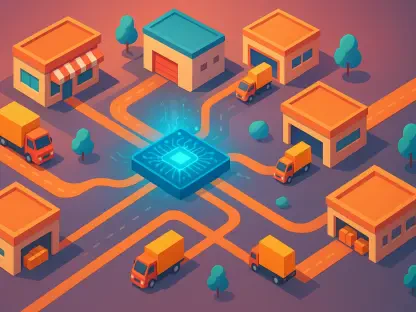

The shift from isolated digital tools to integrated ecosystems marks a fundamental reorganization of the Indian logistics landscape under the National Logistics Policy. For decades, the movement of goods across the subcontinent was hindered by a labyrinth of siloed processes, where each transport mode operated in its own technological vacuum. Shippers frequently found themselves managing multiple logins for different customs portals, warehouse management systems, and freight booking sites. This fragmentation created massive inefficiencies, leading to high logistical costs that hovered well above the global average. However, the current transition toward platformization is finally bridging these gaps by creating a single, cohesive digital environment. Instead of disparate software solutions that only solve one piece of the puzzle, the industry is now moving toward holistic platforms that offer end-to-end visibility. This architectural change ensures that every stakeholder can participate in a more transparent and agile supply chain.
The Digital Foundation: Strengthening Infrastructure through the Unified Logistics Interface Platform
Central to this technological transformation is the Unified Logistics Interface Platform (ULIP), which serves as the invisible connective tissue of the entire industry. By leveraging a robust network of Application Programming Interfaces (APIs), ULIP has successfully integrated data from nearly thirty different government systems across various ministries, including those governing ports, civil aviation, and railways. This integration allows for real-time validation of documents and the seamless exchange of information without the constant need for manual data entry or physical paperwork. For a company shipping goods from a dry port in North India to a maritime terminal in the South, ULIP provides a single source of truth that drastically reduces administrative lead times. The platform does not seek to replace existing physical infrastructure but rather acts as a digital layer that optimizes how these assets are utilized through better coordination and data transparency.
Beyond mere connectivity, this data-centric foundation enables advanced regulatory validation and sophisticated classification tasks. For instance, the use of HSN-related classification within the platform ensures that tax compliance and trade documentation are handled with precision, reducing the risk of costly delays at checkpoints. This level of standardization is crucial for a sector that has long struggled with inconsistent reporting and lack of accountability. By providing a standardized data protocol, ULIP allows third-party developers to build specialized applications on top of the government’s core infrastructure, fueling a new wave of innovation in the logistics tech space. Shippers now benefit from enhanced tracking capabilities and predictive analytics that were previously out of reach for many. As these digital solutions become more deeply embedded in daily operations, they foster a culture of trust and reliability that is essential for India’s goal of becoming a global hub.
Orchestrating the Ecosystem: The Logistics e-Marketplace and Strategic Implementation
While ULIP provides the technical infrastructure, the Logistics e-Marketplace (LeMP) represents the operational front end of this digital revolution. The framework of LeMP has evolved far beyond a simple directory or a freight-matching service where shippers merely look for the lowest price. It now functions as a comprehensive gateway that manages the entire lifecycle of a shipment, from initial procurement and competitive bidding to electronic proof of delivery. This “one-stop-shop” approach allows users to compare rates across road, rail, air, and ocean transport simultaneously, enabling truly multimodal logistics planning. By consolidating these functions into a single interface, the platform eliminates the need for disjointed digital touchpoints that previously slowed down decision-making. Businesses can now initiate a shipment, exchange digital documents, track goods in real-time, and manage financial settlements within a unified environment, which significantly lowers the barrier to entry.
The initial implementation phases of these platforms successfully proved that a unified digital architecture could overcome the historical fragmentation of the transport sector. Policymakers and industry leaders recognized that isolated improvements were no longer sufficient, and they pivoted toward creating a synchronized national transport ecosystem. Moving forward, organizations should conduct thorough audits of their existing digital infrastructure to ensure seamless compatibility with evolving national standards. They must also focus on cybersecurity measures to protect the vast amounts of sensitive data flowing through these integrated networks. The lessons learned from the early rollout of the National Logistics Policy emphasized that collaboration was the primary driver of efficiency. Looking ahead, the sector should explore deeper integrations with international trade corridors to extend these efficiencies beyond domestic borders. By embracing these integrated solutions, the logistics industry established a foundation for sustainable growth.