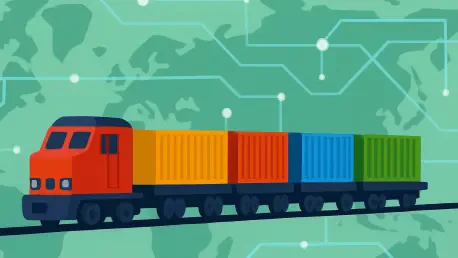

The federal mandate for Electronic Logging Devices gave trucking a digital foundation that the unpowered railcar fleet has struggled to replicate without solar innovation. As the American logistics landscape reaches a pivotal juncture in 2026, the desire for sustainable and cost-effective transportation is being throttled by a significant technological deficit known as the visibility gap. This phenomenon describes the growing discrepancy between what modern shippers require—continuous, real-time data on the location and physical status of their goods—and what the U.S. rail industry currently provides. Recent research involving 500 high-level decision-makers across the logistics and supply chain sectors reveals that while there is a massive appetite for increased rail usage, the current infrastructure often fails to meet the transparency standards of the digital age. This gap indicates that the rail industry is essentially leaving growth on the table because it cannot provide the data-driven certainty that modern commerce demands for its complex operations.
Structural Limitations: Why Railcars Remained Dark
The lag in rail technology compared to the trucking industry is largely due to fundamental structural differences between the two modes of transport. Trucks are equipped with internal combustion engines and onboard power sources that easily support GPS and communication hardware. In contrast, railcars have traditionally been passive assets, lacking any electronic infrastructure or power generation. Upgrading a railcar requires specialized, ruggedized hardware capable of withstanding extreme vibrations, dust, water, and temperature fluctuations for years on end. These units must be entirely self-sufficient, relying on advanced solar panels and long-life batteries designed to last up to a decade. Historically, rail data was collected at fixed checkpoints or handover points, primarily for the purposes of billing and basic fleet operations. This snapshot approach is increasingly obsolete in a world where businesses require a constant stream of information to feed into their automated management systems and planning tools.
Shifting away from the checkpoint model requires a massive overhaul of how the industry perceives its own assets. For decades, the rail sector operated under the assumption that knowing where a car was once every few hundred miles was sufficient for operational success. However, as supply chains become tighter and more integrated, the demand for precision has skyrocketed. Modern shippers no longer accept the “black hole” of visibility that occurs when a train leaves a terminal. They expect the same level of granularity they receive from parcel carriers or modern trucking fleets. To bridge this gap, rail operators are forced to rethink the physical architecture of the railcar itself. The integration of low-power wide-area network technologies and energy harvesting solutions is no longer a luxury but a baseline requirement for participation in the premium freight market. This transition represents a shift from a mechanical industry to a data-centric one, where the value of the information provided is often as high as the value of the physical transport service.
The Data Evolution: Condition Monitoring and Asset Health
Modern visibility has moved far beyond simply knowing where a railcar sits on a map. Today, the concept of trusted asset data includes comprehensive information about the physical state of both the equipment and the cargo inside. For industries moving perishables, pharmaceuticals, or hazardous materials, location data is only one piece of the puzzle. Shippers need to know if a door was opened at an unauthorized time, if the cargo experienced a significant shock during a coupling event, or if temperature thresholds were breached during a cross-country transit. Modern visibility means providing a continuous data layer that offers time-stamped evidence of the entire journey. This level of detail is critical for quality control, insurance claims, and general risk management. By establishing this constant flow of information, rail operators can transform the humble railcar from a simple metal box into a smart, connected asset that provides high-value insights to every stakeholder in the logistics chain.
By implementing condition monitoring, the industry is addressing a major barrier to rail adoption: the perceived risk of damage or spoilage. When a shipper can see the real-time environmental conditions within a car, they can take proactive steps to mitigate losses before they occur. For instance, if a refrigerated unit shows a slight temperature rise, a technician can be dispatched at the next scheduled stop rather than discovering a lost load at the final destination. This proactive stance not only saves money but also builds trust in a mode of transport that has historically been viewed as less reliable than road freight. Furthermore, the data generated by these sensors can be used for predictive maintenance of the railcars themselves. Identifying a car that consistently experiences high vibration levels can signal a mechanical issue with the wheels or suspension before a failure leads to a derailment. This dual-purpose use of data—for both cargo security and asset health—creates a compelling business case for widespread sensor deployment.
Strategic Efficiency: Fuel Savings and Intermodal Reliability
The push to close the visibility gap is rooted in significant economic and environmental incentives, particularly as companies strive to meet ambitious sustainability targets. Rail is at least four times more fuel-efficient than trucking, with the ability to move a single ton of freight roughly 470 miles on just one gallon of fuel. For organizations looking to reduce their Scope 3 emissions and lower their carbon footprint, rail is the most logical choice for long-haul logistics. However, the lack of predictability remains a significant deterrent. Approximately 28% of shippers cite the inability to forecast arrival times accurately as their primary frustration with rail transport. When handovers between rail and last-mile trucking are imprecise, it creates expensive bottlenecks at intermodal terminals. By improving visibility, rail operators can provide more accurate estimated times of arrival, making intermodal transport more reliable and competitive against long-haul trucking alternatives.
Reliability in 2026 is measured by the ability to integrate into “just-in-time” manufacturing and retail cycles. When a train is delayed and the shipper is unaware, the entire downstream supply chain suffers, leading to stockouts or factory shutdowns. Real-time tracking allows for dynamic rescheduling, where a logistics manager can re-route a different shipment or adjust production schedules the moment a delay is detected. This agility is what modern commerce demands. Moreover, the environmental benefits of rail are only realized if the cargo actually moves onto the tracks. If shippers choose trucks because they fear the “visibility gap,” the overall carbon intensity of the logistics sector remains unnecessarily high. Bridging this gap is therefore not just a technical challenge but an environmental necessity. The cost savings from reduced fuel consumption and fewer road-related accidents further strengthen the argument for a rail-first logistics strategy, provided that the data transparency is there to support it.
Proactive Security: Addressing the Cargo Theft Surge
One of the most urgent drivers for better rail visibility is the alarming rise in cargo theft across North America. Reports from the second quarter of 2026 show that losses from theft have more than doubled compared to previous periods, with sophisticated criminal networks targeting high-value shipments. In this high-threat environment, the traditional method of discovering a theft after the fact is largely useless for recovering stolen property. Security experts note that the window for recovering stolen goods is incredibly tight, typically closing within 24 to 48 hours. Real-time monitoring shifts the paradigm from reactive to proactive. If a sensor detects an unplanned door opening or movement in a known high-theft zone, an immediate alert can be sent to law enforcement and the shipper. This technology provides an essential security layer that can mitigate losses and provide the necessary forensic data for investigators and insurance providers to act quickly.
To address these security needs, the industry is turning to innovative solutions like smart labels and integrated sensor modules. These devices are designed for the long lifecycle of a railcar while providing package-level visibility. A smart label applied to a pallet can detect if it has been tampered with or removed from the car, providing a source of data that is independent of the rail operator. This allows shippers to maintain a strict chain of custody across multiple modes of transport, ensuring that visibility is never lost during handovers. Such granular tracking is particularly important for high-consequence freight, where the security of the shipment is a matter of public safety. By combining railcar-level tracking with package-level sensors, the industry is creating a multi-layered defense against theft. This technological shield makes rail a safer option for high-value electronics, pharmaceuticals, and consumer goods that were previously considered too risky for the long, often isolated journeys characteristic of rail freight.
Navigating the Transition: A Blueprint for Resilience
The industry ultimately recognized that the “visibility gap” was the single greatest obstacle to long-term growth and market relevance. Major rail operators transitioned from a model of periodic checkpoint updates to a system of continuous, trusted asset data. Shippers demanded transparency, and the rail sector responded by prioritizing the accessibility of information. Data generated by smart railcars was standardized and made easily integrable into existing supply chain management software via open APIs. This movement allowed for the expansion of continuous tracking across a larger percentage of the national fleet, transforming it from a premium service into a baseline expectation. The sector successfully demonstrated that it could provide the real-time, actionable data required to manage modern supply chains. As a result, the resilience of the American economy was bolstered by a more balanced and efficient freight network that leveraged the inherent strengths of rail while embracing the digital capabilities of the 21st century.