
A significant portion of the workforce under thirty is regularly absent from home due to educational, social, and professional responsibilities. This demographic, often referred to as the “Always Out Generation,” operates on a schedule that is fundamentally at odds with the traditional 9-to-5 delivery window favored by legacy logistics providers. For these individuals, the concept of waiting at home for a courier is not merely an inconvenience but a logistical impossibility that clashes with their high-mobility lifestyles. As urbanization increases and work-life boundaries continue to blur, the standard home delivery model is showing significant signs of strain. The expectation of physical presence at a residential address is becoming a barrier to commerce rather than a service. Retailers and couriers are now forced to confront a reality where the final mile of the supply chain is frequently a dead end, leading to missed connections and wasted fuel. This friction suggests that the very definition of convenience has fundamentally changed in favor of mobility.
Redefining Convenience in a Mobile Society
The Conflict: Traditional Delivery Windows
The core issue identified by current market research is that nearly half of young adults are away from home at least four days a week during peak delivery times. The primary drivers for this absence include professional obligations, daily errands, and educational commitments that demand their presence elsewhere. Because traditional delivery methods rely heavily on the recipient being present at a specific fixed location, this lifestyle mismatch creates tangible consequences for both the consumer and the logistics provider.
Approximately 41% of surveyed individuals reported missing a delivery within the last twelve months, which often results in a frustrating cycle of attempted redeliveries or the need to travel to a distant depot. Furthermore, a substantial segment of this population reported staying home specifically to wait for a package, often at the expense of their personal plans or professional productivity, illustrating a systemic inefficiency that can no longer be ignored by major retailers who seek to maintain customer loyalty.
The Demand: Shifting Expectations for the Modern Shopper
The consensus among younger consumers is that logistics must adapt to their lives rather than the other way around. Approximately 71% of respondents in recent studies believe that delivery services must provide options that fit their individual, often erratic, schedules. This has led to a heightened demand for flexibility that previous generations might not have prioritized. Around 61% of those surveyed stated that 24/7 access to collection points would significantly improve their overall shopping experience.
For these consumers, the value of a service is measured by the degree of autonomy it provides. They are looking for solutions that do not require a confirmation of presence or a specific time slot. This shift reflects a broader trend toward on-demand services where the user dictates the terms of engagement. Retailers that fail to offer this level of control risk losing a demographic that views time as their most valuable commodity and convenience as a baseline requirement for modern digital trade.
Implementation and Market Response
The Solution: Automated Parcel Lockers and Infrastructure
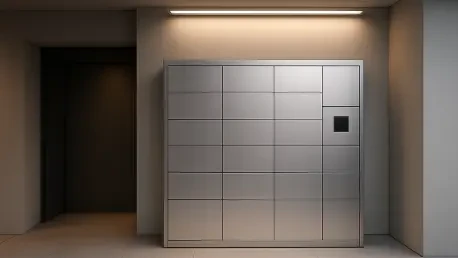
Offering diverse delivery options at the digital checkout is a significant opportunity for retailers to enhance customer satisfaction while simultaneously boosting operational efficiency. A primary case study involves the British retailer Superdry, which sought to address the delivery challenges faced by its core demographic. When Superdry introduced automated lockers as its sole free delivery option, the service quickly captured 49% of the total checkout share. This rapid adoption proved that customers were willing to trade home delivery for the flexibility of a secure locker.
The benefits extended far beyond consumer preference, as Superdry recorded a 19% reduction in total delivery costs. By consolidating multiple shipments to single points, the retailer minimized the high costs associated with individual house calls and repeated delivery attempts. This model demonstrates that aligning delivery strategies with consumer behavior leads to a more sustainable and profitable logistics framework for e-commerce, reducing friction and customer anxiety regarding the final mile.
The Outlook: Personalized Delivery Ecosystems
The evolution of the logistics industry was defined by a transition toward personalization and increased consumer control. Industry leaders emphasized that making delivery choice a standard component of online shopping was essential for maintaining long-term loyalty. By expanding technological infrastructure and locker networks, the sector aimed to ensure that parcels fit the person rather than forcing the person to accommodate the parcel. This proactive approach allowed companies to bypass the limitations of traditional residential delivery and create a more flexible grid.
The focus shifted from mere speed to the reliability and accessibility of the delivery event itself. Stakeholders recognized that a generation on the move required a logistics partner that could move with them. The industry eventually prioritized actionable steps like integrating locker access into mobile apps and ensuring high density in urban hubs to create a seamless, non-intrusive retrieval process. This strategic shift ensured that the delivery process became a secondary thought, allowing consumers to focus on their lives.