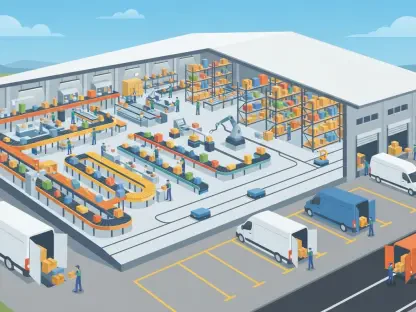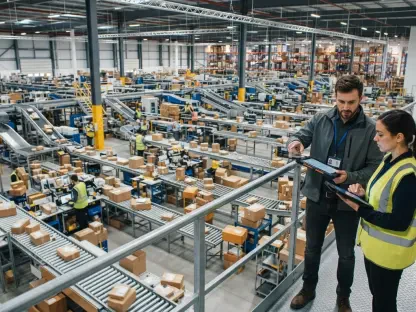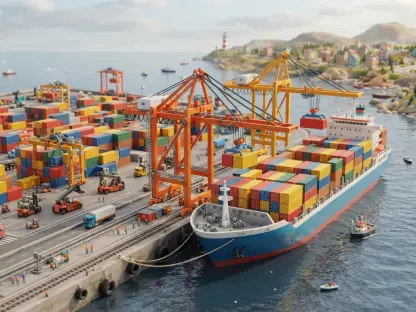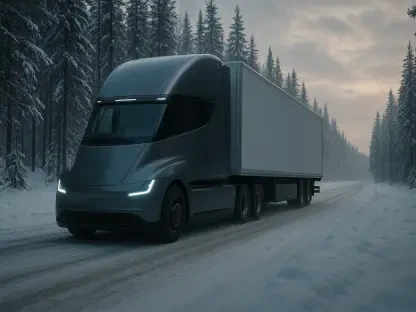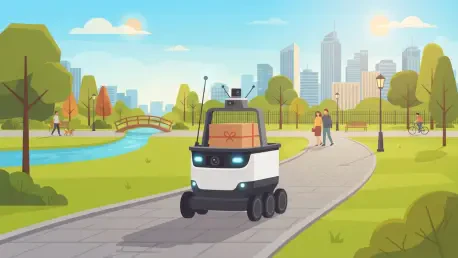

The persistent shortage of delivery drivers has forced automation to transition from a luxury innovation to a competitive necessity for global logistics and fulfillment companies. This foundational transformation is currently visible as autonomous delivery vehicles (ADVs) move from experimental pilot programs to large-scale commercial integration across major metropolitan areas. Driven by a convergence of breakthroughs in artificial intelligence, an unprecedented surge in e-commerce activity, and the chronic scarcity of human labor, the industry is entering a decade of aggressive expansion. Valued at approximately $1.59 billion in 2025, the market is projected to skyrocket to $14 billion by 2035, representing a robust compound annual growth rate of over 24% between 2026 and 2035. This trajectory is primarily fueled by the “last-mile” delivery segment, which accounts for over half of the total demand. As logistics firms face rising operational costs and the pressure for near-instant fulfillment, these robotic systems have become the primary focus for capital investment. The shift is not merely about replacing human effort but about creating a more resilient and scalable infrastructure that can operate around the clock with precision and lower carbon footprints.
Regional Disparities: Exploring the Global Landscape of Delivery Robots
The adoption of autonomous delivery technology is currently manifesting through unique regional dynamics as different territories face specific regulatory and infrastructure challenges. North America holds a commanding lead, currently maintaining over 44% of the global market share. The United States serves as the primary hub for this development, with its local market value expected to grow from roughly $0.60 billion in 2025 to over $4.86 billion by 2035. This dominance is largely attributed to a sophisticated technological ecosystem, high domestic labor costs that provide a clear incentive for automation, and proactive regulatory frameworks that have allowed for extensive testing on public sidewalks and roads. Furthermore, the prevalence of suburban sprawl in the U.S. creates a unique environment where sidewalk robots can navigate predictable paths more easily than in the cramped, ancient streets of many European cities.
While North America currently leads in valuation, the Asia-Pacific region is poised to experience the most rapid growth during the period from 2026 to 2035. With a projected compound annual growth rate of 26.72%, countries like China and South Korea are leveraging hyper-urbanized populations and massive investments in “smart city” infrastructure to accelerate deployment. In these regions, a dominant e-commerce culture has created a fertile ground for large-scale fleets that can navigate dense high-rise residential complexes. In contrast, growth in Europe is being dictated primarily by sustainability goals and urban mobility policies. High labor costs and a strong push for green transportation solutions have led to significant investments in autonomous fleets that navigate historic centers where traditional delivery vans are increasingly restricted by local emissions laws. Meanwhile, emerging initiatives in the Middle East, particularly in the UAE and Saudi Arabia, are integrating these robots into newly built urban centers as a core component of their future-ready logistics networks.
Hardware and Connectivity: The Foundation of Reliable Autonomy
The current shift toward fully autonomous fleets is underpinned by critical technological pillars that allow these machines to interact safely with the physical world. Modern vehicles rely on a complex integration of AI-driven sensor fusion, which utilizes LiDAR, high-resolution cameras, and ultrasonic sensors to interpret urban environments in real time. These components currently account for roughly 50% of the total market share, as the hardware required to achieve Level 4 and Level 5 autonomy remains a significant capital investment. The AI software acts as the brain, processing thousands of data points every second to recognize obstacles, predict the movement of pedestrians, and navigate complex intersections without human intervention. This capability is vital for maintaining public trust, as any safety incident can lead to immediate regulatory setbacks. The accuracy of these systems has improved dramatically over the past year, allowing robots to operate in diverse weather conditions including rain and light snow.
Complementing the on-board hardware is the vital role of 5G connectivity and cloud-based fleet management. The integration of low-latency 5G networks allows for real-time monitoring and “teleoperation,” a safety layer where a human operator can remotely assist a robot if it encounters a situation beyond its current programming. This connectivity ensures that a single supervisor can manage dozens or even hundreds of units simultaneously, maximizing operational efficiency. Beyond simple navigation, cloud platforms are now optimizing routes in real time based on traffic patterns and battery life, while coordinating with micro-fulfillment centers to ensure that robots are loaded and dispatched with minimal downtime. The software and services segment is actually the fastest-growing part of the market, as the focus shifts from just building the machines to managing the massive amounts of data they generate. This digital infrastructure is what allows the transition from isolated pilot programs to a cohesive, city-wide delivery ecosystem.
Strategic Integration: How Major Players Are Capturing the Market
The competitive landscape of the autonomous delivery industry is characterized by a mix of specialized robotics startups and established e-commerce titans. Companies like Starship Technologies have already established a strong presence in sidewalk delivery through strategic partnerships with food delivery platforms, focusing heavily on university campuses and closed urban environments. Their recent expansion into broader residential markets in the United States and Europe demonstrates that the technology is ready for mainstream consumption. Simultaneously, Nuro Inc. has distinguished itself by focusing on custom-built, road-ready autonomous vehicles rather than sidewalk units. By securing significant investment rounds, including a major series E in late 2025, Nuro is aggressively expanding its footprint into international markets such as Japan. These specialized firms are often the ones driving innovation in hardware design, creating vehicles specifically optimized for parcels rather than passengers.
In parallel with specialized startups, e-commerce giants like Amazon and JD.com are pursuing vertical integration by developing their own proprietary fleets. These companies aim to gain total control over the delivery experience, reducing their dependency on third-party logistics providers and lowering their long-term shipping costs. By owning the entire chain from the warehouse to the consumer’s doorstep, these retailers can implement custom software that bridges the gap between their inventory systems and the delivery robots. Another significant trend is the rise of strategic mergers and acquisitions, such as Serve Robotics’ recent acquisition of Diligent Robotics. This move signaled a pivot toward indoor autonomous delivery, specifically targeting the healthcare sector to transport medical supplies within hospitals. This diversification shows that the market is maturing, with companies finding specialized niches where automation can solve specific operational bottlenecks that human labor cannot easily address.
Overcoming Obstacles: Regulatory Compliance and Operational Hurdles
Despite the clear economic incentives and technological progress, the industry still faces significant headwinds that could influence the pace of adoption. Regulatory compliance remains the most prominent barrier, as nearly 40% of autonomous delivery pilots have faced delays due to a lack of standardized laws regarding robot-pedestrian interaction and liability in the event of accidents. Cities are often hesitant to allow large numbers of robots on sidewalks without clear frameworks for insurance and public safety. Furthermore, the initial cost of advanced sensors like high-performance LiDAR remains high, although prices are expected to drop as manufacturing scales up toward 2030. Maintaining these fleets in diverse weather conditions also presents a persistent operational challenge, as extreme temperatures or heavy precipitation can impact sensor accuracy and battery performance. Solving these issues is essential for companies aiming to achieve true profitability and move beyond investor-funded testing phases.
The conclusion of this phase of industrial development showed that the future of logistics was not a single technology, but a multi-layered ecosystem of automation. Companies realized that success required a seamless integration of these robots into the fabric of “smart cities,” necessitating constant communication with traffic infrastructure and urban management systems. The industry successfully transitioned from a period of experimental curiosity into a foundational pillar of modern commerce, where the focus shifted from “if” these vehicles would work to “how” they could best be scaled. As labor costs continued to rise and the demand for instant gratification grew, the adoption of autonomous units became an irreversible trend. Stakeholders ultimately established that the most successful implementations were those that combined robust hardware with sophisticated fleet management software, ensuring that the final link in the global supply chain was as efficient as the automated warehouses that preceded it. This shift fundamentally altered the urban landscape, making autonomous delivery as ubiquitous as the traditional mail trucks of previous generations.