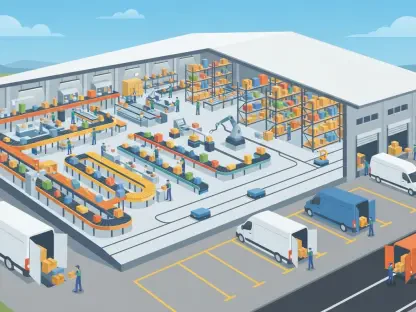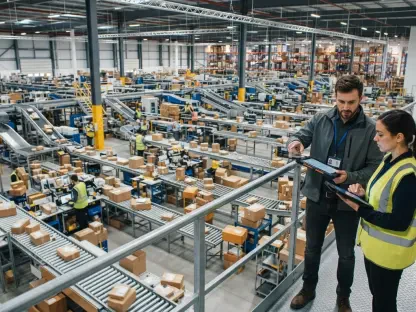

The radical reorganization of global commerce has finally reached a breaking point where the survival of a retail brand depends entirely on its ability to synchronize digital signals with physical assets in real time. For decades, the retail industry relied on a binary model that separated physical foot traffic from digital clicks, yet the current landscape of 2026 proves that this distinction is no longer viable. In the present year, the closure of thousands of legacy storefronts serves not as a funeral for brick-and-mortar, but as a shedding of outdated skins. Successful enterprises are now defined by their transition toward integrated networks where supply chains act as the actual engine of customer experience, rather than just a back-end logistics function. This review analyzes the technological pillars that define this shift, moving beyond mere multichannel selling into a unified, phygital architecture.
The ongoing transformation is visible in the stark dichotomy between store closures and the emergence of high-tech growth strategies. While more than 4,100 brick-and-mortar locations across the United States are slated for closure this year, the retailers that remain are those that have successfully pivoted. These organizations recognize that the physical store is no longer just a destination for a transaction; it is a critical node in a larger, invisible network of fulfillment and engagement. The necessity of this change is driven by a consumer who expects a seamless transition between their smartphone and the physical aisle, demanding that inventory be as fluid and accessible as the information on their screens.
The Evolution of “Phygital” Retail Integration
The evolution of the omnichannel supply chain represents a pivot from siloed sales channels to a holistic ecosystem where digital and physical interactions are indistinguishable. Historically, retailers managed e-commerce stock and store inventory as separate entities, often leading to situations where a product was available on a shelf but out of stock for a digital customer. This fragmentation created massive inefficiencies and customer frustration. The emergence of the phygital model solves this by creating a unified data layer that connects every point of contact. This transition matters because it acknowledges that the modern consumer journey has no fixed starting point, as over 70% of shopping journeys now begin online before concluding in a physical space or via a home delivery.
At its core, phygital integration relies on a sophisticated nervous system of sensors, edge computing, and real-time data streaming. By processing information at the store level rather than sending everything to a centralized cloud, retailers can reduce latency and provide instant updates on inventory status. This capability is the foundation of the modern “always-on” retail environment. It enables a brand to offer services like curbside pickup or same-day delivery with absolute confidence, ensuring that the promise made on the website can be fulfilled by the physical reality of the store. This shift from channel-specific management to a network-centric approach is the defining characteristic of the current retail era.
Core Pillars of Omnichannel Infrastructure
Dynamic Inventory Visibility and ATP Logic
Total inventory visibility is the primary requirement for any modern retail operation, yet the complexity of achieving this precision is often underestimated. At the heart of this capability is “Available-to-Promise” (ATP) logic, a sophisticated algorithmic approach that treats every item in the network as a single pool of assets. Unlike traditional inventory management that merely counts what is on the shelf, ATP logic calculates availability by factoring in on-hand stock, items currently in transit, and confirmed future deliveries. This creates a highly accurate picture of what can actually be sold and delivered within a specific timeframe, allowing the system to commit inventory to a sale even if that inventory is still on a truck between a warehouse and a store.
This approach is unique because it shifts the strategic focus from what is currently owned to what can be fulfilled. By treating inventory as a fluid asset rather than a static one, retailers can maximize their asset turnover and reduce the amount of capital tied up in “safety stock.” In the 2026-2028 market cycle, the ability to orchestrate orders across multiple nodes—whether a regional distribution center, a local flagship store, or a third-party logistics provider—is what separates market leaders from laggards. The ATP logic acts as the brain of this orchestration, making real-time decisions about which inventory source offers the most efficient path to the customer, thereby balancing speed against the cost of fulfillment.
AI-Driven Demand Planning and Predictive Analytics
Artificial Intelligence has fundamentally altered the cadence of retail by shifting demand planning from a reactive process to a predictive science. In previous business cycles, planning was largely a historical exercise, where retailers looked at sales from the previous year to guess what the next year might require. Now, AI-driven models sense real-time signals from browsing patterns, social media sentiment, and even micro-localized weather events to anticipate demand before it manifests in actual sales data. This capability is vital because it allows for “pre-emptive logistics,” where products are moved into specific urban nodes based on predicted viral trends or shifts in consumer behavior within a particular neighborhood.
The uniqueness of this implementation lies in its ability to process “unstructured” data at scale. Modern AI can convert a trending hashtag on social media or a spike in YouTube product reviews into a concrete procurement order within minutes. This allows retailers to respond to “viral moments” that would have been missed in a traditional planning cycle. Furthermore, predictive analytics help mitigate the risk of overstocking, as the system can identify when a trend is losing momentum and automatically slow down the replenishment of that specific SKU. This level of responsiveness is essential for navigating the volatile demand cycles that characterize the modern, social-media-driven marketplace.
Modular Tech Stacks and RFID Precision
While high-level AI manages the overarching strategy, modular technology stacks and Radio Frequency Identification (RFID) handle the tactical execution of the supply chain. Modular architectures, often referred to as “composable commerce,” allow retailers to swap out specific fulfillment modules without the need to rebuild their entire digital core. For instance, a brand can integrate a new “ship-from-store” capability or a different payment gateway in a fraction of the time it would have taken with legacy, monolithic systems. This agility is a significant competitive advantage in an environment where technological standards and consumer preferences change almost monthly.
Meanwhile, RFID technology provides the granular accuracy required to make these digital promises credible to the consumer. Achieving 99% inventory accuracy via RFID is no longer an optional luxury; it is a baseline necessity for effective omnichannel fulfillment. If a system claims an item is available in a local store for pickup, but a manual search fails to find it because it was misplaced or miscounted, the consumer trust is broken. RFID bridges this gap by providing near-constant digital confirmation of an item’s physical location, even if it is buried in a backroom or misplaced on a different shelf. This precision reduces “shrinkage” and ensures that the digital twin of the inventory always matches the physical reality.
Emerging Trends in Consumer Connectivity
The connectivity between consumers and brands has reached a state of perpetual engagement, characterized by the rise of social commerce and the “no direct path to purchase” phenomenon. Consumers in 2026 are as likely to purchase a product directly through a video interface or a search result as they are through a traditional website. This fragmentation of the shopping journey has forced a shift toward smaller, forward-deployed store formats that serve as much as distribution nodes as they do showrooms. These “neighborhood hubs” are strategically placed in high-density urban areas to facilitate ultra-fast delivery, effectively reducing the distance between the product and the user.
This trend is significant because it redefines the value of urban real estate for the retail sector. A store’s worth is no longer measured solely by the foot traffic it generates or the sales made at the cash register, but by its fulfillment capacity and its ability to act as a physical billboard for the brand’s digital presence. This “store-as-a-service” model allows brands to maintain a physical footprint that is flexible and responsive to local demand. Moreover, the integration of social commerce means that the supply chain must be prepared for extreme volatility, as a single influencer post can generate a week’s worth of demand in a matter of hours, requiring a network that can scale instantly.
Real-World Strategic Applications
Real-world applications of these integrated strategies are visible in the way retailers now use their physical locations as “relief valves” during periods of peak demand. When a centralized distribution center reaches its capacity, the omnichannel system automatically redirects fulfillment tasks to local stores that have the labor and stock capacity to handle the overflow. This is not merely a backup plan but a core component of a resilient network that prevents bottlenecks and ensures that delivery promises are kept during high-volume events like holiday sales or major product launches. By decentralizing fulfillment, brands can maintain high service levels without the need for massive, underutilized warehouse space.
Some brands have taken this a step further by creating experiential hubs that blend physical discovery with sophisticated digital fulfillment. For example, experiential locations like Black Barn Alpacas allow consumers to engage with a brand’s story and materials in a tactile way—connecting with the source and the ethics of the products. While the customer may interact with a sample or a display, the actual transaction and subsequent logistics are handled through the seamless omnichannel backend. This ensures that the tactile experience of the “Black Barn” can be translated into a convenient home delivery, proving that the most successful retail applications are those that use technology to enhance, rather than replace, the human element of shopping.
Critical Challenges and Technical Hurdles
Despite these advancements, the heavy reliance on high-performance algorithms has exposed a critical vulnerability: the need for “clean” and standardized data. Many retailers still struggle with fragmented legacy systems that produce “dirty” data—duplicate SKUs, mismatched inventory counts, and inconsistent customer profiles across different regions. Without a rigorous and ongoing data cleansing process, AI-driven insights are not only useless but potentially damaging. An incorrect inventory signal can cause a system to over-allocate stock to a region where there is no demand, leading to significant financial losses and an increase in dead inventory that eventually has to be liquidated.
Furthermore, the logistical and financial burden of e-commerce returns remains a significant technical hurdle for the industry. With online return rates currently averaging around 24.5%, the cost of transporting, inspecting, and re-stocking these items often exceeds their original resale value. This challenge is driving the adoption of virtual try-on technologies and augmented reality tools designed to mitigate returns at the point of origin. By giving customers a more accurate expectation of how a product will look or fit before they buy it, retailers can reduce the “intentional” return rate—where customers buy multiple sizes or colors with the intent of returning most of them—thereby improving the overall sustainability and profitability of the supply chain.
Future Trajectory and Resilience Modeling
Looking ahead, the next phase of supply chain maturity involves the deployment of “Digital Twins” and advanced scenario modeling to build systemic resilience. By creating a complete virtual replica of the global supply chain, retailers can simulate various disruptions—ranging from port congestion to sudden raw material shortages—and develop automated response protocols. This technology allows a company to pivot its entire logistics network in seconds rather than weeks. For example, if a major shipping lane is blocked, the Digital Twin can immediately calculate the impact on all pending orders and automatically re-route shipments through alternative ports or air freight to minimize the delay.
In the 2027 and 2028 market cycles, the focus on sustainable reverse logistics will likely intensify as a core business requirement. Technologies that enable automated, source-to-store data tracking will allow retailers to implement truly “circular” supply chains, where returned goods are intelligently rerouted to local repair centers, resale platforms, or non-profits rather than being discarded in landfills. Currently, nearly 80% of returned goods end up as waste due to logistical costs, but the future of the omnichannel network lies in “revenue recovery” through smart routing. This shift toward “resilience-as-a-service” will define the long-term viability of retail brands as they face increasing pressure to balance efficiency with environmental responsibility.
Summary of Strategic Findings
The assessment of modern retail infrastructure confirmed that the supply chain transitioned from a cost-driven support function to the ultimate competitive differentiator for global brands. The investigation demonstrated that the retailers successfully navigating the 2026 landscape were those that prioritized total inventory transparency and predictive agility over traditional, siloed management strategies. By leveraging AI-driven planning and modular tech stacks, these organizations created a phygital ecosystem that satisfied the demands of an always-on consumer base. The evidence suggested that future growth would depend on solving the logistical complexities of the circular economy and mastering real-time scenario modeling to anticipate global disruptions.
The review determined that the implementation of Available-to-Promise logic and RFID precision was essential for maintaining consumer trust in an era of ultra-fast fulfillment. Furthermore, the findings highlighted that while technology provided the framework for success, the quality of data remained the most significant bottleneck for many organizations. The verdict established that a unified, data-centric approach to fulfillment is the only viable path for retailers seeking to remain relevant. Ultimately, the next generation of retail leaders will be defined by their ability to transform the supply chain into a resilient, transparent, and sustainable network that can respond to the unpredictable rhythms of the modern marketplace.