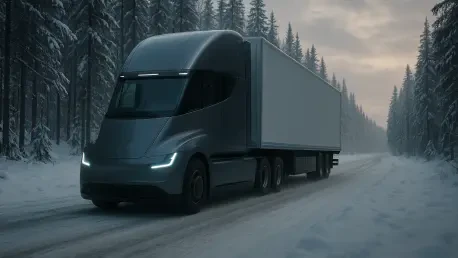

The technical success of the ESCALATE project relies on the ability of megawatt-scale charging points to support the massive energy requirements of 68-tonne freight combinations. As the logistics industry grapples with the transition away from fossil fuels, the VTT Technical Research Centre of Finland has launched a sophisticated pilot program to address the most demanding segments of heavy-duty transport. This initiative, part of the European Union’s Horizon Europe program, revolves around the SISU Escalate, a hybrid vehicle that blends electric propulsion with hydrogen fuel cell technology. Unlike standard passenger vehicle electrification, which has progressed rapidly, heavy-duty shipping faces immense barriers in energy density and refueling speed. This project involves 37 partners across 13 nations, aiming to build a scalable ecosystem that includes charging standards, economic feasibility, and hardware reliability for the future of global shipping. By focusing on high-intensity conditions, the project seeks to prove zero-emission powertrains are viable.
Innovative Hybrid Architecture: Integrating Dual-Energy Systems
The SISU Escalate distinguishes itself through a sophisticated hybrid powertrain that combines a 650 kWh battery system with a 120 kW hydrogen fuel cell. While the battery serves as the primary energy source for standard assignments, the hydrogen fuel cell acts as a vital range extender. This dual-energy approach allows the truck to mitigate the downtime typically associated with traditional electric vehicle charging by providing an on-board power generation source. Because the vehicle must house both large battery packs and hydrogen storage tanks, it features a specialized, elongated chassis that represents a unique engineering feat in the heavy-duty sector. The integration of these two technologies allows for greater operational flexibility, especially in regions where charging stations are sparse or grid connections are limited. The fuel cell can generate electricity to power the drivetrain or top up the battery while the truck is in motion, ensuring long-haul reliability.
This hybrid configuration is specifically designed to overcome the payload paradox that has long hindered the adoption of pure electric semi-trucks. By utilizing lithium-ion batteries for high-efficiency transit and hydrogen for sustained power on the highway, the SISU Escalate manages to maintain the power levels necessary for heavy haulage without the excessive weight of a multi-megawatt battery pack. This modular design provides a blueprint for how different energy sources can work in tandem to meet the rigorous demands of the logistics industry. Engineers from Sisu Auto and IONCOR have collaborated to ensure the chassis can withstand the structural stresses of 68-tonne loads while protecting the high-pressure hydrogen tanks. This design choice highlights a shift toward multifaceted energy solutions rather than a single-source approach, allowing the vehicle to adapt to varying mission profiles and creating a versatile platform for a wide range of heavy-duty logistics assignments.
Performance Testing: Infrastructure and Nordic Climate Trials
Starting in late 2026, the SISU Escalate will undergo a rigorous testing phase, covering a 540-kilometer daily route between Vuosaari and Jyväskylä. This specific corridor is designed to test the vehicle’s endurance and the efficiency of the supporting infrastructure under real-world conditions. A key component of this pilot is the Megawatt Charging System (MCS), which provides the high-capacity power levels necessary for rapid turnaround times in commercial trucking. This infrastructure, provided by industry leaders like Kempower and integrated by Hevtec, is essential for proving that electric freight can match the operational speed of traditional diesel fleets. Without the ability to recharge massive batteries in less than an hour, electric trucks remain confined to short-haul loops. The pilot aims to demonstrate that a combination of fast-charging and hydrogen refueling can keep a heavy truck on the road for long shifts, effectively mirroring the performance of diesel operations.
The Finnish pilot is particularly significant because it involves much higher weight limits than the rest of Europe. While most EU nations cap truck weights at 40 tonnes, this hybrid pilot will operate at a gross combination weight of 68 tonnes, pushing the boundaries of electric propulsion. This makes the SISU Escalate the heaviest vehicle in the broader European ESCALATE program, providing a unique stress test for the powertrain and axle configuration. Furthermore, the harsh Nordic winter will serve as a primary trial for the truck’s thermal management systems. Sub-zero temperatures typically challenge the efficiency of both lithium-ion batteries and hydrogen systems, as energy must be diverted to maintain operational temperatures for the sensitive components. By monitoring performance through these extreme weather cycles, researchers will identify the critical thresholds for cold-weather reliability, ensuring the technology can be deployed effectively from the Mediterranean to the Arctic.
Advanced Monitoring: Utilizing Digital Twins for Efficiency
To ensure the success of the project, every aspect of the truck’s performance is monitored using digital twin technology, which creates a virtual mirror of the physical vehicle. This allows researchers at VTT to analyze energy consumption and drivetrain efficiency in real-time, providing a level of transparency that was previously unavailable in fleet management. By comparing the ratio of electricity to hydrogen used under various loads and weather conditions, the team can optimize energy management systems to prioritize the most cost-effective fuel source. This data is crucial for developing an economic framework that makes zero-emission trucking competitive with diesel, especially given the current price volatility of green hydrogen compared to grid electricity. The digital twin also allows for predictive maintenance, identifying potential component fatigue before it leads to operational downtime. This proactive approach is vital for the high uptime requirements of logistics firms.
The insights gathered from this digital monitoring will also guide future infrastructure planning across Europe. By understanding exactly where energy demands are highest and how the state of charge fluctuates on specific gradients, planners can more effectively locate hydrogen refueling stations and megawatt charging points. This data-driven approach removes the guesswork from infrastructure development, ensuring that public and private investments are targeted at high-impact locations. Ultimately, the SISU Escalate pilot aims to provide a clear cost-benefit analysis for logistics companies, proving that the move away from fossil fuels is not only environmentally necessary but also economically feasible in the long run. The project highlights the necessity of a unified digital layer in modern transport, where hardware and software work together to solve complex energy equations. Digitizing the heavy-freight sector lays the groundwork for smarter grid integration.
Strategic Implementation: Data Analysis and Economic Viability
The successful deployment of the SISU Escalate provided a template for the next generation of modular heavy-duty transport. Moving forward, fleet operators prioritized the integration of telematics that could seamlessly switch between power sources based on real-time grid prices and hydrogen availability. Regulatory bodies looked to the Finnish model to reconsider weight and length restrictions, as the added weight of zero-emission components required flexibility to maintain payload competitiveness. The transition demonstrated that infrastructure development had to precede or at least parallel vehicle deployment to avoid operational bottlenecks. Future investments focused on creating multi-modal energy hubs where green hydrogen production was co-located with high-speed electric charging to maximize land use and energy efficiency. By treating the truck as a mobile energy asset, the industry successfully pivoted toward a sustainable model for heavy-haulage logistics across the continent.
Furthermore, the lessons learned from the SISU Escalate pilot indicated that collaboration across the supply chain was non-negotiable for the successful decarbonization of the heavy-haulage sector. Logistics companies moved to establish partnerships with energy providers and vehicle manufacturers earlier in the procurement cycle to ensure vehicle specifications matched the available energy landscape. Training programs for drivers and technicians were updated to handle high-voltage systems and pressurized hydrogen, ensuring safety and operational longevity. As the industry moved beyond technology demonstrators into mass-market series production, the focus shifted to standardizing the interfaces between different charging networks and hydrogen dispensers across international borders. The pilot proved that while the technical challenges were significant, the convergence of multiple energy pathways offered a resilient solution that helped stabilize the industry during a period of rapid technological change.