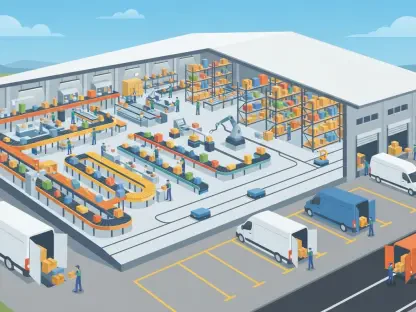

The vulnerability of a logistics operation is highest during its startup phase, making digital workforce readiness tools essential for mitigating operational risk. As the supply chain landscape becomes more complex in 2026, the success of a third-party logistics provider is no longer measured solely by the speed of its automated conveyor belts or the precision of its autonomous mobile robots. Instead, the focus has shifted toward the efficiency with which a human workforce can be mobilized and integrated into these high-tech environments. When a new contract is signed or a facility expansion occurs, the pressure to reach peak productivity is immediate and unforgiving. Traditional methods of onboarding often leave new hires in a state of administrative limbo, where the potential for error and delay is at its peak. By prioritizing digital readiness, organizations can bridge the gap between human capability and mechanical speed, ensuring that the transition from a warehouse shell to a fully functional hub is seamless and profitable for everyone.
The Strategic Importance of Rapid Scaling
Mastering the Logistics Ramp-Up Phase
In the current 2026 market, the ability to scale a workforce from a skeleton crew to several hundred associates within a narrow timeframe is a non-negotiable requirement for competitive 3PL providers. Historically, the startup phase of a new warehouse was treated as a grace period—a time when clients expected certain levels of inefficiency as the operation found its rhythm. However, modern commercial demands have eliminated this buffer. Customers now expect flawless execution from the very first hour of operation, leaving no room for the slow, manual onboarding processes of the past. This pressure is compounded by seasonal spikes that require rapid surges in labor, making the old “wait and see” approach to training completely obsolete. Strategic leaders are now viewing the ramp-up phase not as a hurdle to be cleared, but as a critical window of opportunity where a digital-first approach to human capital management can solidify a long-term partnership through early reliability and operational excellence.
Reducing Friction During Initial Onboarding
Transitioning from a manual onboarding system to a digital workforce readiness model directly addresses the costly phenomenon of “unproductive waiting” that frequently handicaps new facilities. When new associates spend their first two or three shifts essentially idled—waiting for physical security badges to be printed, navigating confusing facility maps, or sitting in overcrowded rooms for generic safety orientations—the hidden costs are massive. These delays do more than just waste wages; they pull supervisors away from their technical duties to handle basic administrative troubleshooting, creating a ripple effect of inefficiency throughout the entire site. By implementing smart access platforms, a 3PL can initiate the credentialing process before a worker even arrives. Digital tools allow for pre-arrival orientations and automated document verification, which ensures that by the time an employee steps through the door, they are already equipped with the knowledge and access permissions required to hit the ground running.
Technological Integration for Operational Excellence
Synchronizing Access Control and Digital Education
The most significant breakthroughs in modern logistics efficiency occur when smart access control systems are integrated with sophisticated Learning Management Systems (LMS). This synergy creates a powerful “gatekeeper” effect that enhances both safety and operational compliance without requiring constant human oversight. For example, a warehouse associate’s digital credential can be programmed to remain inactive for specific high-risk zones until the corresponding safety training module is completed and verified within the LMS. If a worker attempts to enter a forklift-intensive area or a cold-storage zone without the necessary certifications, the system automatically denies entry. This integration removes the burden of manual compliance checks from floor managers, ensuring that every person in the building is fully qualified for their specific tasks. This level of automated governance is essential for maintaining safety standards in a 2026 environment where high-speed throughput and rigorous safety regulations must coexist today.
Ensuring Scalability and Training Consistency
Digital training frameworks also solve the inherent scalability problems that have long plagued traditional warehouse education methods like one-on-one shadowing or thick paper manuals. Shadowing is inherently inconsistent, as the quality of training depends entirely on the expertise and patience of the person being shadowed—who is often under extreme pressure themselves during a new facility launch. In contrast, an LMS provides a standardized, repeatable, and interactive curriculum that ensures every new hire receives the exact same high-quality instruction regardless of their location or the time of day. This consistency is particularly vital in 2026 as logistics providers increasingly manage diverse, multilingual workforces across multiple geographical regions. By moving training to a digital platform, 3PLs can deliver localized content that addresses specific regional safety requirements or customer protocols, ensuring that the entire network operates on a single, unified standard of excellence that is easily auditable.
Measuring Success and Future Trends
Quantifying Productivity Gains and Economic Impact
The financial implications of accelerating workforce readiness are both profound and highly quantifiable for large-scale logistics operations. Consider a typical 3PL launch requiring the onboarding of five hundred associates; if digital readiness tools can reduce the time it takes for a new worker to become fully productive by just two days, the operation gains a total of one thousand days of productive labor. At a standard burdened labor rate, this translates into a significant cost saving that often covers the entire investment in digital technology within a single fiscal year. However, the return on investment extends far beyond simple payroll mathematics. Faster readiness translates directly into higher customer service levels and a lower risk of safety-related incidents, which can carry devastating financial and reputational penalties. By shortening the “learning curve,” companies are also seeing a measurable reduction in turnover, as employees who feel better prepared and more competent from day one are significantly more likely to stay.
Advancing the Frictionless Employee Experience
Looking ahead from 2026 to 2028, the prevailing industry trend is toward a completely “frictionless” employee experience that mirrors the consumer-grade technology workers use in their daily lives. This involves the adoption of mobile-first onboarding platforms that allow new hires to complete their paperwork and basic training modules on their own smartphones before their first shift. Furthermore, the integration of data-driven readiness metrics is allowing managers to move away from seniority-based task assignments in favor of a meritocratic model based on actual skill mastery. When digital systems can track exactly which modules an employee has aced and which tasks they have performed most accurately, supervisors can deploy labor with surgical precision. This data-driven approach, combined with multilingual support and interactive augmented reality training, ensures that the modern warehouse remains an environment where people and technology work in perfect harmony to create a workplace where the transition to productivity is fast.
Sustaining Operational Value Through Digital Human Capital
The transition toward digital workforce readiness successfully redefined how third-party logistics providers managed their most critical assets. By moving away from fragmented, paper-based processes, industry leaders secured a framework that prioritized both speed and safety during the high-stakes launch phases of 2026. This evolution proved that the most effective way to optimize a facility was to ensure that every associate was operationally prepared before the first shipment ever left the dock. Organizations that adopted these integrated technologies noticed a significant decrease in initial turnover and a marked improvement in overall accuracy. The path forward for logistics directors necessitated an immediate shift toward centralizing training and access data to create a self-regulating environment. Leaders who focused on reducing administrative friction achieved higher margins and stronger client trust. Ultimately, the industry learned that while machinery provided the backbone, it was the readiness of the people that determined the true speed.