
The threshold for consumer patience has disintegrated so completely that the traditional two-day shipping window now feels like a relic from a slower, less efficient era. Today, the competitive landscape is defined not by the breadth of a product catalog, but by the velocity at which an item moves from a digital cart to a physical doorstep. This shift toward instant fulfillment signals a fundamental reorganization of the retail sector, where convenience is no longer a perk but the primary currency of consumer loyalty. As the instant gratification economy matures, the roadmap for success involves heavy investment in micro-logistics, predictive inventory management, and hyper-local fulfillment networks.
The Meteoric Rise of Hyper-Local Logistics
Market Growth and Consumer Adoption Trends
The transition from standard shipping to sub-30-minute delivery represents the new gold standard in the logistics industry. Urban consumers increasingly treat e-commerce platforms as digital extensions of their own pantries, driving massive demand for immediate-need categories such as fresh produce, personal care products, and emergency household goods. This behavior has catalyzed a surge in high-frequency purchasing patterns that ignore traditional business hours and favor platforms capable of maintaining absolute availability.
Moreover, the 24/7 delivery cycle has become an essential component of the modern urban lifestyle. As cities become more densely populated and work schedules more fragmented, the ability to receive goods at any hour is no longer a luxury for the few. Statistics indicate that these rapid fulfillment windows are particularly effective in high-density zones where the opportunity cost of a trip to a physical store is measured in lost time and increased transit stress.
Real-World Applications: The Amazon Now Expansion
Amazon has moved aggressively to secure its position in this space by rolling out 30-minute delivery services across major hubs like Atlanta, Dallas-Fort Worth, and Phoenix. This expansion is powered by a strategic layer of specialized, smaller fulfillment centers tucked directly into residential and commercial neighborhoods. These hubs are designed to bypass the traditional delays associated with massive regional warehouses, allowing for a streamlined picking process that targets localized demand with surgical precision.
In contrast to the flat-fee structures of the past, the current model utilizes tiered pricing to manage high operational costs. Prime members often pay a modest fee of $3.99 for this speed, while non-members face a steeper $13.99 charge, effectively turning logistics into a powerful tool for membership retention. Competitors like Sam’s Club and Dollar General have followed suit, launching their own rapid initiatives to prevent losing market share to this convenience-first model.
Industry Expert Insights on Rapid Fulfillment
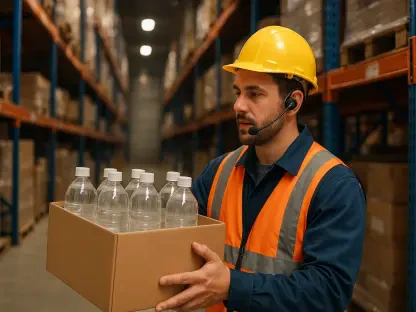
Operational experts frequently highlight the immense pressure that hyper-compressed picking windows place on facility staff and automated systems. Maintaining high levels of safety and order accuracy while racing against a thirty-minute clock requires a level of coordination that was once deemed impossible. However, the integration of advanced robotics and spatial AI has allowed these small hubs to maintain efficiency without sacrificing worker welfare or product integrity.
The economic viability of these networks remains a point of intense debate among retail analysts. While $13.99 fees help offset costs in high-rent urban environments, the real value lies in the strategy of using logistics as a competitive moat. By creating a system where speed is the primary driver of customer value, retailers build a defensive barrier that is difficult for smaller players or traditional stores to replicate. This approach shifts the focus of the industry from price wars to service-level agreements.
The Future of the “Instant” Retail Model
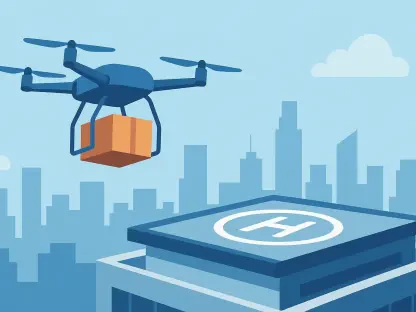
Looking ahead, the evolution of delivery technology will likely center on the deployment of autonomous drones and AI-driven predictive inventory systems. By analyzing local purchasing trends, retailers can position stock before a customer even places an order, further shrinking the window between desire and possession. However, scaling these networks requires addressing significant labor costs and the environmental footprint of increased last-mile traffic in already congested city centers.
Furthermore, traditional brick-and-mortar stores are being forced to adapt by serving as hybrid fulfillment hubs. This transformation allows retailers to maximize the value of their existing real estate while providing the proximity needed for rapid dispatch. The long-term sustainability of the 30-minute model will eventually depend on how well these companies can balance the demand for speed with the logistical realities of diverse geographical demographics outside of major urban cores.
Concluding Thoughts on the New Retail Benchmark
The transition toward a hyper-local commerce model fundamentally altered how businesses perceived the value of distance and time. Retailers that successfully navigated this shift moved away from centralized shipping models and toward a decentralized network that prioritized the near-instant consumer expectation. This specialized infrastructure became the backbone of a new retail reality, proving that proximity was the ultimate competitive advantage in a world that refused to wait.
Future strategies must prioritize the refinement of autonomous delivery lanes and the integration of sustainable packaging to mitigate the impact of high-frequency transit. Stakeholders should also evaluate the role of collaborative logistics, where multiple brands share micro-fulfillment spaces to reduce overhead costs. As the industry moved forward, the success of these ambitious delivery windows continued to redefine the social contract between retailers and the communities they served.