
A Million-Dollar-an-Hour Bet on the Future of Warehousing
The relentless pace of global trade now requires a level of investment that borders on the astronomical, with Toyota Industries Corporation funneling a staggering one million dollars into research and development every single hour of the day. This monumental capital expenditure signifies a departure from the era of simple hardware improvements toward a future where intelligence and automation dictate the survival of supply chains. By establishing Toyota Automated Logistics, the organization is effectively ending the age of fragmented intralogistics to create a cohesive powerhouse capable of navigating the complexities of modern commerce through sheer scale.
This massive injection of funds is not merely about staying competitive; it is about redefining the standard of how goods move across the planet. While most companies measure progress in annual cycles, this hourly commitment ensures that innovation remains a continuous process rather than a periodic event. The launch of this unified entity signals to the market that the boundaries between traditional machinery and high-tech software have finally dissolved, creating a singular path for future growth.
Consolidating Giants Under the Toyota Automated Logistics Umbrella
The formation of this new organization represents a strategic pivot to unify three industry titans—Vanderlande, Viastore, and Bastian Solutions—into a single, high-performance ecosystem. Previously, these entities operated with a high degree of autonomy, which occasionally led to technological silos that slowed down complex global deployments. The new “one family” philosophy removes these friction points, ensuring that the transition from a standard forklift to a fully autonomous sorting system is handled through a unified point of contact.
By utilizing the extensive Toyota Material Handling dealer network as the primary engine for lead generation, the organization is transforming every local touchpoint into a gateway for sophisticated technology. This approach allows even mid-sized operations to access enterprise-level expertise that was once reserved for the world’s largest distribution centers. The synergy between local service and global engineering creates a powerful feedback loop where field data directly informs the design of next-generation automated systems.
Synergizing Specialized Technologies for Global Distribution
Reorganizing these specialized brands allows for the seamless deployment of technologies like the ADAPTO shuttle system and POSISORTER across diverse international markets. These high-speed solutions are no longer isolated products but are integrated into a broader portfolio that serves both massive continental hubs and regional fulfillment centers. This integration ensures that the best-in-class hardware from one subsidiary can be perfectly paired with the software intelligence of another to solve unique logistical bottlenecks.
With management centralized to ensure operational consistency, the group is positioned to double its business volume over the coming years. This growth trajectory is supported by the ability to offer end-to-end solutions that cover everything from the initial warehouse design to long-term digital maintenance. As global distribution demands increase, the ability to provide a scalable logistics framework becomes a critical competitive advantage for businesses looking to modernize their infrastructure.
Engineering Sustainability Through Lean Production and Advanced Materials
Sustainability has become a core pillar of this technological expansion, merging the famous “Lean” philosophy with rigorous environmental stewardship. A landmark partnership with the Swedish steelmaker SSAB has enabled the use of low-carbon steel in the manufacturing process, resulting in an immediate 18% reduction in carbon emissions for foundational equipment like hand pallet trucks. This move demonstrates that heavy industry can successfully decouple production growth from its environmental footprint without losing structural integrity.
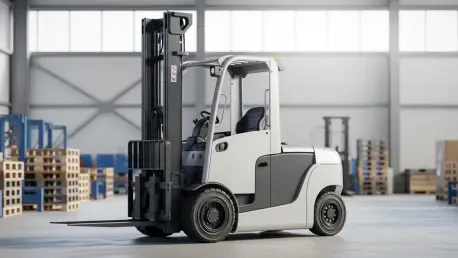
Beyond materials, energy efficiency is being engineered into every new piece of hardware, such as the Traigo80 electric forklift series. This equipment reduces energy consumption by 12% while maintaining the heavy-duty performance required for high-throughput environments. By optimizing the hardware for lower power draw and utilizing recycled materials, the organization helps clients meet their own green targets while simultaneously lowering their total cost of ownership.
Implementing the Toyota Automated Logistics Framework for Growth
The framework for growth within this new structure prioritizes the synthesis of robotics research with practical, field-tested logistics hardware. This methodology ensures that every technological breakthrough from the Toyota Research Institute is quickly adapted for real-world warehouse environments where reliability is paramount. The focus remains on creating a seamless integration path that allows businesses to scale their automation at a pace that matches their specific economic realities.
The decision to unify these brands provided a clear roadmap for organizations seeking to navigate the transition toward fully automated operations. Industry leaders observed how the integration of diverse technologies and sustainable materials established a new benchmark for corporate responsibility and operational excellence. Moving forward, the strategy focused on refining these integrated systems to ensure that global logistics remained resilient and efficient in the face of evolving economic challenges.