
Rohit Laila brings decades of specialized experience in global logistics, supply chain management, and delivery innovation to our discussion today. Having navigated the complexities of international trade through various economic cycles, he offers a unique perspective on the operational realities behind high-level political negotiations. In this conversation, we explore the intensifying trade tensions between the United States and the European Union, focusing on the logistical and economic implications of the July 4 deadline and the potential for significant tariff hikes on the automotive sector.
With a July 4 deadline set for the European Union to ratify the trade agreement, how does this aggressive timeline affect diplomatic leverage? What specific hurdles do individual member states face when trying to harmonize domestic legislation with these new tariff caps by mid-summer?
The imposition of a July 4 deadline creates a high-pressure environment that significantly compresses the window for traditional diplomatic nuance, effectively turning a trade negotiation into a race against the clock. This aggressive timeline forces European negotiators to bypass some of the more deliberative consensus-building exercises that are hallmarks of the bloc’s legislative process. Individual member states are currently wrestling with the administrative burden of aligning their domestic tax and customs frameworks to hit the 15% cap or zero-out duties by mid-summer. It is a logistical marathon; for instance, the European Parliament only just concluded its second round of negotiations this week, leaving a very narrow corridor for the third round starting May 19 to resolve outstanding issues. The tension is palpable because failing to meet this “Historic Deal” deadline could trigger immediate retaliatory levies, leaving little room for error in the legislative drafting.
If a 25% tariff on European cars and trucks were to take effect, what would be the immediate fallout for American dealerships and consumers? How can supply chain managers mitigate the costs of such a sharp increase while attempting to maintain steady inventory levels?
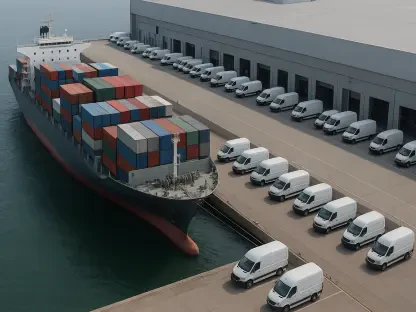
A 25% tariff on European automotive imports would be a seismic shock to the American market, likely resulting in an immediate and sharp increase in the sticker price for consumers. American dealerships would face the grim reality of “lot rot,” where inventory sits unsold because the sudden price hike exceeds the average buyer’s financing capacity. From a supply chain perspective, managers are currently looking at “pulling forward” shipments to beat any potential implementation date, which creates its own set of headaches regarding warehousing and port congestion. To mitigate these costs, firms often explore duty drawback programs or re-evaluate their “Value-Add” strategies, but a jump to 25% is so steep that it often necessitates a complete overhaul of the sourcing strategy to avoid passing the full cost to the consumer. The smell of new leather in the showroom might soon come with a much higher price tag if these threats materialize into official documentation.
The agreement reached in Turnberry aims to cap certain imports at 15% while zeroing out tariffs on specific industrial products. What are the logistical trade-offs of this arrangement, and which industrial sectors stand to gain or lose the most from this shift in trade policy?
The Turnberry agreement creates a bifurcated landscape where the logistical trade-offs involve balancing the high-volume, low-margin industrial goods that will now move at zero tariffs against the more complex 15% capped items. Sectors like heavy machinery and industrial components stand to gain immensely, as the removal of duties streamlines customs clearance and lowers the total landed cost significantly. On the other hand, sectors still facing the 15% cap must remain lean to stay competitive, as they don’t enjoy the same “free-flow” benefits as the zero-rated industrial products. We are seeing a shift where logistics providers are prioritizing routes for these zero-tariff goods to capitalize on the expected surge in volume. However, the complexity of verifying which specific products qualify for the “zero” status adds a layer of administrative friction that can lead to delays at the border if documentation isn’t perfect.
European officials are currently navigating a third round of negotiations between the Parliament and individual member governments. How do these internal regional discussions complicate the broader international timeline, and what metrics should be used to track whether these legislative milestones are being met?
Internal regional discussions are the “engine room” of this trade deal, and right now, that engine is running at redline. These negotiations complicate the international timeline because each of the member governments has unique domestic concerns—ranging from labor protections to environmental standards—that must be reconciled with the broader U.S. agreement. To track progress, we should look closely at the conclusion of the third round of talks scheduled for May 19 as a primary metric of success. Another key indicator is the “stepping up” of technical-level engagement mentioned by officials; if we don’t see finalized legislative text by early June, the July 4 deadline becomes a statistical impossibility. The friction between the European Parliament’s mandate to protect citizens and the U.S. demand for immediate ratification creates a volatile atmosphere where one missed meeting can derail the entire schedule.
Given recent judicial rulings regarding the legality of certain global tariffs, how does the current legal climate shape the enforcement of these trade threats? What steps should corporations take to prepare for a scenario where new trade agreements are challenged in the court system?
The legal climate is currently a minefield, especially following the recent trade court ruling that declared a previous 10% global tariff illegal. This creates a precedent that empowers corporations to challenge the executive’s authority to impose broad levies without specific legislative backing, potentially stalling the 25% car and truck tariff in the courts for years. Corporations should be actively “stress-testing” their contracts, ensuring they have robust force majeure and price-adjustment clauses that specifically account for sudden regulatory changes. They must also maintain a dual-track strategy: preparing for the operational reality of the tariffs while simultaneously engaging legal counsel to prepare for potential litigation or duty recovery actions. The uncertainty of the courtroom adds a layer of “legal fog” that makes long-term capital investment in transatlantic supply chains incredibly risky right now.
What is your forecast for EU-U.S. trade relations?
I forecast a period of “calculated volatility” where we will see a last-minute scramble to meet the July 4 deadline, likely resulting in a partial or provisional implementation of the Turnberry agreement to avoid the 25% automotive cliff. While the rhetoric remains fiery, the economic interdependence between the two regions is too deep to ignore, and the progress toward the 15% cap indicates a mutual desire to avoid an all-out trade war. We will likely see the EU finalize its provisions in June, as suggested by Bernd Lange, which will temporarily cool the temperature. However, the threat of judicial challenges will remain a permanent shadow over these deals, meaning that businesses must learn to operate in a “new normal” where trade policy is as much about court rulings and social media posts as it is about actual cargo movement. Expect more “salvos” of threats followed by technical breakthroughs, as both sides realize that a full breakdown in trade would be a self-inflicted wound neither can afford.