
Modern logistics hubs hum with the sound of automated sorters and electric fleets, yet the digital brains managing these complex networks remain surprisingly tethered to legacy logic and manual oversight. While artificial intelligence dominates every boardroom conversation, the transition from experimental pilots to integrated reality is moving at a glacial pace. This disconnect reveals a fundamental truth: enthusiasm for high-tech tools often outpaces the structural readiness of the organizations meant to deploy them.
Understanding the Disconnect Between AI Hype and Operational Reality
The industry currently grapples with a significant divide between what technology promises and what supply chain managers can actually execute on the ground. Most organizations find themselves trapped in a cycle of “pilot purgatory,” where AI projects show promise in isolated settings but fail to scale across the broader enterprise. This stagnation often stems from a lack of foundational readiness, as many firms lack the data hygiene and architectural flexibility required to support autonomous decision-making.
Beyond technical limitations, the culture of logistics remains deeply rooted in reactive problem-solving rather than predictive strategy. Shifting toward a full-scale AI redesign requires more than just a software update; it necessitates a complete rethink of how workflows are structured. Without a clear path to maturity, the industry risks staying stuck in an incremental loop, missing the transformative power that true digital intelligence offers.
The Strategic Importance of AI Integration in Modern Logistics
Recent research involving senior leaders highlights that while investment remains a top priority, the focus has shifted toward resilience over mere efficiency. In an increasingly volatile global market, the ability to anticipate disruptions before they occur is no longer a luxury but a competitive necessity. Resolving the current adoption stalls is essential for any firm aiming to move away from fragile, linear networks toward agile, self-healing supply chains.
The stakes are high because the window for establishing a digital advantage is closing. Stakeholders who fail to bridge the gap between legacy systems and automated networks will find themselves burdened by higher operational costs and slower response times. Consequently, the research underscores that the current pause in progress is not a sign of AI’s failure, but rather a mandatory period of infrastructure building that will define the winners of the next decade.
Research Methodology, Findings, and Implications
Methodology
To understand this stagnation, a comprehensive survey was conducted involving 140 senior supply chain leaders in late 2025. The study utilized a rigorous categorization framework to differentiate between firms attempting a full workflow redesign and those settling for incremental updates. This approach allowed for a clear view of how different organizational strategies impact the speed and depth of technology integration.
Furthermore, the research employed qualitative analysis to pinpoint specific friction points within the corporate structure. By interviewing decision-makers across various sectors, the study identified the specific roadblocks that prevent AI from moving out of the lab and into the core of the warehouse and shipping office.
Findings
The data reveals a stark implementation gap, with only 17% of surveyed firms pursuing a total AI-driven redesign. The remaining 83% are taking a cautious stance, largely due to five specific barriers: fragmented vendor options, internal data gaps, unreliable partner information, low process maturity, and a continued reliance on the “human element.” These hurdles create a landscape where even high-performing companies struggle to move beyond basic automation.
Even in scenarios where initial returns on investment were high, the complexity of embedding AI into daily operations proved daunting. The findings suggest that the lack of a unified platform makes it difficult for companies to achieve a single version of the truth, leading to a fragmented digital landscape that resists cohesion.
Implications
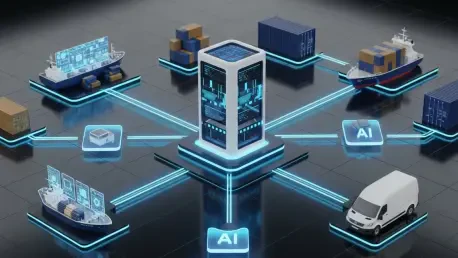
These results signal a shift toward “agentic orchestration,” where AI begins to act as an active monitor rather than a passive dashboard. To reach this stage, organizations must prioritize their data infrastructure over the acquisition of shiny new tools. This transition requires a standardized framework that allows different systems to communicate seamlessly across the entire supply chain network.
Moreover, the research suggests that the theoretical model of supply chain management is evolving. We are moving away from manual coordination toward a data-centric reality where AI handles the heavy lifting of event monitoring. This shift will eventually force a standardization of data models across the industry, facilitating better collaboration between global partners.
Reflection and Future Directions
Reflection
The persistent reliance on human professional judgment remains a significant factor in the current adoption plateau. While AI can process vast amounts of data, it still lacks the situational context that a veteran logistics manager provides during a global crisis. Additionally, the absence of an all-in-one vendor platform forces companies to adopt a modular approach, which increases the difficulty of maintaining a streamlined operation.
Reflecting on these challenges shows that AI is far from a turnkey solution. It is a capability that must be grown alongside process maturity. Organizations are beginning to realize that without a solid baseline of standardized operations, even the most advanced algorithms will produce unreliable results.
Future Directions
Future inquiries should focus on developing standardized data models that allow for smoother “handshakes” between internal systems and external logistics partners. As “agentic AI” begins to simulate response options in real-time, the role of the supply chain professional will need to be redefined from an operator to an orchestrator. There is also a significant opportunity to explore how mid-market firms can achieve foundational readiness without the massive budgets of global conglomerates.
Investigating the synergy between human intuition and machine speed will be vital for the next phase of development. Researchers should look into how hybrid models can bridge the gap between automated suggestions and final executive decisions to ensure resilience.
Conclusion: Building the Foundation for a Predictive Supply Chain
The research clarified that the current stall in AI adoption originated from deep-seated technical and organizational limitations rather than a lack of perceived value. It became evident that addressing data fragmentation and process immaturity was the only viable path to securing long-term business value. Leaders recognized that investing in foundational readiness today would be the deciding factor in who manages the end-to-end orchestration of the future. Moving forward, the industry should focus on creating interoperable data environments that empower AI to move from simple automation to proactive problem-solving. Success will likely depend on how effectively organizations can blend machine intelligence with the strategic nuance of their human workforce.