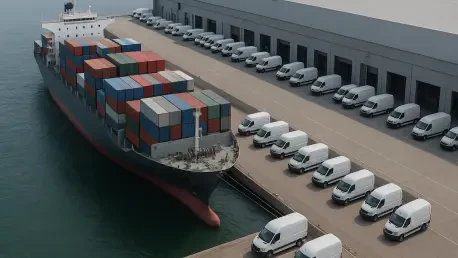

The traditional boundaries between maritime transport and domestic distribution have fundamentally dissolved as giants like Maersk transition into integrated logistics powerhouses capable of managing every step of the consumer journey. This evolution reflects a broader pivot from managing fragmented shipping routes toward providing holistic, end-to-end fulfillment solutions. The collaboration with Shipstore serves as a pivotal bridge, allowing high-volume shippers to access Maersk’s North American delivery network directly through a specialized multi-carrier platform.
Technological synergy between legacy carriers and modern software platforms is currently reshaping the North American delivery market. By integrating maritime leadership with last-mile precision, companies are moving toward a model where global supply chains are no longer viewed as separate links but as a single, fluid process. This integration is essential for managing the modern complexities of speed and reliability that retailers now require to stay competitive.
The Modern Logistics Landscape: Integrating Ocean Freight with Last-Mile Delivery
The shift from a port-to-port focus to a doorstep-delivery strategy marks a significant turning point for the shipping industry. Maersk has strategically repositioned itself to handle not only the massive containers traversing the Pacific but also the individual parcels that eventually reach a customer’s home. This change is driven by the need for transparency and control over the entire supply chain, reducing the friction often found when handing off cargo between multiple third-party providers.
Multi-carrier shipping platforms have become the backbone of this transition, providing the necessary infrastructure to handle the explosion of global e-commerce. These platforms allow for a unified view of shipping operations, ensuring that the same level of care applied to ocean freight is extended to the final delivery. The result is a more resilient supply chain that can adapt to sudden market shifts and consumer demands without losing operational efficiency.
Shaping the Future of Fulfillment through Digital Innovation
Emerging Trends in Parcel Automation and Multi-Carrier Strategies
Retailers are rapidly diversifying their carrier portfolios to avoid the risks associated with single-carrier dependency, such as capacity limits or sudden rate hikes. This move toward a multi-carrier strategy allows for greater flexibility, especially during peak seasons when shipping networks are under extreme pressure. By leveraging a variety of partners, businesses can ensure that their products reach consumers regardless of localized disruptions or carrier-specific bottlenecks.
The rise of invisible logistics represents a shift where software automates rate selection and routing rules in real-time without human intervention. This automation ensures that every parcel is sent via the most cost-effective and timely method available. High-volume growth has made unified shipping documentation and label generation a necessity, as manual processes simply cannot keep pace with the current scale of digital commerce.
Projecting Growth in the Global Parcel and E-Commerce Market
Global parcel volumes are currently on a steep upward trajectory, with an anticipated increase of 33 percent from 2026 to 2028. This surge highlights the immense pressure on existing infrastructure to scale rapidly and efficiently. Maersk’s footprint in North America, which includes managing over 10 million annual parcels, positions the company as a central player in meeting this demand through its expanding fulfillment-as-a-service models.
The economic weight of reverse logistics has become a critical focal point, as the cost of managing returns has nearly doubled compared to outbound shipping. Companies are now looking for integrated solutions that can handle the complexities of the return journey as efficiently as the initial delivery. Data transparency across the end-to-end customer journey is the key to improving these processes and reducing the overall financial burden on retailers.
Navigating the Complexities of High-Volume E-Commerce Logistics
Technical hurdles remain a significant obstacle when integrating legacy shipping infrastructure with modern, API-driven platforms. Bridging the gap between old-world maritime systems and high-speed digital fulfillment requires significant investment in software and data architecture. Many enterprises struggle to harmonize their inventory management systems with final-mile carrier networks, leading to data silos that hinder real-time decision-making and operational visibility.
The financial drain of the last mile continues to be the most expensive and logistically challenging segment of the supply chain. Home delivery networks require dense infrastructure and precise coordination to be profitable. To mitigate these costs, businesses are adopting flexible, multi-node distribution strategies that place inventory closer to the end consumer, thereby reducing the distance and time required for final delivery.
Governance and Compliance in a Digital-First Shipping Era
Navigating the regulatory frameworks of cross-border e-commerce and North American transit standards requires a sophisticated approach to data management. Security and privacy compliance are paramount when utilizing cloud-based shipping platforms that store sensitive customer information. Companies must ensure that their digital tools not only provide efficiency but also adhere to the highest standards of protection against cyber threats and data breaches.
Environmental regulations are also driving a push for sustainable, carbon-conscious green logistics. Shippers are increasingly required to report on their carbon footprint and seek out carriers that offer eco-friendly delivery options. Compliance with automated customs requirements for international parcel flow has become a standard necessity, as manual documentation is no longer viable for the high speeds required in the digital-first shipping era.
The Next Frontier: Automation and the Global Supply Chain
Artificial intelligence and machine learning are now being deployed to handle predictive routing and load optimization at a scale previously thought impossible. These technologies allow carriers to anticipate delays and re-route shipments before they become a problem. Maersk’s continued acquisitions in the B2C sector suggest a future where the competitive landscape is defined by those who can best integrate these intelligent systems into their daily operations.
Consumer expectations for speed and transparency are the primary drivers for investment in hyper-local fulfillment centers. The industry is moving toward a transition where fully autonomous and decentralized delivery ecosystems will become the standard for urban logistics. This future-proofing is essential for businesses that wish to maintain a competitive edge in a market where the window for delivery continues to shrink from days to hours.
Strengthening the Supply Chain through Strategic Collaboration
The collaboration between Maersk and Shipstore successfully eliminated the friction that once plagued high-volume shippers by centralizing disparate logistics functions. This partnership proved that digital transformation was no longer optional for legacy carriers but a requirement for survival in a modern economy. Strategic investments in scalable, technology-driven logistics provided the necessary tools for businesses to navigate a rapidly changing retail landscape where consumer demand for reliability became the highest priority.
Integrated shipping solutions eventually became the fundamental backbone of global digital commerce, allowing for a more resilient and responsive market. The long-term outlook suggested that the most successful companies were those that embraced automation to manage the complexities of both ocean freight and last-mile delivery. As the industry moved forward, the focus shifted toward refining these digital ecosystems to further enhance sustainability and speed across the entire global supply chain.