
Closing the living wage gap for workers in the Naivasha region would require an estimated increase of nearly two euro cents per individual rose stem. This figure, while seemingly small, represents a pivotal shift in the economic structure of an industry that bridges the vast distance between East African highlands and European floral markets. The export of Kenyan roses is a masterclass in global logistics, requiring a seamless orchestration of agricultural precision, temperature-controlled transport, and navigation of complex trade regulations. As the focal point of this industry, Lake Naivasha produces approximately 70% of Kenya’s roses, benefiting from an environment that allows for year-round cultivation. However, the journey from a greenhouse in Naivasha to a vase in Amsterdam is fraught with marginal costs that accumulate at every transition point. From the initial harvest to the final auction at Royal FloraHolland, each stem carries the weight of labor, aviation fuel, and administrative compliance, making the final wholesale price a reflection of a high-stakes race against time and biological decay.
Trade Agreements and Regulatory Frameworks
Navigating Fiscal Policies: International Trade
The trade relationship between Kenya and the European Union has reached a period of relative stability, underpinned by a comprehensive agreement that eliminates import duties for Kenyan floral products. This 0% tariff status is the bedrock of Kenya’s competitive advantage, allowing its roses to enter the European market on equal or better footing than competitors from South America or Ethiopia. This agreement, which was solidified in mid-2024, has allowed Kenyan growers to focus on scaling production without the immediate burden of external tax barriers. However, the domestic fiscal landscape in Kenya has been more volatile, with the government balancing the need for revenue against the necessity of supporting its primary export sectors. Legislative shifts, such as those seen in the Finance Acts of the last two years, have directly impacted the cost of essential inputs like packaging materials.
The shifting nature of domestic excise duties on materials such as kraft paper illustrates the sensitivity of the supply chain to local policy changes. While the Finance Act of 2025 introduced duties that increased the cost of the “jumbo boxes” used for transport, the Finance Act of 2026 recognized the strain this placed on exporters and subsequently removed these levies to encourage export growth. This legislative pivot was essential for maintaining the narrow margins of flower farms, which must absorb these costs before the product even leaves the farm gate. By aligning domestic policy with international trade goals, the Kenyan government has attempted to shield the floriculture sector from internal inflation. For wholesalers in the Netherlands, these policy adjustments are critical markers that influence the base price of every shipment long before the flowers are subjected to the fluctuations of the global air freight market.
Compliance Costs: Essential Export Standards
Ensuring that every rose stem meets the stringent plant health standards of the European Union is a task managed by the Kenya Plant Health Inspectorate Service (KEPHIS). These inspections are not merely bureaucratic hurdles; they are essential for protecting the integrity of the European agricultural environment from invasive pests and diseases. Every shipment requires a phytosanitary certificate, which involves a multi-step verification process at the packhouse and Jomo Kenyatta International Airport. These compliance measures carry fixed costs, including a base fee per certificate and a rate calculated per kilogram of the shipment. While these fees are a small percentage of the total export value, they represent a non-negotiable layer of the per-stem cost that ensures market access. Without these rigorous standards, the entire Kenyan floral industry would face the risk of sudden bans or increased scrutiny at European borders.
In addition to plant health inspections, exporters must account for the export cess, a domestic levy calculated as 0.25% of the total export value. This revenue is typically reinvested into the horticultural directorate to fund industry oversight and market development. While seemingly minor, the cumulative effect of these administrative fees, when combined with the costs of cold-chain management and rapid transit, creates a baseline price floor. Exporters must meticulously document every aspect of the rose’s journey to satisfy both Kenyan and Dutch authorities, ensuring that the flowers are not only beautiful but also legally and biologically compliant. This regulatory framework creates a layer of invisible logistics that is just as vital as the physical planes and trucks used to move the flowers, as any documentation error can lead to the total loss of a shipment due to delays or rejection at the port of entry.
The Impact of Air Freight Volatility
Calculating Costs: High-Volume Flower Shipments
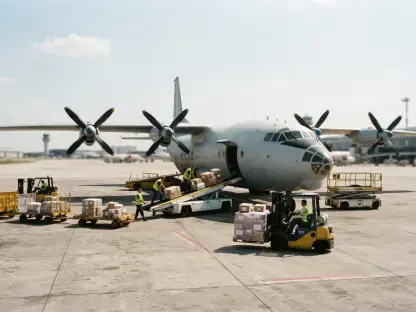
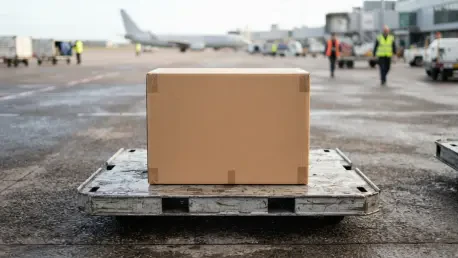
Air freight is arguably the most volatile component of the Kenyan rose supply chain, often dictating whether a season is profitable or a loss. By 2026, air cargo rates have stabilized at a higher baseline than in previous years, with costs often approaching USD 5.00 per kilogram during periods of high demand. Because roses are relatively light but take up significant space, airlines typically use chargeable weight calculations, which favor volumetric measurements over actual weight. This makes the efficiency of packing a primary concern for exporters; a box that is not filled to its volumetric capacity is essentially wasted money. The density of the product is also influenced by stem length, with longer, premium roses requiring more space and fewer stems per box, which inherently increases their per-unit shipping cost compared to shorter varieties.
The logistical complexity of air freight is further compounded by the necessity of maintaining a perfect cold chain from the moment the flowers leave the refrigerated truck at the airport to the moment they are loaded into the cargo hold. Any break in this chain results in a loss of vase life, which directly devalues the product in the eyes of European wholesalers. As aviation fuel prices remain a major variable in global shipping, airlines have increasingly relied on surcharges that can change with little notice. For Kenyan exporters, this means that the price of a rose is never truly fixed until the cargo has actually departed. This environment requires sophisticated logistics software and strong relationships with cargo carriers to secure space on flights that offer the most direct routes to Dutch hubs like Schiphol Airport, minimizing the time the flowers spend on the tarmac.
Managing Spikes: Seasonality and Currency Risk
The flower industry is uniquely sensitive to the calendar, with massive demand spikes occurring around Valentine’s Day and International Women’s Day. During these super-peak weeks, the sheer volume of roses being moved from Kenya can exceed 460 million stems, placing an immense strain on global aviation capacity. This surge in demand allows cargo carriers to command premium rates, often doubling or tripling the standard freight cost. For many farms, the ability to secure charter flights becomes a necessity, though it comes with high financial risk. If a farm cannot find space on an outbound flight, the harvest is frequently discarded—a hidden cost where the labor and resources spent on growing the flowers are completely lost, placing a heavier financial burden on the inventory that does make it to market.
Compounding the logistical challenge of seasonal spikes is the constant presence of currency risk. Air freight is almost universally billed in US dollars, whereas the flowers are sold in euros at the Dutch auctions. This creates a dual-exposure scenario for Kenyan exporters who must manage the fluctuating exchange rates between the Kenyan shilling, the dollar, and the euro. A sudden strengthening of the dollar can instantly erode the profit margins of a shipment, even if the auction price in euros remains high. To mitigate this, larger export firms have increasingly turned to financial hedging and direct contracts with European retailers, which fix prices in advance. This move toward financial sophistication is a response to the reality that in the modern flower trade, being a good farmer is no longer enough; one must also be an expert in global logistics and international finance to survive.
Market Entry and Sustainable Distribution
Processing Roses: Logistics at European Hubs
Upon landing at Schiphol Airport in the Netherlands, the roses enter a highly automated and efficient distribution network. The flowers are immediately transferred to refrigerated handling facilities where they undergo final inspections by the Dutch Quality Control Bureau (KCB). Since the implementation of a time-based billing model in 2025, these inspections are charged based on the duration of the review plus a standard start fee. In 2026, these rates were adjusted by a 3.48% index increase, reflecting the rising labor and operational costs within the European logistics sector. This final administrative hurdle is the gateway to the auction floor or the direct buyer’s warehouse. The speed with which roses move through this phase is critical, as every hour spent in processing is an hour of vase life lost for the end consumer.
The distribution of Kenyan roses has increasingly shifted away from the traditional auction clock toward direct sales and digital platforms like Floriday. While the Royal FloraHolland auction in Aalsmeer remains a vital hub for price discovery and handles about 25% of the total volume, the majority of roses are now sold through pre-arranged contracts. This shift provides a much-needed level of predictability for both growers and retailers, allowing for more stable pricing and better planning of supply volumes. For the Dutch importer, direct sales reduce the risks associated with the daily price volatility of the auction clock, while for the Kenyan grower, it ensures a guaranteed buyer for their premium stems. This evolution of the market toward digital, direct-to-retail channels represents the future of the industry, where data-driven supply chains replace the uncertainty of traditional open-market trading.
Strategic Evolution: Future Supply Chain Resilience
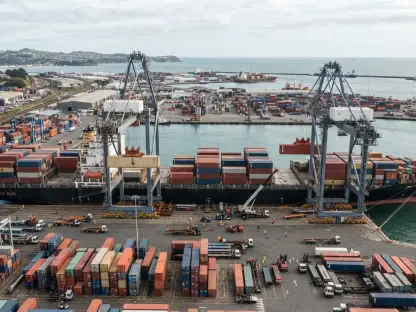
The journey of the Kenyan rose ends in a landscape where traditional logistics meet modern demands for sustainability and fiscal responsibility. Over the past several cycles, stakeholders realized that the moving lines of air freight and regulatory fees were just as significant as the horticultural quality of the flowers themselves. To address these challenges, the industry moved toward diversifying its transport methods, including successful pilot programs for sea freight. By utilizing advanced atmosphere-controlled containers, exporters were able to transport roses by sea over several weeks while maintaining freshness, significantly reducing the carbon footprint and the cost per stem. This transition allowed the industry to bypass some of the volatility of the air cargo market, providing a more stable logistical foundation for the future of the trade.
Furthermore, the integration of blockchain and real-time data loggers throughout the cold chain transformed how value was preserved and verified. By 2026, many Kenyan farms adopted transparent tracking systems that allowed European buyers to verify the ethical and environmental conditions of the rose’s production. This transparency addressed the living wage gap by creating a direct link between consumer price and worker welfare, encouraging a market where higher social standards were rewarded with better contracts. The successful delivery of a rose from Naivasha to a Dutch market ceased to be viewed as a mere transaction and instead became recognized as a sophisticated partnership between two continents. This strategic shift ensured that the Kenyan rose remained a staple of European culture, proving that resilience in the global flower trade depended on a balance of technological innovation, social equity, and logistical agility.