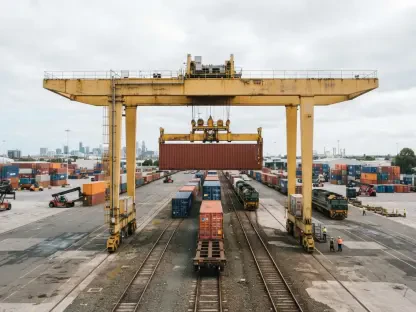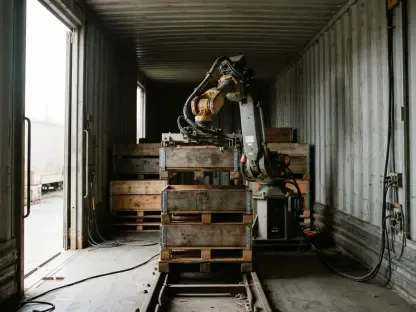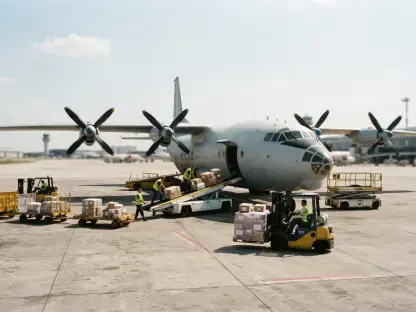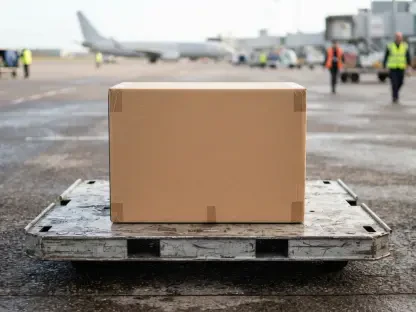

The ability to transform millions of chaotic data points into a synchronized blueprint for global distribution has become the ultimate differentiator in an environment where delays cost billions. As the industry navigates the complexities of the mid-2020s, the integration of artificial intelligence into logistics has moved beyond simple automation toward a sophisticated paradigm of predictive resilience. This evolution marks a shift from reactive troubleshooting to a proactive stance where the stability of a supply chain is no longer an abstract goal but a quantifiable performance metric. By leveraging deep learning and ensemble models, organizations are now attempting to decode the hidden patterns within downstream delivery cycles that were previously dismissed as operational noise.
The core principles of machine learning in this sector are fundamentally rooted in the concept of supply chain resilience. Rather than viewing resilience as a static organizational trait, modern predictive systems define it as the observable ability of a network to maintain delivery standards under varying levels of operational stress. Historically, logistics technology focused primarily on upstream inventory optimization, ensuring that warehouses were stocked efficiently. However, the current landscape demands a shift toward downstream delivery detection, where the focus lies on the final segments of the transit process. This transition is a direct response to the lingering disruptions of previous years, requiring a more granular understanding of how shipments behave once they leave the point of origin.
Navigating global operational stress has transformed from a strategic challenge into a data-driven science. The emergence of these technologies occurred in a post-pandemic world where the fragility of global shipping was exposed on an unprecedented scale. Today, in 2026, the industry has largely abandoned abstract notions of “flexibility” in favor of predictive modeling that can flag a potential delay days before it occurs. This shift toward quantifiable performance allows logistics providers to move away from general assumptions about transit times, instead relying on localized markers that account for regional volatility and specific shipping modes.
Core Components: The Architecture of Predictive Logistics Systems
The foundation of any modern predictive logistics system rests on its algorithmic selection, with a heavy emphasis on supervised machine learning. Currently, the industry favors ensemble models such as Random Forest and XGBoost because of their unique ability to process mixed tabular data. These models function by constructing multiple decision trees and aggregating their results, which helps to mitigate the impact of outliers and prevents the model from overfitting to specific, non-repetitive events. In the context of global shipping, where a single weather event or port closure can create a ripple effect, the robustness of ensemble learning is essential for maintaining accuracy across diverse datasets.
Moreover, these algorithms excel at identifying nonlinear relationships that traditional statistical methods might overlook. For example, the relationship between shipping cost and delivery speed is rarely a straight line; instead, it is influenced by a complex web of service tiers, geographic hurdles, and carrier priorities. Supervised learning handles these complexities by categorizing delivery outcomes into specific classes, such as early, on-time, or delayed. This multi-class classification approach allows managers to move beyond a binary “pass/fail” mentality and toward a nuanced understanding of the probability of various transit durations.
Effective predictive modeling also requires sophisticated feature engineering, particularly when addressing categorical encoding and shipping variables. Identifying the most influential predictors, such as shipping modes or geographic market markers, is critical for reducing the computational burden on the system. However, developers must be extremely vigilant regarding data leakage, which occurs when a model is inadvertently trained using information that would not be available in a real-time scenario. For instance, including the actual transit duration in a model designed to predict that very duration leads to artificially inflated performance metrics that crumble during real-world application.
Emerging Trends: The New Standard in Logistics Analytics
A significant trend currently shaping the industry is the pivot toward real-time disruption detection and localized mitigation. While previous generations of analytics focused on broad empirical generalizability, modern practitioners are prioritizing internal validity within specific operational contexts. This means that instead of searching for a universal formula for shipping efficiency, companies are building models tailored to their unique routes and carrier partnerships. This localized approach allows for much higher sensitivity to the specific types of “noise” that characterize certain trade lanes, such as customs delays in emerging markets or seasonal labor shortages in established hubs.
Furthermore, the integration of chronological data splitting has become a standard practice for preserving seasonal trends and temporal validity. Unlike random data shuffling, which can ignore the chronological flow of logistics events, chronological splitting ensures that models are tested on data that follows the training period in time. This is particularly vital in 2026, as shipping patterns remain highly sensitive to global economic shifts and seasonal peaks. By training models on earlier periods and validating them on subsequent ones, data scientists can ensure that the AI is actually learning to forecast future events rather than simply memorizing the past.
There is also an increasing focus on noise reduction within high-volatility operational datasets. Logistics data is notoriously messy, often containing erroneous timestamps or impossible delivery durations that can skew predictive outcomes. Modern systems utilize advanced filtering techniques to remove these anomalies before they reach the model. By narrowing the focus to plausible duration windows, these systems can provide more reliable insights into the “near-zero” zones where the difference between an on-time delivery and a minor delay is often a matter of hours rather than days.
Real-World Applications: Predictive Modeling across Global Markets
The deployment of predictive logistics models has seen significant success across diverse global markets, from the high-volume corridors of Europe to the emerging trade networks in Africa and Latin America. In these regions, AI acts as a vital screening tool for identifying high-risk shipments that require proactive intervention. For example, shipments destined for regions with historically high volatility are flagged early in the process, allowing logistics coordinators to allocate additional resources or choose alternative routes before a delay becomes inevitable.
Interestingly, the application of service tier proxies has revealed fascinating paradoxes in shipping behavior. In many global markets, premium shipping modes like First Class do not always equate to a lower frequency of delays. On the contrary, these modes are often utilized for the most fragile or time-sensitive cargo, which by its very nature is more susceptible to transit disruptions. Predictive models are now being used to anticipate these delays by analyzing the specific cargo characteristics and transit requirements, rather than relying solely on the promised service level of the carrier.
Sector-specific implementations are also becoming more common, particularly in the transit of fragile or high-value goods. In these instances, the predictive model takes into account the specific handling requirements and the sensitivity of the cargo to environmental factors. By integrating service-level data with geographic markers, companies can better understand the unique risks associated with different transit nodes. This granular level of insight is essential for maintaining agility in a global market where a single localized disruption can quickly escalate into a broader supply chain crisis.
Technical Hurdles: Addressing the Limitations in AI Adoption
Despite the rapid advancements in the field, several technical hurdles continue to challenge the widespread adoption of predictive logistics. One of the most persistent issues is the difficulty in distinguishing “on-time” deliveries from those that fall into the “early” or “near-zero” duration zones. Because these outcomes often overlap significantly in terms of their operational signatures, decision-tree models frequently struggle to isolate the specific variables that lead to a perfect on-time arrival. This limitation suggests that while AI is excellent at spotting broad patterns of failure, it still lacks the precision to guarantee exact timing in highly variable environments.
Another significant obstacle is the inherent class imbalance found in logistics timing and duration signatures. In many datasets, delayed shipments significantly outnumber on-time or early arrivals, which can lead a model to become biased toward predicting delays as the default outcome. While techniques like stratified cross-validation and adjusted weightings can help, they do not entirely eliminate the underlying data skew. This imbalance highlights the need for more diverse and high-quality datasets that provide a more balanced representation of successful logistics outcomes.
Market obstacles related to dataset provenance and verification also remain a concern. Many organizations rely on third-party data or legacy systems that may not have been designed with machine learning in mind. The “garbage in, garbage out” principle remains highly relevant here; if the underlying data lacks integrity or was collected using inconsistent protocols, the resulting predictive model will be fundamentally flawed. Ensuring the validity of timestamps and the accuracy of geographic markers is a continuous struggle for data scientists working in the logistics space.
Future Outlook: Toward Autonomous and Integrated Supply Chains
Looking toward the next phase of development from 2026 to 2028, the integration of external variables like real-time weather and traffic data is expected to be the next major breakthrough. While current models rely heavily on internal operational data, the next generation of predictive logistics will likely incorporate live environmental feeds to provide an even more accurate picture of transit conditions. This transition will mark the move from exploratory prototypes to truly autonomous decision-making tools that can reroute shipments in real-time without the need for human intervention.
Potential breakthroughs in spatial data and the mapping of specific transit node coordinates will also play a crucial role. By understanding the exact path a shipment takes through a warehouse or a port, AI models can identify micro-bottlenecks that are currently invisible to macro-level tracking. This level of detail will be instrumental in improving the long-term reliability of global shipping and enhancing the organizational agility of major logistics providers. The goal is to create a seamless flow of information where every node in the supply chain is constantly communicating its status to a central predictive hub.
The long-term impact of these technologies on global shipping reliability cannot be overstated. As predictive models become more sophisticated and integrated, the industry will see a gradual reduction in the variance of delivery times. This stability will allow businesses to operate with leaner inventories and more precise production schedules, ultimately reducing costs for consumers. While the “human in the loop” remains essential for handling edge cases and ethical considerations, the day-to-day management of logistics is rapidly moving toward an AI-first future.
Summary: A Final Evaluation of Logistics Technology
The review of current predictive logistics technology indicated that while artificial intelligence has made remarkable strides, it functioned primarily as a powerful screening tool rather than an autonomous solution. The analysis of ensemble models like Random Forest demonstrated a clear, albeit modest, improvement over traditional baseline predictions, particularly in identifying high-risk, delayed shipments. However, the technology struggled to distinguish the narrow window of on-time deliveries from the surrounding operational noise, suggesting that the complexity of global transit still required a level of human oversight that algorithms could not yet replicate.
The investigation into shipping modes revealed that premium service tiers often acted as proxies for higher-risk shipments, a finding that challenged the traditional assumption that higher costs always lead to greater reliability. Furthermore, the geographical analysis showed that while average transit times varied by region, the frequency of delays remained surprisingly consistent across global markets. This consistency pointed to systemic challenges in the logistics industry that transcended regional boundaries and required more than just localized fixes.
Ultimately, the findings suggested that the path forward for predictive logistics involved a deeper integration of real-time environmental data and a more rigorous approach to data provenance. The successful implementation of these models relied heavily on the ability of organizations to clean and validate their datasets while avoiding the pitfalls of data leakage. As the industry moved toward 2027 and beyond, the focus shifted from proving the feasibility of AI to refining its accuracy and expanding its role in autonomous decision-making processes.
Frequently Asked Questions
How Does AI Improve Supply Chain Resilience?
AI improves resilience by transforming the concept from a reactive capability into a measurable, predictive outcome. By analyzing historical transit data, machine learning models can identify the specific markers of operational stress—such as port congestion or carrier bottlenecks—before they lead to systemic failure. This allows supply chain managers to implement mitigation strategies, such as rerouting cargo or adjusting inventory levels, well in advance. Furthermore, AI provides a granular view of delivery performance across different regions, enabling companies to build more robust networks that can withstand localized shocks.
Which Machine Learning Models Are Best for Logistics?
For logistics applications involving tabular data, tree-based ensemble models like Random Forest and XGBoost are generally considered the gold standard. These models are particularly effective because they do not require extensive data scaling and can naturally handle the nonlinear relationships common in shipping data. Unlike simpler linear models, ensembles can capture complex interactions between variables like shipping mode, geographic region, and seasonal timing. Their ability to aggregate multiple decision trees also makes them more resilient to the outliers and “noise” typically found in messy, real-world operational datasets.
What Are the Main Causes of Data Leakage in Shipping Models?
Data leakage in logistics most commonly occurs when variables that are only known after a delivery has been completed are included in the training phase for a predictive model. A classic example is the “delivery duration” variable; if this is calculated using the actual arrival timestamp and then used to predict whether a shipment will be late, the model is essentially being given the answer. Other causes include using future timestamps or derived metrics that indirectly reveal the outcome, leading to models that appear highly accurate in testing but fail completely when deployed in a live, real-time environment.
Can AI Predict On-Time Deliveries With High Precision?
While AI is highly effective at identifying the likelihood of delays, predicting an exact “on-time” arrival with high precision remains a significant challenge. This is largely due to the “near-zero” duration zone, where the data signatures for early, on-time, and slightly delayed deliveries overlap almost entirely. Because of this lack of clear separation, even advanced models often have low recall for the on-time category. Currently, AI is best utilized as a risk-assessment tool that flags potential problems, while the fine-tuning of exact delivery schedules still benefits greatly from human expertise and real-time telematics.